


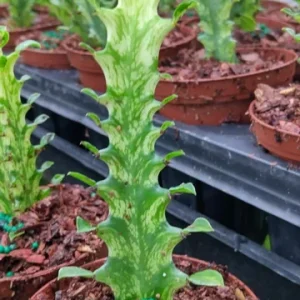
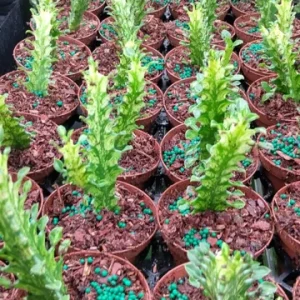
Variegated Euphorbia Trigona Milk Cactus Live Starter Plant – 3 inch Pot
Original price was: $35.18.$23.99Current price is: $23.99.
Bring exotic charm to your home with the Variegated Euphorbia Trigona Milk Cactus. This unique live Euphorbia Trigona plant offers striking variegated foliage and a captivating architectural form, making it an ideal indoor succulent plant.
-
USDA Hardiness Zone
USDA zones 9-11 (outdoors), year-round indoors -
Soil Type
Well-draining succulent or cactus potting mix -
Sunlight Exposure
Bright indirect light -
Expected Planting Period
Year-round indoors

You can track your order HERE
Oct 24
Oct 29 - Oct 31
Nov 03 - Nov 07
Shipping and return policies: Our Alive & Thrive Guarantee covers issues with your plants within the first 30 days. Reach out to us. Our team will answer your questions and help you find the plants that are truly suitable for your environment, climate, and personal preferences.

Overview
Introduce a touch of the exotic to your indoor plant collection with the magnificent Variegated Euphorbia Trigona Milk Cactus. This striking succulent, often referred to as the African Milk Tree, is not a true cactus but a member of the Euphorbia genus, known for its distinctive upright, columnar growth and eye-catching variegated stems. Originating from Central Africa, this particular variety boasts beautiful green stems adorned with creamy white or yellow margins, offering a captivating visual contrast. It’s an ideal choice for both seasoned plant enthusiasts and beginners alike, providing a unique architectural element to any space. As a live Euphorbia Trigona plant, it arrives ready to thrive in your home, adding instant character and a vibrant splash of color.
The Variegated Euphorbia Trigona Milk Cactus grows tall and majestic, forming a candelabra-like shape as it matures. Its unique appearance makes it a fantastic focal point in modern and minimalist decor, or a fascinating addition to a diverse succulent display. This resilient plant is relatively low maintenance and can tolerate various indoor conditions, making it a rewarding choice for those seeking an easy-to-care-for yet visually impressive houseplant. Embrace the beauty of this intriguing succulent and enjoy its enduring charm.
Key Benefits
The Variegated Euphorbia Trigona Milk Cactus offers numerous advantages, making it a popular choice for indoor gardening. Its unique aesthetic and resilience contribute to a rewarding plant ownership experience.
- Striking Variegated Foliage: The plant’s most notable feature is its vibrant green stems with creamy white or yellow variegation, which adds a dynamic and attractive element to any room. This color contrast ensures it stands out from other houseplants.
- Architectural Form: With its upright, columnar growth habit, this live Euphorbia Trigona plant provides a strong vertical accent, perfect for adding structure and interest to shelves, tabletops, or floor displays. It creates a modern and sculptural look.
- Low Maintenance: This succulent is remarkably easy to care for, requiring infrequent watering and tolerating a range of light conditions. It’s an excellent choice for busy individuals or those new to plant care, making it an easy care houseplant.
- Drought Tolerant: As a succulent, it naturally stores water in its stems, enabling it to withstand periods of drought. This characteristic reduces the frequency of watering and makes it forgiving if you occasionally forget.
- Air Purifying Qualities: Like many houseplants, the Variegated Euphorbia Trigona Milk Cactus can contribute to improved indoor air quality by absorbing certain common airborne toxins, creating a healthier living environment.
- Unique Conversation Starter: Its unusual appearance and intriguing common name (African Milk Tree) often spark curiosity and conversation among guests, making it a memorable addition to your home decor.
- Adaptable to Indoor Environments: This plant thrives in typical household conditions, adapting well to average room temperatures and humidity levels, making it a versatile indoor succulent plant.
Plant Care & Growing Tips
Caring for your Variegated Euphorbia Trigona Milk Cactus is straightforward, ensuring it remains a vibrant and healthy addition to your home. Providing the right conditions will allow it to flourish and maintain its stunning appearance. Understanding African Milk Tree care is key to its longevity.
This indoor succulent plant thrives in bright, indirect light. While it can tolerate some direct morning sun, prolonged exposure to intense afternoon sun can scorch its delicate variegated stems. An east or west-facing window is often ideal. If you notice the variegation fading or the plant stretching, it may need more light. Conversely, if the white areas turn brown, it might be receiving too much direct sun. Good air circulation is also beneficial. When it comes to watering, the key is moderation and allowing the soil to dry out completely between waterings. Overwatering is the most common cause of problems for this plant, leading to root rot. In warmer months, you might water every 2-4 weeks, reducing frequency significantly in winter to once a month or even less. Always check the soil moisture with your finger before watering.
For soil, use a well-draining potting mix specifically formulated for cacti and succulents. A mix that includes perlite, pumice, or coarse sand will ensure excellent drainage and prevent waterlogged roots. The ideal temperature range for your Variegated Euphorbia Trigona Milk Cactus is between 65-80°F (18-27°C). Protect it from temperatures below 50°F (10°C) and sudden cold drafts. Fertilize sparingly; a diluted, balanced liquid fertilizer can be applied once or twice during the growing season (spring and summer). Avoid fertilizing in fall and winter. Common problems include yellowing or mushy stems from overwatering, and shriveling from severe underwatering. Pests are rare, but mealybugs can occasionally be an issue; treat with rubbing alcohol on a cotton swab. Remember that the milky sap (latex) produced by this plant can be an irritant, so handle with gloves and avoid contact with skin and eyes.
Size & Details
This offering is for one Variegated Euphorbia Trigona Milk Cactus, a live starter plant typically provided in a 3-inch nursery pot. At this stage, the plant will generally stand approximately 6-8 inches tall, ready to be transplanted into a slightly larger decorative container upon arrival. This particular succulent is known for its moderate to fast growth rate under optimal conditions, often adding several inches of height per year. It will develop into a striking, multi-branched specimen, eventually reaching heights of 4-6 feet or more indoors over many years, creating an impressive vertical statement in your home.
The plant is shipped with care to ensure it arrives healthy and ready to thrive. While it is a young plant, its distinctive variegated stems are already visible, showcasing the unique beauty this species is known for. With proper African Milk Tree care, you can expect this plant to become a long-term, captivating feature in your indoor garden. We recommend having a suitable well-draining pot and succulent soil ready for its new home.
Frequently Asked Questions
- Q: How big does this plant get? A: The Variegated Euphorbia Trigona Milk Cactus is a relatively fast grower for a succulent. Indoors, it can reach heights of 4 to 6 feet or more over several years, forming a tall, architectural specimen.
- Q: Is this an indoor or outdoor plant? A: This plant is primarily grown as an indoor succulent plant in most climates. It can be moved outdoors in warm, frost-free regions (USDA zones 9-11) during summer but must be brought inside before temperatures drop.
- Q: How much sunlight does it need? A: It prefers bright, indirect light. A few hours of direct morning sun is acceptable, but protect it from intense afternoon sun, which can scorch its variegated stems.
- Q: Is this plant easy to care for? A: Yes, the Variegated Euphorbia Trigona Milk Cactus is considered an easy care houseplant. Its drought tolerance and minimal care requirements make it suitable for beginners and busy plant owners.
- Q: What condition will it arrive in? A: Your live Euphorbia Trigona plant will arrive as a healthy starter plant, carefully packaged in a 3-inch nursery pot, ready for you to acclimate and repot.
- Q: How often should I water my African Milk Tree? A: Water sparingly. Allow the soil to dry out completely between waterings. In summer, this might be every 2-4 weeks; in winter, reduce to once a month or less, depending on your environment.
- Q: Is this plant pet-safe? A: No, the milky white sap (latex) produced by the Euphorbia Trigona is toxic if ingested and can cause skin irritation. Keep it out of reach of children and pets.
- Q: What is the best soil for this succulent? A: Use a well-draining potting mix specifically designed for cacti and succulents. This typically includes ingredients like perlite or pumice to ensure excellent drainage.
- Q: Can I propagate the Variegated Euphorbia Trigona Milk Cactus? A: Yes, it can be propagated from stem cuttings. Allow the cut end to callus for several days before planting in dry, well-draining soil.
- Q: Why is my Euphorbia Trigona turning yellow or brown? A: Yellowing or mushy stems often indicate overwatering and potential root rot. Browning can be a sign of too much direct sun or severe underwatering. Adjust your care routine accordingly.
Be the first to review “Variegated Euphorbia Trigona Milk Cactus Live Starter Plant – 3 inch Pot”
People Also Viewed


Sold 64 products
Original price was: $38.98.$22.98Current price is: $22.98.

Sold 86 products
Original price was: $147.16.$73.58Current price is: $73.58.


























Reviews
There are no reviews yet.