
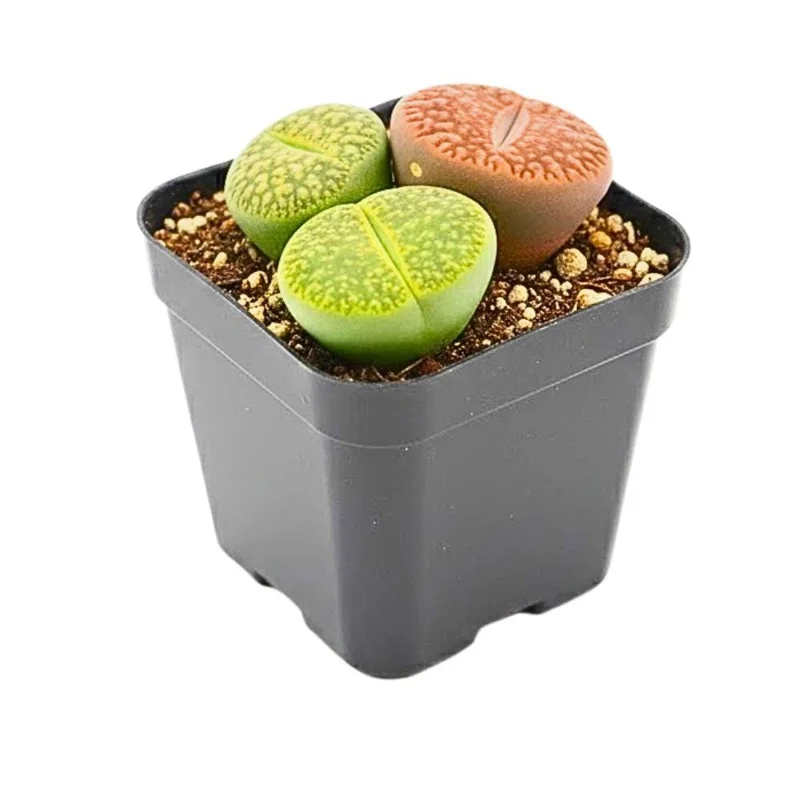
Lithops Live Plant – Rare Succulent in 2-inch Pot – Indoor
Original price was: $52.09.$26.04Current price is: $26.04.
Bring home a fascinating Lithops live plant, also known as “living stones.” This rare succulent live plant comes in a 2-inch pot, ready to thrive in your indoor space. Its unique, stone-like appearance and compact size make it an ideal desk or shelf accent, offering easy care and a touch of natural artistry.
-
USDA Hardiness Zone
USDA zones 9-11 (indoors recommended for most) -
Soil Type
Well-draining succulent/cactus mix -
Sunlight Exposure
Bright direct to bright indirect light -
Expected Planting Period
Year-round indoors

You can track your order HERE
Oct 23
Oct 28 - Oct 30
Nov 02 - Nov 06
Shipping and return policies: Our Alive & Thrive Guarantee covers issues with your plants within the first 30 days. Reach out to us. Our team will answer your questions and help you find the plants that are truly suitable for your environment, climate, and personal preferences.

Overview
Introduce an extraordinary element to your indoor plant collection with this captivating Lithops live plant. Often called “living stone plants” due to their remarkable resemblance to pebbles and rocks, these unique succulents are native to Southern Africa. Each Lithops live plant features thick, paired leaves that are fused together, with a small fissure from which new leaves and flowers emerge. This particular specimen arrives well-rooted in a 2-inch pot, perfectly sized for immediate display or transplanting into a decorative container. Their minimalist aesthetic and intriguing growth habit make them a conversation starter and a favorite among succulent enthusiasts looking for a truly rare and distinctive addition to their home or office.
The compact nature of the Lithops live plant ensures it remains small, making it an excellent choice for limited spaces, terrariums, or succulent arrangements. Despite their exotic appearance, Lithops care is surprisingly straightforward, appealing to both novice and experienced plant parents. Embrace the subtle beauty and resilience of these geological wonders as they slowly grow and transform, adding a serene and natural touch to any environment.
Key Benefits
Adding a Lithops live plant to your home offers a range of unique advantages that set it apart from other houseplants. Its distinctive characteristics contribute to a captivating and low-maintenance indoor garden experience.
- Unique Aesthetic Appeal: The primary draw of the Lithops live plant is its uncanny resemblance to colorful stones or pebbles. This natural camouflage creates a fascinating visual element, making it a living piece of art that seamlessly blends with modern or minimalist decor. It’s a truly unique conversation starter.
- Compact Size for Small Spaces: Grown in a 2-inch pot, this succulent maintains a very small and compact form throughout its life. This makes it perfect for windowsills, desks, bookshelves, or terrariums where space is at a premium. It adds natural beauty without overwhelming your area.
- Exceptional Drought Tolerance: As a rare succulent live plant from arid regions, Lithops are incredibly drought-tolerant. They store water in their fleshy leaves, requiring infrequent watering, which is ideal for busy individuals or those who prefer low-maintenance plants.
- Low Maintenance & Easy Care: Once you understand their specific watering cycle, Lithops care is minimal. They don’t require frequent repotting, pruning, or fertilization, making them an excellent choice for beginners or those seeking a hassle-free plant companion.
- Fascinating Growth Cycle: Observe the intriguing process as new leaves emerge from the fissure between the old ones, absorbing nutrients from the dying outer leaves. This natural shedding and renewal cycle is a captivating aspect of owning an indoor Lithops.
- Ideal for Collectors: For succulent and plant collectors, a living stone plant is often considered a prized possession. Its rarity and distinctive nature make it a coveted item to add to a diverse collection of unique botanical specimens.
- Non-Toxic to Pets: Lithops are generally considered non-toxic to pets, offering peace of mind for households with curious cats or dogs. This makes it a safer option for adding greenery to your home.
Plant Care & Growing Tips
Proper Lithops care is key to ensuring your Lithops live plant thrives and displays its unique beauty. While considered low-maintenance, they have specific needs that differ from typical houseplants. The most critical aspect is understanding their watering schedule, which correlates with their natural growth cycles.
For sunlight, indoor Lithops require bright light, ideally direct morning sun or very bright indirect light for at least 4-5 hours daily. A south-facing window is often ideal, or you can supplement with a grow light if natural light is insufficient. Insufficient light can lead to etiolation (stretching), which detracts from their compact, stone-like appearance. Temperature-wise, they prefer warm conditions during their growing season (spring/autumn) and can tolerate cooler temperatures (down to 50°F / 10°C) during their dormancy in winter. Avoid frost entirely.
The most important aspect of Lithops care is watering. They should only be watered when the soil is completely dry, and often only during their active growth periods (late summer to early winter, and sometimes late spring). During summer dormancy and winter when new leaves are consuming the old ones, watering should be drastically reduced or stopped altogether. When you do water, soak the soil thoroughly, ensuring excellent drainage. A well-draining soil mix is paramount; a specialized succulent or cactus mix with extra perlite or pumice is highly recommended. The pot MUST have drainage holes. Fertilization is rarely needed for a living stone plant; if you do fertilize, use a highly diluted, low-nitrogen succulent fertilizer once a year during active growth. Common problems include overwatering, which leads to rot, and insufficient light, which causes stretching. By adhering to these specific guidelines, your Lithops live plant will flourish.
Size & Details
This offering includes one healthy Lithops live plant, meticulously grown and well-rooted in a standard 2-inch nursery pot. The plant’s compact size is one of its defining characteristics, with individual plants typically measuring between 0.5 to 1.5 inches in diameter when mature. Lithops are slow-growing succulents, maintaining their small stature over many years, making them perfect for miniature gardens or as part of a collection on a desk or shelf. They ship as an established, actively growing plant, carefully packed to ensure safe arrival.
Each rare succulent live plant is ready for continued growth in its current pot or can be gently transplanted into a slightly larger decorative container with appropriate drainage. The plant’s unique appearance, resembling small, colorful pebbles, will develop further as it matures, showcasing its natural patterns and textures. Expect this indoor Lithops to unfurl new leaves and potentially produce small, daisy-like flowers during its blooming season, typically in autumn.
Frequently Asked Questions
- Q: How big does this plant get? A: This Lithops live plant is grown in a 2-inch pot and will remain relatively small. Mature Lithops typically reach about 0.5 to 1.5 inches in diameter, making them ideal for compact spaces and miniature succulent arrangements.
- Q: Is this an indoor or outdoor plant? A: While Lithops can grow outdoors in very specific, arid climates, this rare succulent live plant is best suited as an indoor Lithops for most US customers. It thrives indoors with proper light and controlled watering, protecting it from unsuitable weather conditions.
- Q: How much sunlight does it need? A: Your living stone plant requires bright light. Place it in a spot that receives at least 4-5 hours of direct morning sun or very bright, indirect light throughout the day. A south-facing window is often ideal for optimal growth and to maintain its compact shape.
- Q: Is this plant easy to care for? A: Yes, Lithops care is considered easy once you understand its specific watering needs. The key is to avoid overwatering and provide ample light. It’s a low-maintenance plant perfect for busy individuals or those new to succulents.
- Q: What condition will it arrive in? A: Your Lithops live plant will arrive well-rooted in its 2-inch pot, carefully packed to ensure it reaches you in excellent, healthy condition, ready for planting or display. We take great care in preparing our plants for shipment.
- Q: How often should I water my Lithops? A: Water sparingly. Only water your Lithops live plant when the soil is completely dry, and typically only during its active growth phases (late summer to early winter, and sometimes late spring). Avoid watering during summer dormancy and when new leaves are emerging from the old ones.
- Q: What kind of soil is best for a Lithops? A: A fast-draining soil mix is crucial for your living stone plant. Use a specialized succulent or cactus potting mix, often amended with additional perlite, pumice, or coarse sand to ensure excellent drainage and prevent root rot.
Be the first to review “Lithops Live Plant – Rare Succulent in 2-inch Pot – Indoor”
People Also Viewed
Succulents
Boobie Cactus Live Plant – Myrtillocactus Geometrizans – Rare Exotic Succulent – 4″, 6″, 8″ Pot
Sold 54 products
Original price was: $55.99.$40.99Current price is: $40.99.
Grasses
3 Christmas Fern Bare Root Plants (Polystichum Acrostichoides) – Outdoor Evergreen Shade Plant
Sold 90 products
Original price was: $24.00.$12.00Current price is: $12.00.





Reviews
There are no reviews yet.