
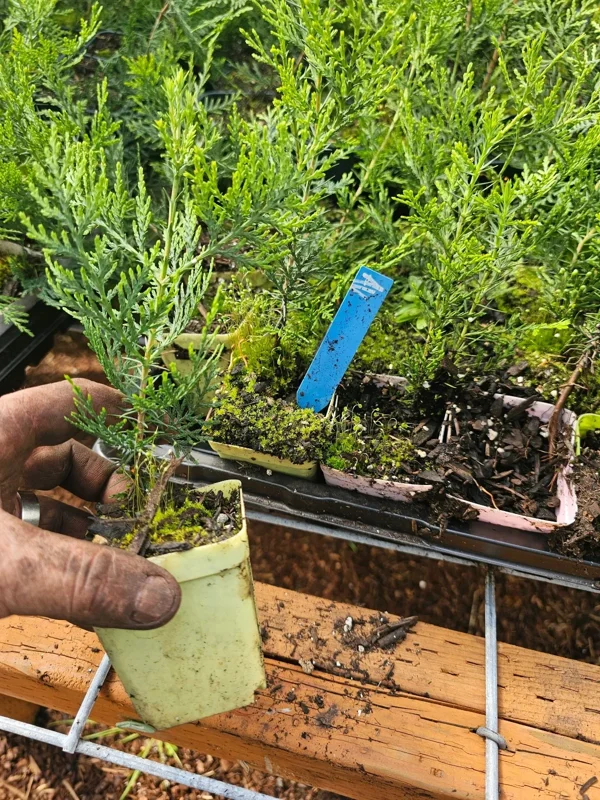
Arborvitae Hedge Tree Sapling – Live Evergreen Conifer – 3″ Pot – Outdoor
Original price was: $28.00.$17.60Current price is: $17.60.
Cultivate a beautiful, natural privacy screen with this arborvitae hedge tree sapling. This small, live evergreen conifer arrives ready to plant in a 3″ pot, perfect for establishing a lush border in your garden.
-
USDA Hardiness Zone
USDA Zones 3-7 -
Soil Type
Well-draining, slightly acidic to neutral soil -
Sunlight Exposure
Full sun to partial shade -
Expected Planting Period
Early spring or early fall

You can track your order HERE
Sep 25
Sep 30 - Oct 02
Oct 05 - Oct 09
Shipping and return policies: Our Alive & Thrive Guarantee covers issues with your plants within the first 30 days. Reach out to us. Our team will answer your questions and help you find the plants that are truly suitable for your environment, climate, and personal preferences.

Overview
Introducing the arborvitae hedge tree sapling, a resilient and attractive evergreen conifer perfect for enhancing any outdoor space. Scientifically known as Thuja occidentalis, this variety is highly prized for its dense foliage, columnar growth habit, and ability to form effective privacy screens and windbreaks. Our small live saplings are carefully cultivated and shipped in a 3″ pot, ensuring they arrive healthy and ready for planting. Whether you’re looking to define property lines, create a lush backdrop, or add year-round greenery to your landscape, this arborvitae hedge tree is an excellent choice. Its robust nature makes it a favorite among gardeners seeking a low-maintenance yet impactful addition to their outdoor environment.
The arborvitae hedge tree is known for its vibrant green color that holds well throughout the seasons, providing consistent beauty even in winter. These young plants are ideal for starting a new hedge or filling in existing gaps. With proper care, they will grow into mature, stately trees, offering not only aesthetic appeal but also practical benefits like noise reduction and habitat for local wildlife. Invest in these versatile evergreens to transform your garden into a serene and private sanctuary.
Key Benefits
The arborvitae hedge tree offers a multitude of benefits for both novice and experienced gardeners, making it a highly desirable plant for various landscaping projects. Its inherent characteristics contribute significantly to its popularity and functionality.
- Excellent Privacy Screen: The dense, upright growth of the arborvitae hedge tree creates an effective and beautiful living barrier, offering year-round privacy from neighbors and street views.
- Year-Round Greenery: As an evergreen conifer, it maintains its vibrant green foliage throughout all seasons, ensuring your landscape remains lush and appealing even in the depths of winter.
- Low Maintenance: Once established, these trees are relatively easy to care for, requiring minimal pruning and watering compared to many other hedging plants.
- Noise Reduction: The thick foliage acts as a natural sound buffer, helping to reduce noise pollution from busy streets or neighboring properties.
- Windbreak Protection: Planted in rows, they can significantly reduce wind speeds, protecting more delicate plants in your garden and making outdoor spaces more comfortable.
- Versatile Landscaping Use: Beyond hedges, they can be used as specimen trees, in foundation plantings, or to create formal garden designs.
- Wildlife Habitat: The dense branches provide shelter and nesting sites for various bird species, contributing to local biodiversity.
Plant Care & Growing Tips
Caring for your arborvitae hedge tree sapling is straightforward, ensuring healthy growth and a thriving landscape. These robust evergreens are quite forgiving, but providing optimal conditions will accelerate their development into a magnificent hedge. Upon arrival, gently remove the sapling from its 3″ pot and prepare the planting site.
Sunlight Requirements: Arborvitae hedge tree thrives in full sun to partial shade, meaning at least 6 hours of direct sunlight per day is ideal. While they can tolerate some shade, too little sun can lead to sparser foliage and slower growth. Ensure they receive adequate light for dense, healthy development. Watering Schedule: Young saplings require consistent moisture. Water deeply 2-3 times a week during the first growing season, especially during dry spells. Once established, they are more drought-tolerant but will benefit from watering during prolonged dry periods. Check the soil moisture before watering; it should be consistently moist but not waterlogged. Soil Type and Drainage: This evergreen conifer prefers well-draining soil with a slightly acidic to neutral pH. Amend heavy clay soils with organic matter like compost to improve drainage and aeration. Good drainage is crucial to prevent root rot. Temperature Range & USDA Hardiness Zone: Most arborvitae varieties are hardy in USDA zones 3-7, making them suitable for a wide range of climates. They are tolerant of both cold winters and hot summers, provided they receive adequate moisture. Fertilization: Fertilize in early spring with a balanced, slow-release granular fertilizer formulated for evergreens. Follow package directions for application rates. Avoid over-fertilizing, especially with young plants. Common Problems: Watch for bagworms and spider mites, which can be managed with appropriate horticultural oils or insecticides. Ensure good air circulation to prevent fungal issues. Yellowing foliage can indicate overwatering, nutrient deficiency, or winter burn.
Size & Details
This offering includes one small live arborvitae hedge tree sapling, carefully grown and shipped in a 3″ pot. At the time of shipment, the sapling typically stands between 6 to 12 inches tall, depending on growth stage and variety. This size is ideal for planting and establishing a strong root system quickly. The small arborvitae will arrive with its roots protected in the nursery pot, ready for immediate transplanting into your garden or a larger container.
The growth rate of thuja occidentalis is moderate, typically adding 12-24 inches in height per year under optimal conditions. Mature plants can reach heights of 10-20 feet and widths of 3-5 feet, forming a dense, columnar shape. When planting for a hedge, space saplings 2-3 feet apart to allow for proper growth and canopy development. Expect these young plants to begin forming a noticeable hedge within 3-5 years, with full density achieved over 5-10 years. This evergreen conifer is a long-term investment that provides enduring beauty and functionality to your landscape.
Frequently Asked Questions
- Q: How big does this plant get? A: This arborvitae hedge tree sapling is shipped in a 3″ pot and typically measures 6-12 inches tall. Mature plants can grow to 10-20 feet tall and 3-5 feet wide, depending on the specific variety and growing conditions.
- Q: Is this an indoor or outdoor plant? A: The arborvitae hedge tree is an outdoor plant, best suited for landscaping purposes to create hedges, privacy screens, or as a specimen tree. It thrives in various outdoor climates.
- Q: How much sunlight does it need? A: For optimal growth and dense foliage, this evergreen conifer requires at least 6 hours of direct sunlight daily (full sun). It can tolerate partial shade but may grow less vigorously.
- Q: Is this plant easy to care for? A: Yes, the arborvitae hedge tree is considered low-maintenance once established. It requires consistent watering in its first year, but after that, it’s quite resilient and easy to care for, making it a great privacy hedge plant.
- Q: What condition will it arrive in? A: Your small arborvitae sapling will arrive healthy and well-packaged in its 3″ nursery pot, with its roots protected and ready for planting. We take great care to ensure safe transit.
- Q: When is the best time to plant this evergreen conifer? A: The best time to plant your arborvitae hedge tree is in early spring or early fall, allowing the roots to establish before extreme summer heat or winter cold.
- Q: What’s the minimum temperature this plant can tolerate? A: Most varieties of thuja occidentalis are hardy in USDA Zones 3-7, meaning they can withstand winter temperatures well below freezing, typically down to -40°F (-40°C).
Be the first to review “Arborvitae Hedge Tree Sapling – Live Evergreen Conifer – 3″ Pot – Outdoor”
People Also Viewed


Sold 92 products
From $16.04
Flower Plants
Sold 68 products
Original price was: $45.58.$26.98Current price is: $26.98.



Sold 64 products
Original price was: $38.98.$22.98Current price is: $22.98.





&url=https://gardennursery.net/product/peter-pepper-live-plants-hot-yellow-chili-organic-set-of-3/&media=https://img.gardennursery.net/2026/05/peter-pepper-live-plants-hot-yellow-chili-organic-4bf53c40.webp)


Reviews
There are no reviews yet.