
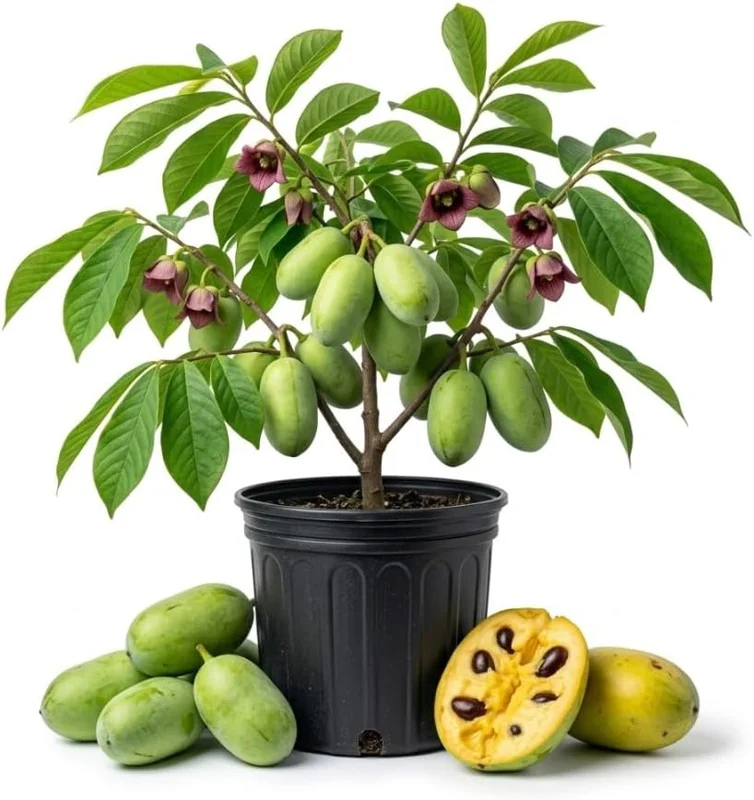
Paw Paw Tree (Asimina Triloba) Live Plant, 2-3 Ft Tall, 1 Gallon Pot, Outdoor Fruit Tree
Original price was: $135.98.$67.99Current price is: $67.99.
Cultivate your own unique fruit with this paw paw tree live plant. This 2-3 ft tall asimina triloba tree arrives in a gallon pot, ready for transplanting into your outdoor garden or food forest. Enjoy the promise of sweet, custard-like fruit from this native American hardy banana tree.
-
USDA Hardiness Zone
USDA Zones 5-9 -
Soil Type
Well-draining, fertile, slightly acidic soil -
Sunlight Exposure
Full sun to partial shade -
Expected Planting Period
Spring to early summer

You can track your order HERE
Oct 31
Nov 05 - Nov 07
Nov 10 - Nov 14
Shipping and return policies: Our Alive & Thrive Guarantee covers issues with your plants within the first 30 days. Reach out to us. Our team will answer your questions and help you find the plants that are truly suitable for your environment, climate, and personal preferences.

Overview
Bring the taste of the tropics to your temperate garden with a paw paw tree live plant. The Paw Paw (Asimina triloba), also known as the American Pawpaw, Poor Man’s Banana, or Hardy Banana Tree, is a truly unique and delightful fruit-bearing tree native to the eastern United States. This listing is for one young, vibrant paw paw tree live plant, approximately 2-3 feet tall, carefully grown in a 1-gallon pot and ready for its new home. Unlike many exotic fruit trees, the asimina triloba tree is remarkably cold-hardy, making it an excellent choice for gardeners in a wide range of climates who wish to grow their own delicious, custard-like fruit.
The paw paw fruit tree is not just a source of incredible fruit; it’s also an attractive ornamental tree, providing lush green foliage and a distinctive pyramidal shape. As a young starter plant, your tree will be focused on establishing its root system and growing strong. While it won’t arrive with fruit or flowers, with proper care and patience, you can look forward to harvesting your own sweet, fragrant pawpaws in 2-4 years. This resilient american pawpaw plant thrives in outdoor settings, making it an ideal addition to backyard gardens, food forests, orchards, and native plant landscapes.
Key Benefits
Adding a paw paw tree live plant to your landscape offers a multitude of unique advantages, combining aesthetic appeal with practical yields. This native fruit tree is a fantastic choice for those looking to diversify their garden and enjoy a truly special harvest.
- Unique & Delicious Fruit: Grow your own sweet, creamy, custard-like pawpaw fruit, often described as a blend of banana, mango, and pineapple. This distinct flavor is a rare treat not typically found in grocery stores.
- Cold Hardiness: Unlike many tropical-tasting fruits, the asimina triloba tree is incredibly hardy, tolerating cold temperatures and thriving in USDA Zones 5-9, making it suitable for a broad range of climates.
- Native Ecosystem Support: Planting a paw paw tree live plant contributes to local biodiversity, providing food for native wildlife and acting as a host plant for the beautiful Zebra Swallowtail butterfly larvae.
- Ornamental Value: Beyond its fruit, the hardy banana tree offers attractive foliage, especially in autumn when its leaves turn a vibrant golden yellow, adding seasonal interest to your garden.
- Low Maintenance Once Established: After its initial establishment period, the pawpaw tree is relatively low-maintenance, requiring less intensive care than many other fruit trees.
- Shade Tolerance: While it produces best in full sun, young pawpaw trees appreciate some partial shade, especially in hotter climates, making them versatile for various garden spots.
- Health Benefits: Pawpaw fruit is rich in vitamins, minerals, and antioxidants, offering a nutritious addition to your diet straight from your backyard.
Plant Care & Growing Tips
Caring for your paw paw tree live plant is a rewarding experience that ensures a healthy, productive tree. Pawpaws are relatively unfussy once established, but providing the right conditions from the start is crucial for their success. They prefer a location with at least 6 hours of direct sunlight per day for optimal fruit production, though young trees benefit from partial shade to protect them from intense afternoon sun. Ensure the planting site has good air circulation to prevent fungal issues.
Soil & Watering: American pawpaw plant thrives in deep, fertile, well-draining soil with a slightly acidic to neutral pH (5.5-7.0). Amend heavy clay soils with compost and organic matter to improve drainage and fertility. Consistent moisture is vital, especially during the first year of establishment. Water regularly, about 1-2 times per week, ensuring the soil remains moist but not waterlogged. Reduce watering frequency once the tree is established, though supplemental watering during dry spells is still beneficial. Mulching around the base of the tree helps retain soil moisture and suppress weeds.
Temperature & Hardiness: The paw paw fruit tree is hardy in USDA Zones 5-9. It requires a certain number of chilling hours in winter to produce fruit effectively. Protect young trees from extreme winter winds. Fertilize in early spring with a balanced, slow-release fertilizer formulated for fruit trees, following package instructions. Pruning is generally minimal, focusing on removing dead, damaged, or crossing branches to maintain good tree structure and air circulation. Watch for common pests like pawpaw peduncle borers and diseases such as powdery mildew, addressing them promptly with appropriate organic or chemical controls.
Size & Details
This offering includes one healthy paw paw tree live plant, specifically the Asimina triloba species. The plant measures approximately 2-3 feet in height from the base of the pot to the tip of the tallest stem, providing a substantial starter tree for your garden. It is currently growing in a durable 1-gallon nursery pot, ensuring its root system is well-developed and ready for transplanting. This is a young, vigorous plant, typically 1-2 years old, carefully nurtured to ensure a strong start in your landscape.
Upon arrival, your asimina triloba tree will be a leafy green specimen, focused on vegetative growth. As a starter plant, it will not have flowers or fruit. With proper planting and care, paw paw trees typically begin to produce their delicious fruit in approximately 2-4 years after establishment, once they reach maturity and sufficient size. The mature size of a pawpaw tree can range from 15-20 feet tall and 10-15 feet wide, forming an attractive understory tree or a compact orchard specimen. They are shipped in their pots with soil, ensuring minimal transplant shock and a smooth transition to your garden.
Frequently Asked Questions
- Q: How big does this plant get? A: This paw paw tree live plant is currently 2-3 feet tall in a 1-gallon pot. Mature pawpaw trees typically grow to be 15-20 feet tall and 10-15 feet wide, forming a small to medium-sized tree in your landscape.
- Q: Is this an indoor or outdoor plant? A: The asimina triloba tree is an outdoor plant. It requires specific chilling hours in winter to produce fruit and thrives in outdoor garden settings, orchards, and food forests.
- Q: How much sunlight does it need? A: For optimal fruit production, the hardy banana tree prefers full sun (at least 6 hours of direct sunlight daily). Young plants, however, can benefit from partial shade in hot climates during their establishment phase.
- Q: Is this plant easy to care for? A: Yes, once established, the american pawpaw plant is relatively easy to care for. It requires consistent watering during its first year, well-draining soil, and minimal pruning.
- Q: What condition will it arrive in? A: Your paw paw tree live plant will arrive carefully packaged in its 1-gallon pot with soil, ensuring it is healthy and ready for transplanting into your garden. It will be a young, leafy plant.
- Q: How long until it blooms and produces fruit? A: As a young starter plant, your paw paw tree live plant will not have flowers or fruit upon arrival. With proper care, pawpaw trees typically begin producing fruit in approximately 2-4 years after establishment.
- Q: Will it survive winter in my zone? A: The paw paw fruit tree is remarkably cold-hardy and thrives in USDA Hardiness Zones 5-9. It requires a period of winter dormancy to produce fruit.
- Q: What is the best time to plant this tree? A: The best time to plant your paw paw tree live plant is in the spring or early fall, allowing the roots to establish before extreme summer heat or winter cold sets in.
- Q: Does this tree need a pollinator? A: Most pawpaw varieties are not self-pollinating and require at least two genetically distinct trees for successful fruit production. Consider planting another pawpaw tree nearby if you only have one.
- Q: What kind of soil is best for pawpaws? A: Pawpaws prefer deep, fertile, well-draining soil that is slightly acidic to neutral (pH 5.5-7.0). Amending with compost or other organic matter can improve soil structure and fertility.
Be the first to review “Paw Paw Tree (Asimina Triloba) Live Plant, 2-3 Ft Tall, 1 Gallon Pot, Outdoor Fruit Tree”
People Also Viewed


HousePlants
Variegated Monstera Adansonii Albo Live Plant – Rare Swiss Cheese Vine, Half-Moon Leaf Houseplant
Sold 96 products
From $96.00

HousePlants
Variegated Philodendron Micans Aurea Live Plant – Rare Collector Houseplant in Nursery Pot
Sold 79 products
Original price was: $232.00.$116.00Current price is: $116.00.




Herbs
Finger Root Live Plant – Chinese Ginger Starter – Krachai Herb – 4-6 Inch Tall – Indoor/Outdoor
Sold 85 products
$29.98









Reviews
There are no reviews yet.