
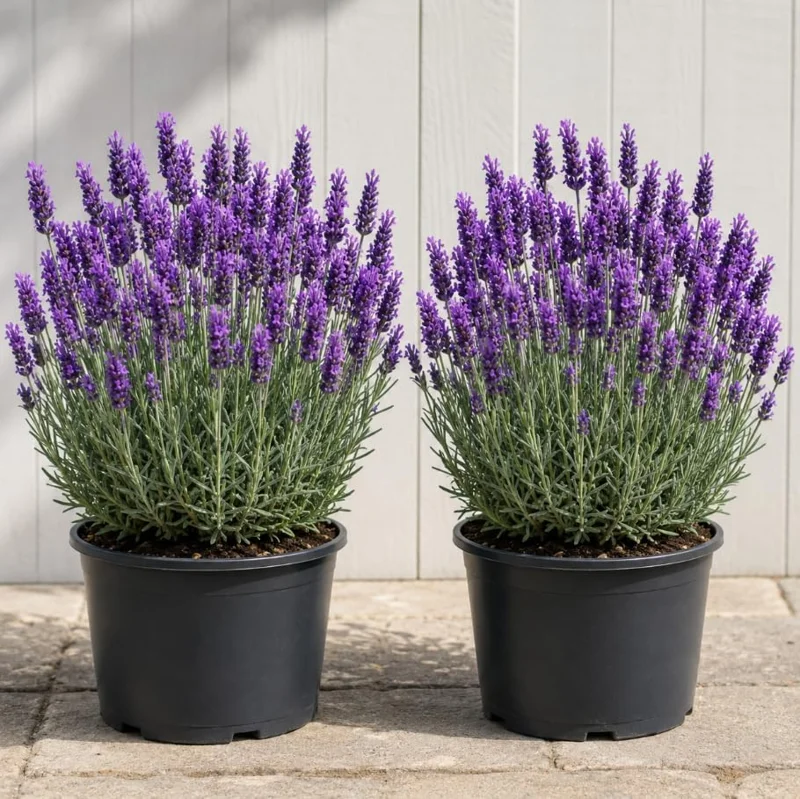
Pack of 2 Lavender Plants Live, 1 Gallon Pot, Fragrant Perennial Herb for Outdoor Garden
Original price was: $149.98.$74.99Current price is: $74.99.
Bring the beauty and fragrance of Provence to your home with this pack of 2 lavender plants live. Each plant comes in a 1 Gallon Pot, ready to thrive in your outdoor garden or patio. Known for their beautiful blue-purple flowers and calming aroma, these fragrant lavender plants are a low-maintenance, hardy perennial herb perfect for any landscape.
-
USDA Hardiness Zone
USDA zones 5-9 -
Soil Type
Well-draining, sandy or gravelly soil -
Sunlight Exposure
Full sun -
Expected Planting Period
Spring to early summer

You can track your order HERE
Oct 30
Nov 04 - Nov 06
Nov 09 - Nov 13
Shipping and return policies: Our Alive & Thrive Guarantee covers issues with your plants within the first 30 days. Reach out to us. Our team will answer your questions and help you find the plants that are truly suitable for your environment, climate, and personal preferences.

Overview
Transform your garden or patio into a fragrant oasis with this exquisite pack of 2 lavender plants live. These robust and established plants, each in a 1-gallon pot, are ready to bring their calming aroma and beautiful blue-purple blooms to your outdoor space. Lavender, scientifically known as Lavandula, is a beloved perennial herb celebrated for its aromatic foliage and stunning flowers. It’s a versatile choice for gardeners looking to add both beauty and utility to their landscape, perfect for creating serene borders, fragrant pathways, or eye-catching container displays. Our lavender plants live are carefully grown to ensure they arrive healthy and eager to flourish, providing you with years of enjoyment.
These plants are not just visually appealing; they also attract beneficial pollinators like bees and butterflies, contributing to a healthier ecosystem. The compact, bushy growth habit and silvery-green foliage make them an attractive addition even when not in bloom. Whether you’re an experienced gardener or just starting, these hardy perennial herb plants are a fantastic choice, offering both aesthetic appeal and practical benefits. They are ideal for cottage gardens, herb gardens, pollinator gardens, and general outdoor landscaping, providing a touch of elegance and a delightful scent.
Key Benefits
Investing in these beautiful outdoor lavender plants offers a multitude of benefits, enhancing both your garden’s aesthetic and your well-being. These plants are a true garden staple, providing sensory delight and ecological advantages.
- Aromatic Fragrance: Enjoy the soothing and iconic scent of lavender, known for its calming properties. The strong, pleasant aroma is perfect for creating a relaxing atmosphere in your garden or patio, and the flowers can be harvested for sachets or essential oils.
- Stunning Visual Appeal: These fragrant lavender plants boast beautiful blue-purple flowers that add a vibrant splash of color to any garden design. Their silvery-green foliage provides year-round interest, making them a standout feature.
- Attracts Pollinators: Lavender is a magnet for bees, butterflies, and other beneficial pollinators, supporting local biodiversity and contributing to a healthy garden ecosystem. This makes them an excellent choice for a pollinator garden.
- Drought-Tolerant & Hardy: Once established, these lavender plants live are remarkably drought-tolerant and resilient, requiring minimal watering. They are a robust choice for various climates and conditions, making them a low-maintenance option.
- Versatile Landscaping Use: Perfect for garden beds, borders, containers, pathways, and rock gardens. Their compact size and bushy growth allow for flexible placement in diverse garden settings, from formal to rustic.
- Culinary and Medicinal Uses: Lavender flowers and leaves can be used in cooking, teas, and homemade remedies. They add a unique floral note to dishes and are known for their calming and anti-inflammatory properties.
- Pest Resistant: The strong scent of lavender naturally deters many common garden pests, helping to protect nearby plants without the need for chemical interventions.
Plant Care & Growing Tips
Caring for your pack of 2 lavender plants live is straightforward, making them an excellent choice for gardeners of all skill levels. To ensure your hardy perennial herb thrives, understanding its basic needs is crucial. Lavender prefers full sun exposure, meaning at least 6-8 hours of direct sunlight per day. Choose a location in your garden or patio that receives ample light throughout the day. In hotter climates, some afternoon shade can be beneficial, but generally, more sun equals more flowers and stronger fragrance. When planting, ensure good air circulation around the plants to prevent fungal issues.
These plants thrive in well-draining soil. Sandy or gravelly soil is ideal, as lavender dislikes wet feet. If your garden soil is heavy clay, amend it with sand or grit to improve drainage. A slightly alkaline pH (6.7 to 7.3) is preferred. Water thoroughly after planting and then allow the soil to dry out completely between waterings. Overwatering is the most common cause of lavender demise. Once established, these outdoor lavender plants are quite drought-tolerant. Fertilization is generally not required, as lavender prefers lean soil. If your soil is very poor, a light application of a balanced, slow-release fertilizer in spring can be beneficial, but avoid high-nitrogen fertilizers which can lead to leggy growth and fewer flowers.
Pruning is essential for maintaining the shape and vigor of your lavender plant care. Prune lightly after the first flush of flowers to encourage a second bloom, and a more significant prune in early spring to remove old wood and promote new growth. Aim to keep the plant from becoming too woody. Lavender is generally hardy in USDA zones 5-9, though specific varieties may vary. Protect plants in colder zones with mulch during winter. Watch out for root rot in poorly drained soils and leaf spot in overly humid conditions. Good air circulation and proper watering are your best defense.
Size & Details
This offering includes a pack of 2 lavender plants live, each individually grown and shipped in a 1-gallon nursery pot. At the time of shipment, plants are well-established with fresh foliage, typically standing 8-12 inches tall, ready for immediate planting in your garden, landscape, or patio container. These fragrant lavender plants will grow into compact, bushy specimens, generally reaching a mature height of 18-24 inches and a similar spread, depending on the variety and growing conditions. They exhibit a moderate growth rate, establishing quickly in their new environment.
Plants are shipped according to their natural growing season to ensure optimal health upon arrival. While they may arrive without flowers or flower buds, this is normal, as flowering depends on the season, plant maturity, and specific growing conditions in your area. Expect the vibrant blue-purple blooms to appear from late spring through summer, providing a long season of color and scent. These plants are an excellent choice for adding structure and fragrance to your garden, and their established root systems ensure a smooth transition to your outdoor space.
Frequently Asked Questions
- Q: How big do these lavender plants get? A: These lavender plants live typically grow to a mature height of 18-24 inches tall and spread similarly wide, forming a compact, bushy mound. Their ultimate size can vary slightly based on growing conditions and specific variety.
- Q: Is this an indoor or outdoor plant? A: These are primarily outdoor lavender plants. They thrive in full sun and are hardy perennials suitable for garden beds, borders, and patio containers in most temperate climates. While they can be brought indoors temporarily, they generally do not perform well long-term as houseplants.
- Q: How much sunlight does it need? A: Lavender requires full sun, meaning at least 6-8 hours of direct sunlight per day. Adequate sunlight is crucial for prolific flowering and the development of its characteristic strong fragrance.
- Q: Is this plant easy to care for? A: Yes, these hardy perennial herb plants are considered relatively easy to care for once established. They are drought-tolerant and prefer lean, well-draining soil, making them a low-maintenance choice for many gardeners.
- Q: What condition will the plants arrive in? A: Your pack of 2 lavender plants live will arrive in 1-gallon pots, established with fresh foliage. Depending on the season, they may or may not have flowers or buds, as flowering is seasonal and depends on maturity.
- Q: When is the best time to plant lavender? A: The best time to plant lavender is in spring after the last frost, or in early fall in warmer climates. This allows the plants to establish their root systems before extreme temperatures.
- Q: What type of soil does lavender prefer? A: Lavender thrives in well-draining soil, ideally sandy or gravelly, with a slightly alkaline pH. Avoid heavy clay soils that retain too much moisture, as this can lead to root rot.
- Q: Will it survive winter in my zone? A: Most common lavender varieties are hardy in USDA Zones 5-9. If you are in a colder zone (e.g., Zone 5), providing winter protection with mulch or bringing container plants indoors to an unheated garage may be beneficial for lavender plant care.
- Q: Can I use this lavender for culinary purposes? A: Yes, many lavender varieties, including common types, are suitable for culinary use. The flowers and leaves can be used in teas, desserts, and savory dishes, adding a unique floral note.
- Q: Is this lavender safe for pets? A: While lavender is generally considered mildly toxic to pets if ingested in large quantities, it’s typically not a serious concern. If you have pets that chew on plants, monitor them or place the plants out of reach.
Be the first to review “Pack of 2 Lavender Plants Live, 1 Gallon Pot, Fragrant Perennial Herb for Outdoor Garden”
People Also Viewed










Sold 60 products
Original price was: $88.50.$76.96Current price is: $76.96.
HousePlants
Purple Wandering Jew Live Plant, Tradescantia Zebrina, 4 Inch Pot, Indoor Trailing Houseplant
Sold 96 products
From $43.80

Sold 67 products
From $107.80



Reviews
There are no reviews yet.