
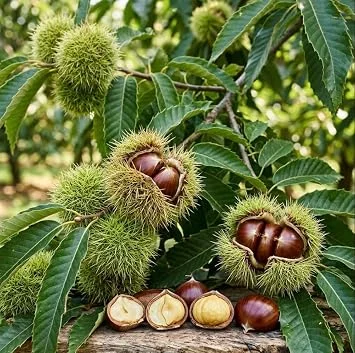
Chestnut Tree Live Plant – Sweet Fruit Nut, Deciduous Shade Tree, 6-10 Inch Tall, 4-Inch Pot
Original price was: $79.98.$39.99Current price is: $39.99.
Cultivate your own delicious nuts with this chestnut tree live plant. This young, deciduous shade tree arrives 6-10 inches tall in a 4-inch pot, ready to establish in your garden or yard. Known for its sweet, edible fruit once mature, it makes a beautiful and productive addition to any landscape.
-
USDA Hardiness Zone
USDA Zones 4-8 -
Soil Type
Well-draining, slightly acidic to neutral soil -
Sunlight Exposure
Full sun -
Expected Planting Period
Spring to early summer or fall

You can track your order HERE
Oct 31
Nov 05 - Nov 07
Nov 10 - Nov 14
Shipping and return policies: Our Alive & Thrive Guarantee covers issues with your plants within the first 30 days. Reach out to us. Our team will answer your questions and help you find the plants that are truly suitable for your environment, climate, and personal preferences.

Overview
Embark on a rewarding gardening journey with this premium chestnut tree live plant. This young, vibrant deciduous nut tree is ready to grow and thrive in your garden or yard, promising a future of delicious, sweet chestnuts. Carefully cultivated and shipped fresh, each plant arrives standing approximately 6-10 inches tall, securely nestled in a 4-inch pot. This provides a robust start, allowing the tree to establish its root system and begin its growth towards maturity. A true symbol of natural beauty and bounty, the chestnut tree live plant is not just a source of edible nuts; it’s also a magnificent shade tree that enhances any outdoor space with its seasonal foliage and impressive stature.
As a deciduous species, this sweet chestnut tree will shed its leaves seasonally, entering a natural dormancy period during colder months. This is a normal and healthy part of its life cycle, ensuring it’s well-prepared to burst forth with new growth when warmer conditions return. While young trees may not produce fruit immediately, with proper care and patience, your tree will mature into a prolific producer of the highly sought-after edible chestnuts. Its presence will transform your landscape, offering both aesthetic appeal and the promise of a bountiful harvest.
Key Benefits
Adding a chestnut tree live plant to your property offers a multitude of benefits, from enhancing your landscape’s beauty to providing a future source of nutritious nuts. This versatile tree is an excellent choice for gardeners looking for both ornamental value and practical yield.
- Future Harvest of Sweet Nuts: Once mature, this edible chestnut tree will produce delicious and nutritious nuts, perfect for roasting, baking, or enjoying fresh. It’s a sustainable way to enjoy fresh produce right from your backyard.
- Stunning Deciduous Shade Tree: With its broad canopy and seasonal foliage changes, the chestnut tree provides ample shade and adds significant aesthetic value to any garden, yard, or open space. Its autumn colors are particularly striking.
- Ecosystem Support: Chestnut trees can attract local wildlife, providing food and habitat, thus contributing positively to the biodiversity of your garden environment.
- Long-Term Investment: A well-cared-for chestnut tree can live for many decades, becoming a cherished, long-term feature of your property that increases in beauty and productivity over time.
- Strong Start for Growth: Each plant arrives potted in a 4-inch container, providing a sturdy root ball and an excellent head start, minimizing transplant shock and encouraging vigorous initial growth.
- Seasonal Interest: Enjoy the changing seasons through your tree’s life cycle, from new spring leaves to summer shade, autumn colors, and the stark beauty of winter dormancy.
- Unique Landscape Feature: Beyond its practical benefits, a chestnut tree live plant stands out as a distinctive and impressive specimen, making your garden unique.
Plant Care & Growing Tips
Ensuring the healthy growth of your chestnut tree live plant requires attention to its specific needs, especially regarding sunlight, soil, and watering. Chestnut trees thrive in locations where they receive ample sunlight. They prefer full sun exposure, meaning at least 6-8 hours of direct sunlight per day. Choose a site in your garden or yard that is open and unshaded by buildings or other large trees to ensure optimal growth and future nut production. While young trees can tolerate some partial shade, consistent full sun is crucial for robust development and fruit bearing. When considering chestnut tree care, proper light is paramount.
The ideal soil for a chestnut tree is well-draining, slightly acidic to neutral (pH 5.5-7.0), and rich in organic matter. Avoid heavy clay soils that retain too much moisture, as this can lead to root rot. If your soil is heavy, amend it with compost, peat moss, or sand to improve drainage and aeration. Regular watering is essential, especially for young trees during their first few years of establishment. Water deeply once or twice a week, ensuring the soil remains consistently moist but not waterlogged. Reduce watering frequency once the tree is established and during its dormant period in winter. During winter, chestnut trees may naturally enter dormancy, so plants may arrive without leaves or with reduced foliage. This is normal and the tree will resume growth when warmer conditions return.
Chestnut trees are generally hardy in USDA zones 4-8, depending on the specific variety. Protect young trees from extreme cold during their first winter by mulching around the base. Fertilize in early spring with a balanced, slow-release fertilizer formulated for trees and shrubs. Follow package instructions for application rates. Monitor your tree for common pests and diseases, and address any issues promptly. Pruning should be done in late winter or early spring to remove dead, damaged, or crossing branches, promoting good air circulation and a strong structure. With diligent chestnut tree care, your tree will flourish.
Size & Details
This offering is for a single chestnut tree live plant, which arrives as a young, actively growing specimen. Each tree stands approximately 6-10 inches tall from the top of the soil to the tip of its highest branch, providing a substantial start for its new home. It is securely potted in a 4-inch nursery pot, complete with its established root system and growing medium, ensuring a smooth transition to your garden. This initial size allows for easy handling and planting, making it accessible for gardeners of all experience levels. The tree is a deciduous variety, meaning it will shed its leaves seasonally, particularly during colder months, which is a natural part of its growth cycle.
As a young tree, it will require several years to reach maturity and begin producing its characteristic sweet fruit. The growth rate can vary depending on planting conditions and care, but chestnut trees are known for their moderate to fast growth once established. When fully mature, these trees can reach impressive heights and develop a wide canopy, offering significant shade and a bountiful harvest. Expect a robust root system ready to expand once planted, providing a strong foundation for years of growth and enjoyment from your edible chestnut tree.
Frequently Asked Questions
- Q: How big does this chestnut tree live plant get? A: This young tree arrives 6-10 inches tall in a 4-inch pot. When mature, chestnut trees can grow quite large, typically reaching heights of 50-70 feet with a similar spread, providing ample shade and a significant presence in your landscape.
- Q: Is this an indoor or outdoor plant? A: This is an outdoor plant. Chestnut tree live plants are deciduous nut trees that require full sun and space to grow into large, productive trees suitable for gardens, yards, and open spaces.
- Q: How much sunlight does a sweet chestnut tree need? A: A sweet chestnut tree thrives in full sun, requiring at least 6-8 hours of direct sunlight per day for optimal growth and fruit production. Choose a sunny location away from dense shade.
- Q: Is this plant easy to care for? A: With proper initial planting and consistent care during its establishment phase, a chestnut tree live plant is relatively easy to care for. Key aspects of chestnut tree care include well-draining soil, adequate water, and full sun.
- Q: What condition will the chestnut tree arrive in? A: Your chestnut tree will arrive fresh and carefully packaged, standing 6-10 inches tall in a 4-inch pot. During winter, it may arrive without leaves or with reduced foliage due to natural dormancy, which is normal.
- Q: How long until this edible chestnut tree produces fruit? A: As a young plant, this edible chestnut tree will need several years to mature and establish properly before it begins to produce fruit. Fruit production typically starts when the tree is 5-10 years old, depending on growing conditions.
- Q: What’s the best time to plant a deciduous nut tree? A: The best time to plant a deciduous nut tree like this chestnut is in early spring or fall, allowing the roots to establish before the extremes of summer heat or winter cold.
- Q: What USDA hardiness zones are suitable for chestnut trees? A: Chestnut trees are generally hardy and thrive in USDA Hardiness Zones 4-8. It’s important to check your specific zone to ensure it’s suitable for long-term growth.
- Q: What kind of soil is best for chestnut tree care? A: For successful chestnut tree care, plant in well-draining, slightly acidic to neutral soil (pH 5.5-7.0) rich in organic matter. Avoid heavy clay or waterlogged conditions.
- Q: Will this tree attract wildlife? A: Yes, once mature and producing nuts, an edible chestnut tree can attract various wildlife, including squirrels, deer, and birds, adding to the natural ecosystem of your garden.
Be the first to review “Chestnut Tree Live Plant – Sweet Fruit Nut, Deciduous Shade Tree, 6-10 Inch Tall, 4-Inch Pot”
People Also Viewed






Sold 88 products
Original price was: $19.00.$9.50Current price is: $9.50.







Reviews
There are no reviews yet.