
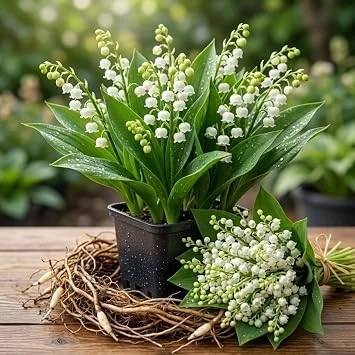
5 Lily of the Valley Bare Root Plant Rhizomes, Fragrant White May Bells, 4-6 Inch
Original price was: $35.30.$17.65Current price is: $17.65.
Bring enchanting fragrance and beauty to your garden with this set of 5 Lily of the Valley bare roots. Each rhizome measures 4-6 inches long, ready to produce delicate white bell-shaped flowers known as May Bells plant in spring. Perfect for shaded garden beds, borders, or containers, these easy-to-plant rhizomes establish quickly for a lush display.
-
USDA Hardiness Zone
USDA zones 2-7 -
Soil Type
Well-draining, rich, organic soil -
Sunlight Exposure
Partial to full shade -
Expected Planting Period
Fall or early spring

You can track your order HERE
Oct 30
Nov 04 - Nov 06
Nov 09 - Nov 13
Shipping and return policies: Our Alive & Thrive Guarantee covers issues with your plants within the first 30 days. Reach out to us. Our team will answer your questions and help you find the plants that are truly suitable for your environment, climate, and personal preferences.

Overview
Transform your garden into a fragrant sanctuary with these exquisite lily of the valley bare roots. This offering includes 5 fresh, high-quality plant rhizomes, each measuring a healthy 4 to 6 inches long, ensuring a robust start for your garden. The lily of the valley bare roots are ideal for creating a charming, naturalized look in shaded areas. Known scientifically as Convallaria majalis, this beloved perennial is cherished for its delicate, bell-shaped white flowers and intensely sweet, captivating fragrance that heralds the arrival of spring. These easy-to-plant bare roots are perfect for gardeners looking to establish a beautiful, low-maintenance groundcover or add a touch of classic elegance to their outdoor spaces. Prepare to enjoy a stunning display of white blossoms and lush green foliage year after year with proper care.
The fragrant lily of the valley is a timeless choice, celebrated globally for its beauty and aromatic qualities. Its common name, May Bells plant, perfectly captures its blooming season and characteristic flower shape. These rhizomes are shipped bare root, making them simple to plant directly into your garden beds, borders, or containers with minimal fuss. They quickly establish themselves, allowing you to enjoy their enchanting presence sooner. Whether you’re an experienced gardener or just starting, these rhizomes provide a reliable and rewarding planting experience, promising a delightful return each spring.
Key Benefits
Cultivating lily of the valley bare roots offers numerous advantages for any garden, enhancing both aesthetics and sensory experience. Their ease of growth and captivating features make them a highly desirable addition.
- Enchanting Fragrance: These plants produce exquisitely sweet, delicate white bell-shaped flowers that release a classic, enchanting spring fragrance. The aroma of fragrant lily of the valley can transform your garden into a sensory delight.
- Easy to Plant & Establish: Arriving as bare root rhizomes, they are incredibly simple to plant in garden beds, borders, or containers, requiring minimal preparation and establishing quickly. This makes them perfect for gardeners of all skill levels.
- Beautiful Spring Blooms: Enjoy a breathtaking display of pure white blossoms in spring, adding a touch of elegance and fresh color to your landscape. The iconic May Bells plant is a true sign of the season.
- Shade Tolerant: Lily of the Valley thrives in shaded to partially shaded areas, making it an ideal choice for woodland gardens, under trees, or in other spots where many plants struggle to grow.
- Low Maintenance Perennial: Once established, these plants are remarkably low maintenance, returning year after year with minimal intervention, providing long-lasting beauty and fragrance.
- Versatile Landscaping: Perfect for groundcover, borders, containers, or naturalizing in woodland settings, offering flexibility in garden design.
- Robust Growth: Each of the 5 bare root rhizomes measures 4-6 inches long, providing a healthy and well-established start for vigorous growth and abundant blooms.
Plant Care & Growing Tips
Caring for your lily of the valley bare roots is straightforward, especially given their preference for shaded environments. To ensure a thriving display of fragrant lily of the valley, pay close attention to their light, water, and soil requirements. These plants flourish in locations that receive partial to full shade, making them perfect for under deciduous trees or on the north side of buildings where direct sunlight is limited. While they can tolerate some morning sun, intense afternoon sun can scorch their delicate leaves. For optimal growth, aim for areas that receive 2-4 hours of dappled sunlight or consistent shade throughout the day.
When it comes to watering, Convallaria majalis prefers consistently moist, but not waterlogged, soil. Water regularly, especially during dry spells and in their first growing season, to help them establish a strong root system. Reduce watering once established, allowing the top inch of soil to dry slightly between waterings, but never let the soil completely dry out. Well-draining, rich, organic soil is crucial. Amend heavy clay soils with compost or peat moss to improve drainage and fertility. A slightly acidic to neutral pH (6.0-7.0) is ideal for these plants. They are quite hardy, typically thriving in USDA zones 2-7, making them suitable for a wide range of climates, and they can tolerate colder temperatures if protected with mulch.
Fertilization is generally not heavily required for the May Bells plant. A light application of a balanced, slow-release granular fertilizer in early spring can encourage more vigorous growth and blooming. Alternatively, top-dressing with a layer of compost each spring can provide sufficient nutrients. Watch out for common issues like slugs and snails, which can be deterred with organic baits or barriers. While generally disease-resistant, ensure good air circulation to prevent fungal issues. Dividing crowded clumps every few years in the fall can rejuvenate the plants and prevent them from becoming too dense, promoting healthier blooms and foliage. Following these simple lily of the valley care tips will ensure a beautiful and fragrant garden for years to come.
Size & Details
This product includes 5 Lily of the Valley bare roots, each carefully selected for its health and vigor. Each rhizome measures approximately 4 to 6 inches long, providing a substantial base for rapid establishment and growth. These bare root rhizomes are ready for immediate planting upon arrival and are designed to quickly develop into robust plants. Expect these plants to reach a mature height of 6-12 inches (15-30 cm) and spread to form dense colonies over time, making them excellent groundcover for shaded areas. They are known for their moderate to fast growth rate once established, rapidly filling in garden spaces.
The delicate white bell-shaped flowers typically emerge in mid to late spring, usually in May, giving them their charming nickname, May Bells plant. These blooms are followed by small, ornamental red berries in late summer, which add visual interest but are toxic if ingested. The plants are shipped dormant and bare root, which is the optimal way to transport and plant them, minimizing transplant shock and ensuring a successful transition to your garden. With proper lily of the valley care, you can expect these rhizomes to mature and produce their iconic fragrant blooms within their first or second season.
Frequently Asked Questions
- Q: How big does this plant get? A: Lily of the Valley typically grows to a height of 6-12 inches (15-30 cm) and will spread to form dense groundcover over time. The rhizomes included are 4-6 inches long to give them a healthy start.
- Q: Is this an indoor or outdoor plant? A: Lily of the Valley bare roots are primarily intended for outdoor planting. They thrive in shaded garden beds, borders, or containers outdoors, but can be forced indoors for temporary blooms.
- Q: How much sunlight does it need? A: This plant prefers partial to full shade. It performs best in areas with dappled sunlight or consistent shade throughout the day, avoiding harsh afternoon sun which can damage its leaves.
- Q: Is this plant easy to care for? A: Yes, lily of the valley bare roots are considered low-maintenance once established. They are very hardy and require minimal attention beyond consistent watering and occasional fertilization, making them great for beginners.
- Q: What condition will it arrive in? A: Your lily of the valley bare roots will arrive dormant and bare root, carefully packaged to ensure they are healthy and ready for planting. This is the optimal shipping method for rhizomes.
- Q: How long until it blooms? A: With proper lily of the valley care, you can typically expect your fragrant lily of the valley to bloom in the first or second spring after planting, usually in May.
- Q: When is the best time to plant these rhizomes? A: The best time to plant lily of the valley bare roots is in the fall or early spring, allowing them to establish their root system before the heat of summer or the cold of winter.
- Q: Will it survive winter in my zone? A: Lily of the Valley is very cold hardy, typically thriving in USDA zones 2-7. It will go dormant in winter and re-emerge in spring, making it an excellent perennial choice for many climates.
- Q: Are the berries of the May Bells plant edible? A: No, all parts of the lily of the valley plant, including the attractive red berries that follow the flowers, are toxic if ingested and should not be consumed by humans or pets.
- Q: Can I grow Convallaria majalis in containers? A: Yes, lily of the valley bare roots can be successfully grown in containers, especially if you want to control their spread or place them on a shaded patio. Ensure containers have good drainage.
Be the first to review “5 Lily of the Valley Bare Root Plant Rhizomes, Fragrant White May Bells, 4-6 Inch”
People Also Viewed








HousePlants
Red Christmas Cactus Live Plant – Schlumbergera truncata – 4-6″ Tall, 4″ Pot – Indoor Holiday Plant
Sold 85 products
Original price was: $35.98.$17.99Current price is: $17.99.




HousePlants
ZZ Plant Black Raven Live Plant – Zamioculcas Zamiifolia – 4 inch & 6 inch Pot – Indoor Houseplant
Sold 71 products
From $28.98









Reviews
There are no reviews yet.