
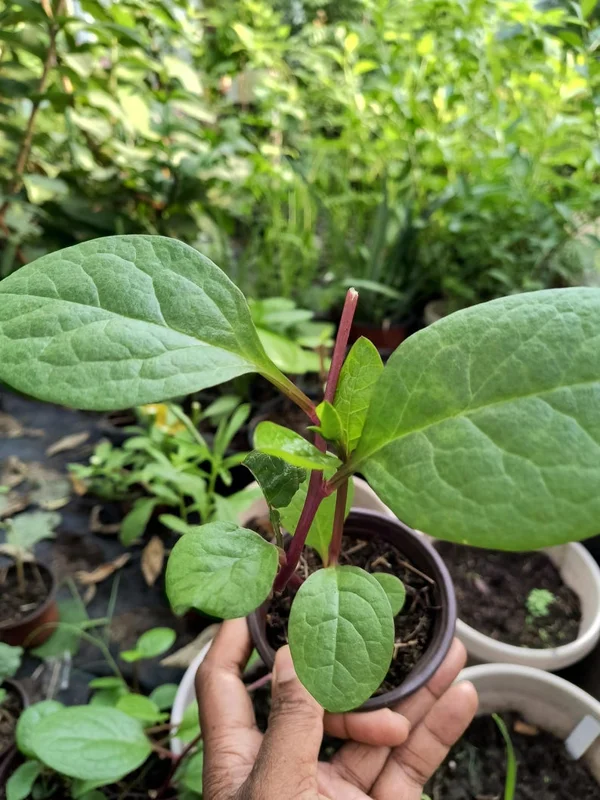
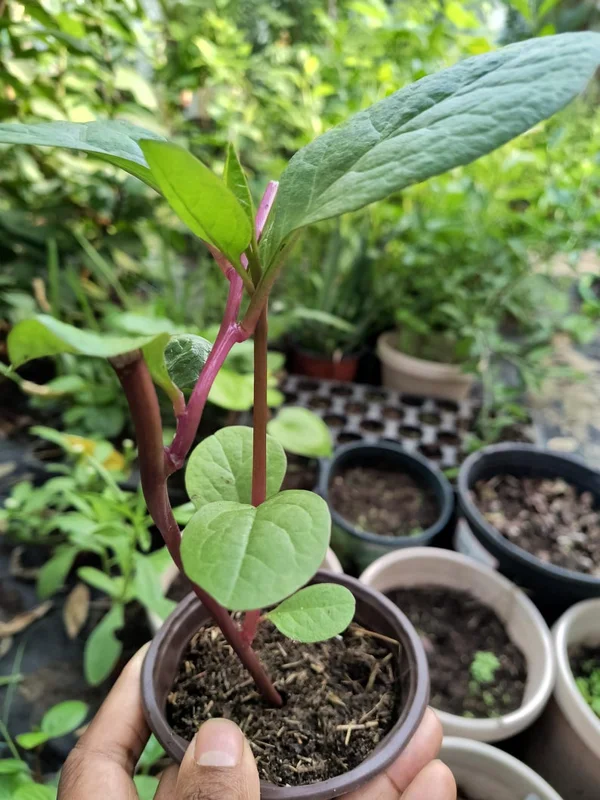
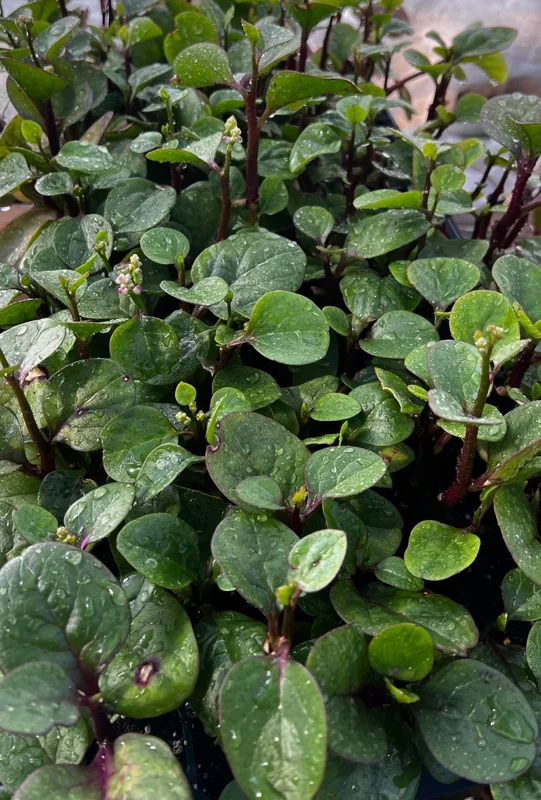
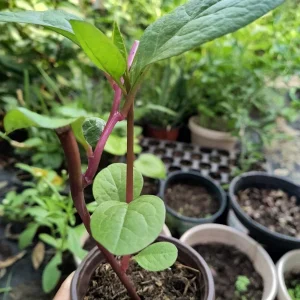
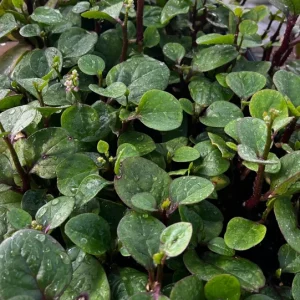
Purple Organic Malabar Spinach Live Plant – 4-6 Inch in 4 Inch Pot – Edible Vine
Original price was: $29.99.$24.99Current price is: $24.99.
Cultivate your own vibrant and healthy purple malabar spinach live plant. This fast-growing, heat-loving vine, also known as organic malabar spinach, is an excellent addition to any edible garden. It’s perfect for trellises and containers, providing continuous harvests of nutrient-rich leaves.
-
USDA Hardiness Zone
USDA zones 9-11 (as perennial), 2-8 (as annual) -
Soil Type
Rich, well-draining soil -
Sunlight Exposure
Full sun to partial shade -
Expected Planting Period
Spring to early summer

You can track your order HERE
Sep 20
Sep 25 - Sep 27
Sep 30 - Oct 04
Shipping and return policies: Our Alive & Thrive Guarantee covers issues with your plants within the first 30 days. Reach out to us. Our team will answer your questions and help you find the plants that are truly suitable for your environment, climate, and personal preferences.

Overview
Bring the joy of fresh, homegrown produce to your garden with this vibrant purple malabar spinach live plant. Unlike traditional spinach, Malabar spinach (Basella alba ‘Rubra’) thrives in warm climates, making it an ideal choice for summer gardens where other greens might wilt. This vigorous, ornamental, and edible vine produces thick, succulent leaves and stems with a beautiful purplish hue, adding visual appeal to your landscape while offering a continuous supply of nutritious greens. Known for its mild, slightly peppery flavor and mucilaginous texture, it’s a versatile ingredient in salads, stir-fries, and soups. Our organic malabar spinach plant comes ready to grow, providing a healthy start to your edible gardening endeavors.
Key Benefits
Adding a purple malabar spinach live plant to your garden offers numerous advantages, from culinary delight to ease of cultivation:
- Nutrient-Rich Edible Greens: Malabar spinach is packed with vitamins A and C, iron, and calcium, making it a healthy addition to your diet. Its succulent leaves offer a unique texture and mild flavor that can be enjoyed raw or cooked.
- Heat-Tolerant Growth: Unlike cool-season spinach, this plant thrives in hot, humid conditions, producing abundant leaves throughout the summer when other greens struggle. This makes it an incredibly reliable crop for warm climates.
- Ornamental Appeal: The beautiful purplish stems and glossy green leaves of Basella alba ‘Rubra’ add an attractive, vining element to your garden. It can be grown on trellises, arbors, or fences, serving as both a food source and a decorative plant.
- Continuous Harvests: With proper care, the purple malabar spinach live plant can be harvested regularly, providing a steady supply of fresh leaves for many months. Simply snip off the leaves and young stems, and the plant will continue to produce.
- Easy to Grow: This resilient plant is relatively low-maintenance, making it suitable for both experienced gardeners and beginners looking to grow malabar spinach. It’s forgiving and adapts well to various growing conditions.
- Supports Organic Gardening: Our plant provides the basis for truly organic malabar spinach, allowing you to cultivate fresh, chemical-free produce right in your backyard.
- Versatile Culinary Use: The leaves and tender stems can be used in a wide range of dishes, from fresh salads and sandwiches to cooked applications like stir-fries, curries, and soups, offering a healthy substitute for traditional spinach.
Plant Care & Growing Tips
To ensure your purple malabar spinach live plant flourishes, understanding its specific care requirements is key. This tropical vine thrives in warmth and humidity. For optimal growth and abundant yields, choose a location that receives full sun to partial shade. In very hot climates, some afternoon shade can prevent leaf scorching, but at least 6 hours of direct sunlight daily is ideal. Plant in rich, well-draining soil that is consistently moist but not waterlogged. Amend heavy clay soils with organic matter to improve drainage and aeration.
Watering is crucial, especially during dry spells. Keep the soil consistently moist, but avoid overwatering, which can lead to root rot. A layer of mulch around the base of the plant can help retain soil moisture and suppress weeds. Malabar spinach is a vigorous climber, so provide a sturdy trellis, fence, or stakes for it to twine around. Regular feeding with a balanced organic fertilizer every 3-4 weeks will promote lush growth. Pinch back the growing tips to encourage bushier growth and more side shoots, which means more leaves for harvesting. Pay attention to signs of pests, though Malabar spinach is generally quite resistant. Understanding how to grow malabar spinach successfully will yield plentiful harvests.
This plant is not frost-tolerant and will die back with the first freeze. In cooler climates, it can be grown as an annual or overwintered indoors in a pot. For those interested in botanical terms, its scientific name, basella alba rubra, highlights its distinctive red stems. Regularly harvesting the leaves and young stems will encourage continuous production and maintain the plant’s vigor. If you’re looking for low-maintenance edible greens that perform well in summer, knowing about malabar spinach care is essential.
Size & Details
This offering is for one purple malabar spinach live plant, typically measuring 4-6 inches in height from the soil line, and shipped in a 4-inch nursery pot. The plant is well-rooted and ready for transplanting into a larger container or directly into your garden bed. Malabar spinach is a fast-growing vine that can reach lengths of 6-10 feet or more in a single growing season when provided with adequate support and optimal conditions. Its growth rate is rapid, often producing harvestable leaves within weeks of transplanting. The plant will arrive healthy and carefully packaged to ensure its safe journey to your home, ready for you to begin your journey to grow malabar spinach.
Frequently Asked Questions
- Q: How big does this plant get? A: The purple malabar spinach live plant is a vigorous vine that can reach lengths of 6-10 feet or more in a single growing season. It’s best grown with a trellis or support structure.
- Q: Is this an indoor or outdoor plant? A: Malabar spinach is primarily an outdoor plant, thriving in warm, sunny conditions. In regions with cold winters, it can be grown as an annual or brought indoors before the first frost.
- Q: How much sunlight does it need? A: This plant prefers full sun, ideally receiving at least 6 hours of direct sunlight per day. In very hot climates, it can tolerate partial afternoon shade.
- Q: Is this plant easy to care for? A: Yes, Malabar spinach is considered relatively easy to care for. It’s heat-tolerant and generally pest-resistant, making malabar spinach care straightforward for most gardeners.
- Q: Can I use Malabar spinach in cooking? A: Absolutely! The leaves and tender stems of organic malabar spinach are delicious and can be used raw in salads or cooked in stir-fries, soups, and curries, similar to traditional spinach.
- Q: What condition will it arrive in? A: Your purple malabar spinach live plant will arrive well-packaged, healthy, and actively growing in a 4-inch pot, ready for transplanting.
- Q: Will it survive winter in my zone? A: Malabar spinach is a tropical plant and is not frost-tolerant. It will not survive freezing temperatures. It is typically grown as an annual in USDA zones below 9 or 10.
- Q: What is the best way to harvest the leaves? A: To harvest, simply snip off the leaves and tender young stems. Regular harvesting encourages the plant to produce more foliage.
- Q: What kind of soil does it prefer? A: It prefers rich, well-draining soil that is kept consistently moist. Amending with compost or other organic matter is beneficial.
- Q: What is the scientific name for this plant? A: The scientific name for this specific variety is Basella alba ‘Rubra’, often referred to as basella alba rubra.
Be the first to review “Purple Organic Malabar Spinach Live Plant – 4-6 Inch in 4 Inch Pot – Edible Vine”
People Also Viewed
Sold 57 products
Original price was: $31.90.$16.90Current price is: $16.90.
Sold 78 products
$57.47
Sold 64 products
Original price was: $213.58.$128.14Current price is: $128.14.
Sold 99 products
Original price was: $62.42.$37.46Current price is: $37.46.
Sold 54 products
Original price was: $90.76.$45.38Current price is: $45.38.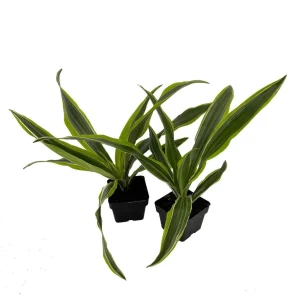
HousePlants
Dracaena Gold Star Dragon Tree Live Plant – Easy Care Indoor Houseplant – 2 Pack 3″ Pots
Sold 53 products
Original price was: $31.96.$15.98Current price is: $15.98.

Sold 53 products
Original price was: $339.80.$169.90Current price is: $169.90.
Sold 86 products
Original price was: $213.58.$128.14Current price is: $128.14.

Sold 95 products
From $4.34

Sold 84 products
Original price was: $115.80.$57.90Current price is: $57.90.
Sold 64 products
Original price was: $56.00.$44.80Current price is: $44.80.
Sold 67 products
Original price was: $55.96.$27.98Current price is: $27.98.
Sold 95 products
Original price was: $27.90.$16.74Current price is: $16.74.
Sold 52 products
From $4.64
Sold 93 products
$47.47
Sold 90 products
Original price was: $80.00.$40.00Current price is: $40.00.
Sold 51 products
$29.99
Sold 55 products
Original price was: $9.16.$6.58Current price is: $6.58.




Reviews
There are no reviews yet.