
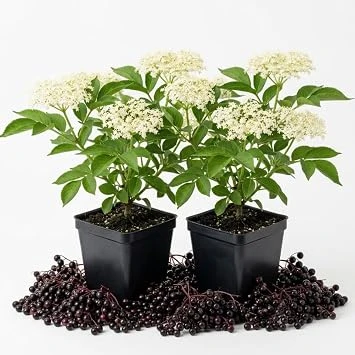
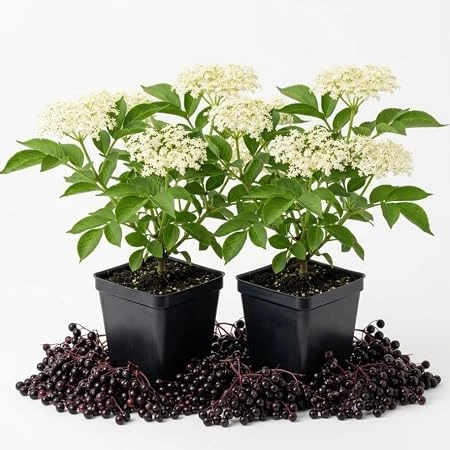
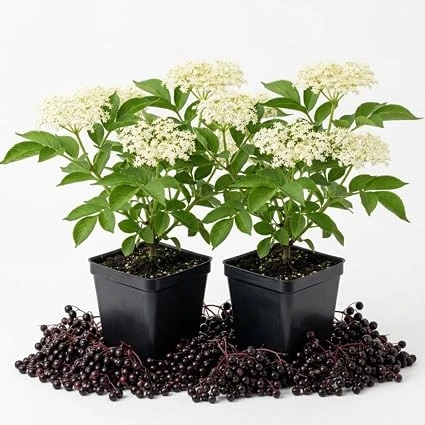
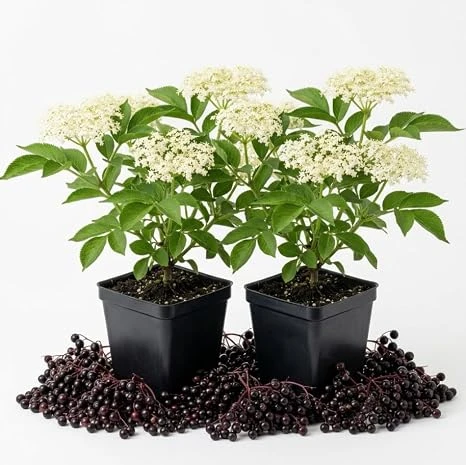
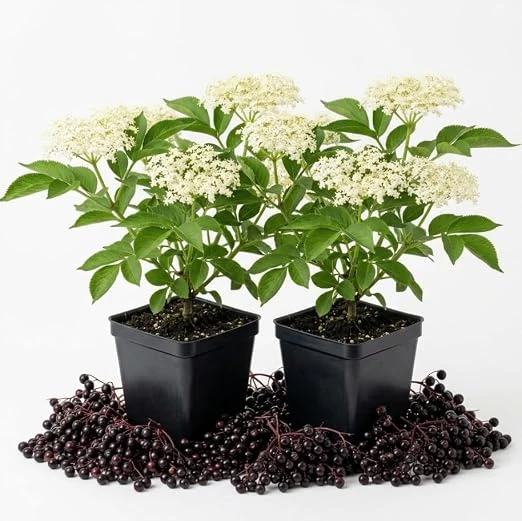
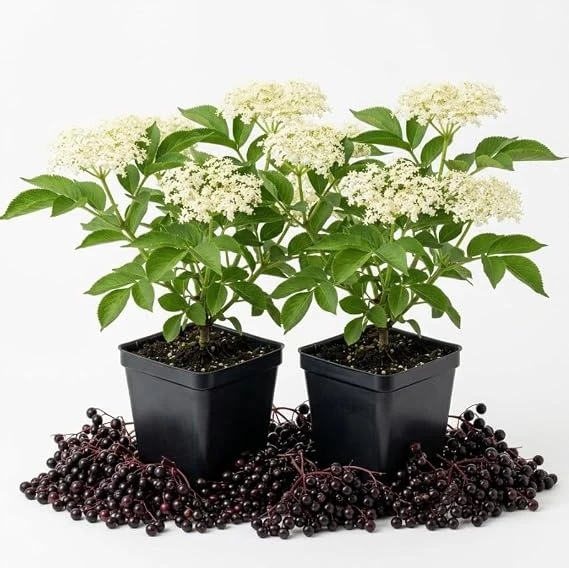
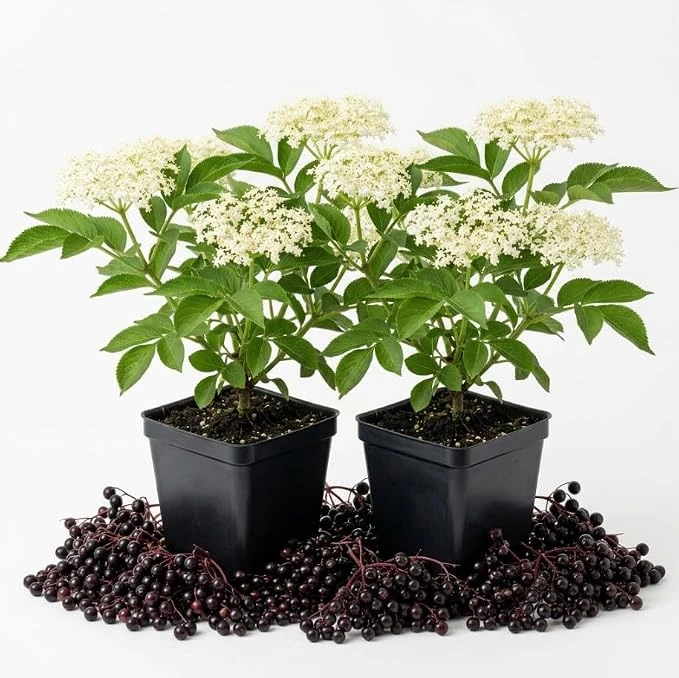
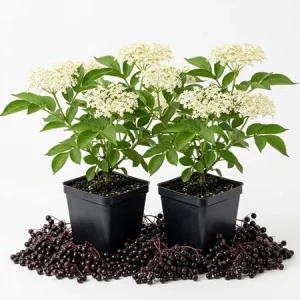
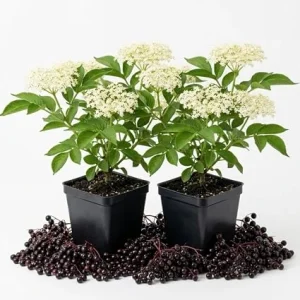
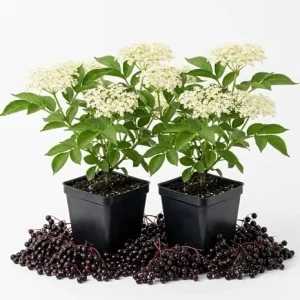
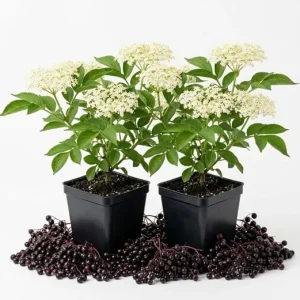
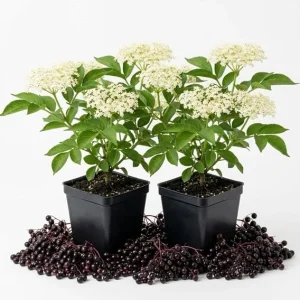
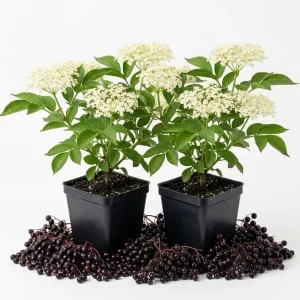
Pack of 2 Black Elderberry Live Plants – American Berry Shrubs 7-12″ Tall Quart Pot
Original price was: $69.98.$34.99Current price is: $34.99.
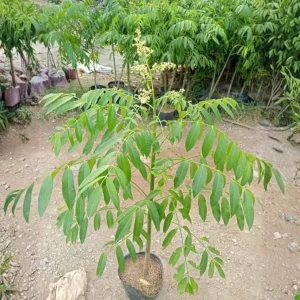
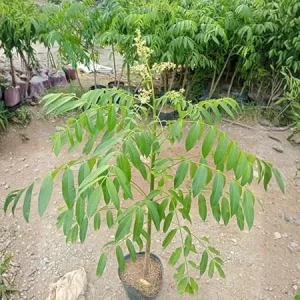
Cultivate your own delicious and healthful berries with this pack of black elderberry live plant specimens. Each american elderberry shrub arrives healthy and established in a quart-sized pot, ready to thrive in your garden or landscape. Known for its dark, nutrient-rich berries, this plant is perfect for hedgerows or ornamental planting.
-
USDA Hardiness Zone
USDA Zones 3-9 -
Soil Type
Well-draining, consistently moist soil -
Sunlight Exposure
Full sun to partial shade -
Expected Planting Period
Spring to early summer

You can track your order HERE
Oct 30
Nov 04 - Nov 06
Nov 09 - Nov 13
Shipping and return policies: Our Alive & Thrive Guarantee covers issues with your plants within the first 30 days. Reach out to us. Our team will answer your questions and help you find the plants that are truly suitable for your environment, climate, and personal preferences.

Overview
Discover the joy of growing your own superfruits with this exceptional pack of black elderberry live plant specimens. Each order includes two vigorous American Black Elderberry (Sambucus nigra) plants, meticulously grown and prepared for your garden. These robust shrubs are not only a beautiful addition to any landscape but also a source of highly prized, dark berries. The black elderberry live plant is renowned for its resilience and adaptability, making it an excellent choice for both novice and experienced gardeners looking to enhance their outdoor space with a productive and ornamental plant. Originating from North America, the American Elderberry is a deciduous shrub that offers seasonal interest, from its creamy white flower clusters in late spring to its abundant, deep purple-black berries in late summer.
Known by many as an american elderberry shrub, this plant is celebrated for its dual appeal: its ornamental beauty and its prolific fruit production. These healthy plants are shipped in quart-sized pots, each standing between 7 to 12 inches tall, ensuring they are well-established and ready for successful transplanting upon arrival. Whether you’re aiming to create a naturalized area, a berry-producing hedge, or simply add a distinctive specimen to your yard, this sambucus nigra plant offers versatility and value. Embrace sustainable living and enjoy the satisfaction of harvesting your own elderberries, perfect for jams, jellies, pies, and beverages.
Key Benefits
Adding a black elderberry live plant to your garden offers a multitude of advantages, enhancing both the aesthetics and productivity of your outdoor environment. These plants are a fantastic investment for any gardener.
- Abundant Berry Production: Enjoy a generous harvest of dark, nutrient-rich elderberries, perfect for culinary uses such as making jams, jellies, syrups, and pies. The prolific nature of the american elderberry shrub ensures a bountiful yield for your family.
- Ornamental Appeal: Beyond its fruit, the plant features attractive creamy white flower clusters in late spring to early summer, followed by striking dark berries, providing seasonal visual interest in your landscape. It serves as a beautiful backdrop or a focal point.
- Wildlife Attraction: The berries are a favorite food source for various bird species, making your garden a lively habitat and contributing to local biodiversity. This natural interaction enhances the ecological balance of your yard.
- Adaptable & Resilient: These robust plants thrive in a wide range of soil types and moisture levels and are tolerant of various growing conditions, making them a low-maintenance choice for many climates. Its hardiness simplifies care.
- Versatile Landscaping Use: Ideal for creating natural hedgerows, adding to perennial borders, or planting in edible landscapes. The sambucus nigra plant can be used to define spaces or provide privacy.
- Medicinal Properties: Elderberries are widely recognized for their potential health benefits, often used in traditional remedies for their antioxidant and immune-boosting properties. Growing your own provides fresh access to these benefits.
- Established & Ready to Grow: Each plant arrives healthy and well-established in a quart-sized pot, standing 7-12 inches tall, ensuring a strong start in your garden. This significantly increases the chances of successful growth.
Plant Care & Growing Tips
Caring for your black elderberry live plant is relatively straightforward, as these plants are known for their hardiness and adaptability. For optimal growth and fruit production, understanding their basic needs is key. Elderberries thrive in a location that receives full sun to partial shade. Full sun (at least 6 hours of direct sunlight daily) will generally lead to more abundant berry production, while partial shade (4-6 hours of sun, especially afternoon shade in hot climates) can help protect the plant from stress. They adapt well to a wide range of soil types but prefer consistently moist, well-draining soil with a pH between 5.5 and 6.5. Amending heavy clay soils with organic matter can improve drainage and aeration, benefiting the root system of your american elderberry shrub.
Watering is crucial, especially during dry spells and in the plant’s first year after planting. Aim for consistent moisture, but avoid waterlogging, which can lead to root rot. Once established, elderberries are moderately drought-tolerant but will produce better fruit with regular watering. Fertilize your sambucus nigra plant in early spring with a balanced, slow-release granular fertilizer or organic compost to support vigorous growth and fruit development. Pruning is best done in late winter or early spring while the plant is dormant. Remove any dead, damaged, or weak canes, and thin out older, less productive stems to encourage new growth and better air circulation. Elderberries produce fruit on one-year-old wood, so a rotational pruning method where you remove the oldest canes each year can maintain productivity. These plants are generally hardy in USDA Zones 3-9, tolerating a wide range of temperatures.
Size & Details
This offering includes a pack of two high-quality black elderberry live plant specimens, ensuring you have a pair of robust growers for your garden. Each plant arrives healthy and well-established in its own quart-sized pot, providing a strong root system ready for transplanting. The plants typically stand between 7 to 12 inches tall at the time of shipment, offering a good balance of maturity and ease of handling for planting. The American Black Elderberry (Sambucus nigra) is a fast-growing shrub that can reach mature heights of 5 to 12 feet tall and spread 5 to 8 feet wide, depending on growing conditions and pruning practices. Expect these elderberry berry plants to begin producing fruit within 1-2 years after planting, with full production typically achieved within 3-5 years. They are shipped as actively growing, potted plants, ensuring minimal stress during transit and a smooth transition to your landscape. The vigorous growth habit means they will quickly establish and fill out, providing both ornamental beauty and a bountiful harvest.
Frequently Asked Questions
- Q: How big does this plant get? A: The black elderberry live plant can grow to a mature height of 5 to 12 feet tall and spread 5 to 8 feet wide. Its final size depends on growing conditions, climate, and how regularly it is pruned.
- Q: What size pot does it come in? A: Each plant in this pack arrives healthy and well-established in a quart-sized pot. This ensures a strong root system and a smooth transition to your garden or larger container.
- Q: Is this an indoor or outdoor plant? A: The American Elderberry is primarily an outdoor plant, best suited for gardens and landscapes. It thrives in various outdoor conditions and is a deciduous shrub.
- Q: How much sunlight does it need? A: This american elderberry shrub prefers full sun to partial shade. For the best fruit production, aim for at least 6 hours of direct sunlight per day. It can tolerate some shade, especially in hotter climates.
- Q: Is this plant easy to care for? A: Yes, elderberries are known for being relatively low-maintenance and adaptable, making them a good choice for gardeners of all experience levels. Consistent watering and annual pruning are the main requirements.
- Q: What condition will it arrive in? A: Your sambucus nigra plant will arrive healthy and well-established in its quart-sized pot, with foliage intact and ready for planting. We take care to ensure safe and secure shipping.
- Q: Can I use elderberry fruit in cooking? A: Absolutely! Elderberries are widely used in cooking for jams, jellies, pies, syrups, and even wine. Ensure berries are cooked before consumption. This is a great reason to buy elderberry plant and grow your own.
- Q: How long until it blooms and produces fruit? A: Elderberry plants typically begin to bloom and produce fruit within 1-2 years after planting, with full production generally starting around 3-5 years.
- Q: Will it survive winter in my zone? A: The American Elderberry is quite hardy and thrives in USDA Zones 3-9. It is well-adapted to cold winters and will enter dormancy, returning with new growth in spring.
- Q: What type of soil is best for this plant? A: Elderberries are adaptable but prefer consistently moist, well-draining soil with a slightly acidic to neutral pH (5.5-6.5). Amending with organic matter is beneficial.
Be the first to review “Pack of 2 Black Elderberry Live Plants – American Berry Shrubs 7-12″ Tall Quart Pot”
People Also Viewed


Sold 91 products
Original price was: $69.99.$59.99Current price is: $59.99.

Sold 56 products
Original price was: $30.31.$26.36Current price is: $26.36.










Reviews
There are no reviews yet.