
Chinese Chestnut Live Plant – Blight-Resistant Nut Tree, Quart Pot, Outdoor
Original price was: $67.96.$33.98Current price is: $33.98.
Introduce a rewarding and productive addition to your landscape with our Chinese Chestnut live plant. Shipped in a convenient quart pot, this deciduous tree is ready to establish itself in your garden and begin its journey towards yielding delicious, sweet nuts. Originating from China, the blight resistant chestnut (Castanea mollissima) is highly prized for its resistance to chestnut blight, making it a robust and reliable choice for home growers.
-
USDA Hardiness Zone
USDA Zones 4-8 -
Soil Type
Well-draining, slightly acidic to neutral (pH 5.5-7.0) -
Sunlight Exposure
Full sun (6-8+ hours daily) -
Expected Planting Period
Early spring or fall

You can track your order HERE
Feb 28
Mar 05 - Mar 07
Mar 10 - Mar 14
Shipping and return policies: Our Alive & Thrive Guarantee covers issues with your plants within the first 30 days. Reach out to us. Our team will answer your questions and help you find the plants that are truly suitable for your environment, climate, and personal preferences.

Overview
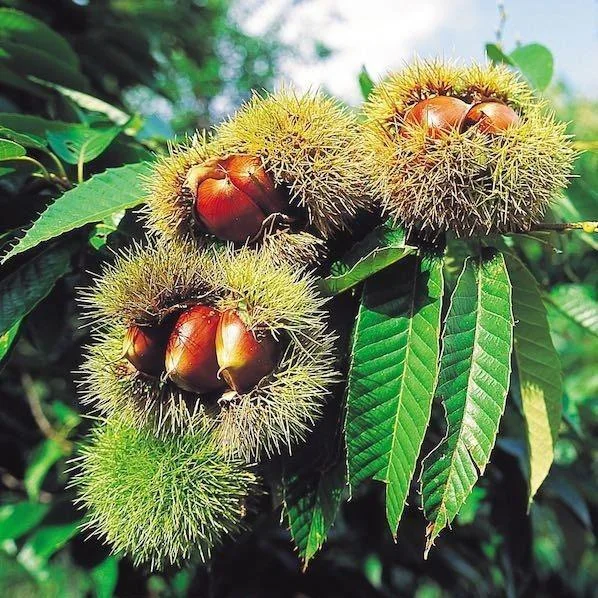
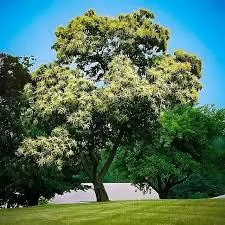
Introduce a rewarding and productive addition to your landscape with our Chinese Chestnut live plant. Shipped in a convenient quart pot, this deciduous tree is ready to establish itself in your garden and begin its journey towards yielding delicious, sweet nuts. Originating from China, the Chinese Chestnut live plant (Castanea mollissima) is highly prized for its resistance to chestnut blight, making it a robust and reliable choice for home growers. Unlike its American counterpart, this species is known for producing abundant crops of flavorful, easily peeled nuts. Our Chinese Chestnut live plant offers an excellent opportunity to grow your own sustainable food source while enhancing your property with a beautiful, broad-crowned tree that can reach up to 66 feet tall at maturity.
The care for this edible nut tree is relatively straightforward, making it an accessible option for gardeners looking to introduce a productive shade tree. This tree is a fantastic choice for those aiming to grow Chinese Chestnut and enjoy the seasonal bounty of its nuts. Each plant is carefully nurtured to ensure it arrives healthy and ready for planting, providing you with a head start on cultivating this valuable species.
Key Benefits
Adding a Chinese Chestnut live plant to your garden offers a multitude of benefits, from its delicious nuts to its ecological contributions. This versatile tree is a true asset for any landscape, providing both aesthetic appeal and practical value, and is known for being a blight resistant chestnut variety.
- Abundant Edible Nuts: Enjoy a yearly harvest of sweet, flavorful chestnuts that are ideal for roasting, baking, or eating fresh. These nuts are a healthy and delicious food source, providing a sustainable food source directly from your backyard when you grow Chinese Chestnut.
- Blight Resistance: Unlike other chestnut varieties, the Chinese Chestnut live plant is highly resistant to chestnut blight, ensuring a healthier and more productive tree for years to come. This resilience makes it a superior choice for long-term growth and a truly blight resistant chestnut.
- Attractive Deciduous Foliage: The tree boasts a beautiful broad crown and lush green leaves that turn vibrant yellow in the fall, offering year-round visual interest to your garden. It provides excellent shade during warmer months and enhances your landscape.
- Wildlife Attraction: The nuts provide a valuable food source for local wildlife, such as deer and squirrels, making it an excellent choice for supporting biodiversity in your area and attracting natural visitors. This adds to the ecological value of your edible nut tree.
- Good for Landscaping: Its majestic size and broad crown make it a prominent and beautiful specimen tree, ideal for larger yards or as part of a food forest design. It adds significant aesthetic value to any property.
- Long Lifespan: A well-cared-for Castanea mollissima can live for many decades, providing generations with a sustainable source of nuts and ample shade. It’s an investment that pays dividends for years.
- Soil Improvement: As a deciduous tree, its falling leaves contribute organic matter to the soil, improving its health and fertility over time. This natural mulching benefits the surrounding ecosystem.
Plant Care & Growing Tips
To ensure your Chinese Chestnut live plant thrives, proper care and attention to its growing environment are essential. These trees are relatively hardy but will perform best with optimal conditions. They prefer a location with full sun, meaning at least 6-8 hours of direct sunlight per day. Good air circulation is also important to prevent fungal issues. When planting, ensure the soil is well-draining; Chinese Chestnuts do not tolerate soggy roots. A slightly acidic to neutral pH (around 5.5-7.0) is ideal. Amending heavy clay soils with organic matter can improve drainage and ensure a healthy start for your edible nut tree.
Watering is crucial, especially during the first few years after planting. Keep the soil consistently moist but not waterlogged. Deep watering once or twice a week, depending on rainfall and temperature, is generally sufficient. Once established, the tree is more drought-tolerant but will benefit from supplemental watering during dry spells, particularly when nuts are developing. Fertilize young trees with a balanced slow-release fertilizer in early spring. Avoid high-nitrogen fertilizers as they can promote leafy growth at the expense of nut production. Pruning should focus on removing dead, damaged, or crossing branches to maintain a strong structure and good air circulation. Understanding proper care will help you successfully grow Chinese Chestnut trees.
This Castanea mollissima is suitable for USDA Zones 4-8. Protect young trees from deer, as they can browse on tender shoots. Consider planting more than one tree to ensure adequate pollination and a larger harvest, as while some varieties are self-fertile, cross-pollination generally leads to better yields for this blight resistant chestnut.
Size & Details
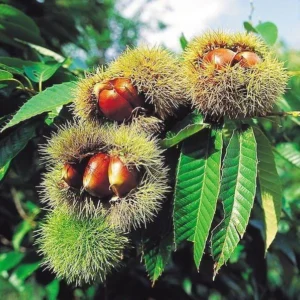
This offering includes one Chinese Chestnut live plant, shipped in a quart pot, ready for planting. The plant will have established roots and foliage, providing a strong start for your garden. At maturity, the Chinese Chestnut tree can reach impressive heights of 20 meters (66 feet) with a broad, spreading crown, offering significant shade and a substantial harvest. The leaves are alternate, simple, and have a distinctive toothed margin, typically growing 4-8.5 inches long and 1.75-3.25 inches broad. The fruit, containing two or three glossy brown nuts, is encased in a densely spiny cupule, about 1.5-3.25 inches in diameter.
The nuts themselves are typically 0.75-1.25 inches in diameter on wild trees, often larger in cultivated varieties. The scientific name, mollissima, refers to the softly downy shoots and young leaves. While the initial growth rate can be moderate, once established, these trees grow steadily, reaching nut production within 3-5 years. Planting this edible nut tree is an investment in future harvests and a beautiful landscape feature.
Frequently Asked Questions
- Q: How big will the Chinese Chestnut tree get? A: The Chinese Chestnut live plant can grow up to 66 feet (20 meters) tall with a broad crown at maturity, making it a significant landscape tree suitable for larger spaces.
- Q: What size pot does the plant come in? A: Each Chinese Chestnut live plant is shipped in a quart-sized nursery pot, ensuring the roots are well-established and ready for transplanting into your garden.
- Q: Is this an indoor or outdoor plant? A: The Chinese Chestnut live plant is an outdoor tree, best suited for planting directly in the ground where it can reach its full potential. It requires ample space and full sunlight.
- Q: How much sunlight does it need? A: Chinese Chestnut trees thrive in full sun, requiring at least 6-8 hours of direct sunlight per day for optimal growth and nut production. This is crucial if you want to successfully grow Chinese Chestnut.
- Q: Is this plant easy to care for? A: Yes, care for this Castanea mollissima is considered relatively easy once the tree is established. It requires consistent watering in its early years and benefits from well-draining soil and full sun. It’s a great edible nut tree for many gardeners.
- Q: Is it good for beginners who want to grow Chinese Chestnut? A: Absolutely! Its blight resistant chestnut characteristics and relatively low maintenance make it a great choice for beginner gardeners looking to cultivate an edible nut tree.
- Q: What condition will it arrive in? A: Your Chinese Chestnut live plant will arrive as a healthy, rooted plant in a quart pot, ready for planting. Please note that plants are shipped in a dormant state during winter months, but will leaf out with proper care.
- Q: How long until it produces nuts? A: Chinese Chestnut trees typically begin producing nuts within 3-5 years after planting, with increasing yields as the tree matures. This makes the Chinese Chestnut live plant a rewarding long-term investment.
- Q: When is the best time to plant a Chinese Chestnut? A: The best time to plant your Chinese Chestnut live plant is in early spring or fall, allowing the roots to establish before extreme summer heat or winter cold.
- Q: What USDA zones is this plant suitable for? A: This Castanea mollissima is hardy in USDA Zones 4-8, making it suitable for a wide range of climates across the United States.
- Q: Does this tree need more than one plant for pollination? A: While some Chinese Chestnut varieties can self-pollinate, planting two or more trees generally leads to significantly better pollination and higher nut yields when you aim to grow Chinese Chestnut.
Be the first to review “Chinese Chestnut Live Plant – Blight-Resistant Nut Tree, Quart Pot, Outdoor”
People Also Viewed
Sold 76 products
Original price was: $36.00.$28.80Current price is: $28.80.
Sold 85 products
Original price was: $150.00.$120.00Current price is: $120.00.
Sold 100 products
From $51.80
Sold 62 products
Original price was: $28.00.$22.40Current price is: $22.40.
Sold 77 products
From $7.98
HousePlants
Purple Wandering Jew Live Plant – Tradescantia Zebrina – 4 inch Grow Pot – Indoor Houseplant
Sold 82 products
Original price was: $54.00.$27.00Current price is: $27.00.

Sold 54 products
Original price was: $31.80.$15.90Current price is: $15.90.
Sold 61 products
From $74.99
Flower Bulbs
Organic Garlic Bulbs – 5 Varieties: Chesnok, Music, Italian, German, Russian – 1-40 lbs
Sold 100 products
From $42.04
Sold 97 products
Original price was: $95.96.$47.98Current price is: $47.98.
Sold 82 products
From $9.08

HousePlants
Silver Wandering Jew Plant – Rare Tradescantia Live Plant, 3″ Nursery Pot, Low Light Indoor
Sold 53 products
Original price was: $33.98.$16.99Current price is: $16.99.
Sold 72 products
Original price was: $58.00.$46.40Current price is: $46.40.
Sold 61 products
Original price was: $64.00.$32.00Current price is: $32.00.
Vegetables
Organic Jerusalem Artichoke Tubers – Early Dwarf Sunray Sunchoke – 1 Lb for Planting or Eating
Sold 67 products
Original price was: $91.96.$45.98Current price is: $45.98.
Sold 84 products
Original price was: $111.80.$55.90Current price is: $55.90.
Sold 89 products
Original price was: $175.96.$87.98Current price is: $87.98.
HousePlants
Sold 94 products
Original price was: $47.98.$23.99Current price is: $23.99.


Reviews
There are no reviews yet.