
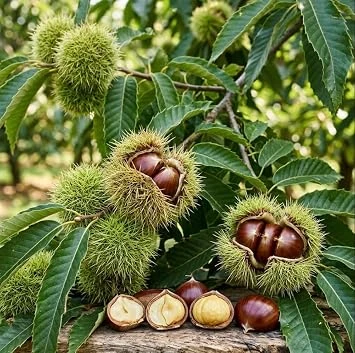
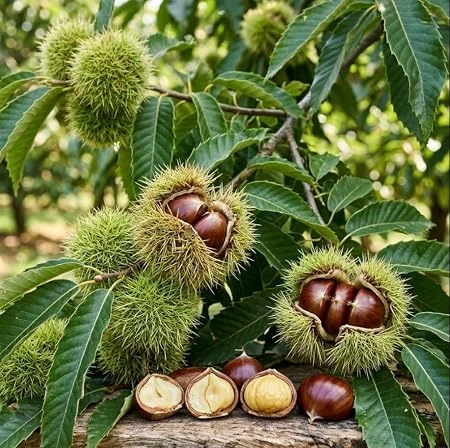
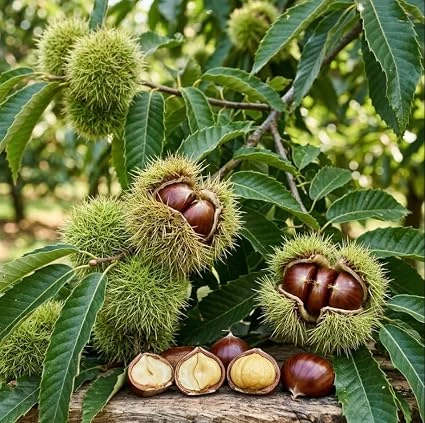
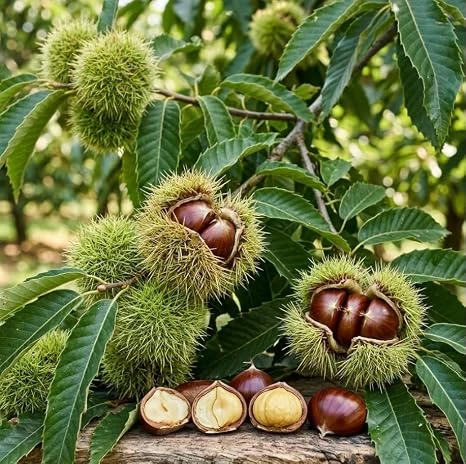
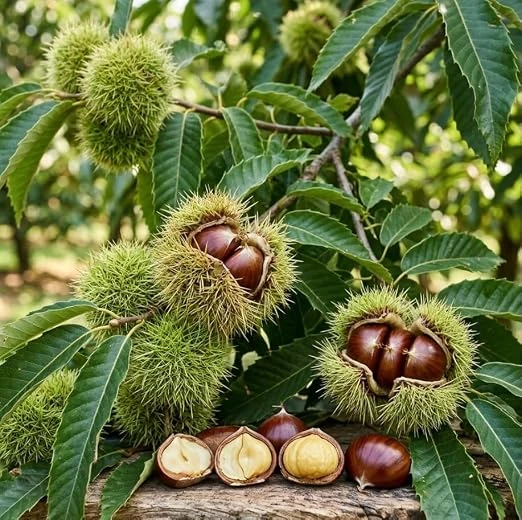
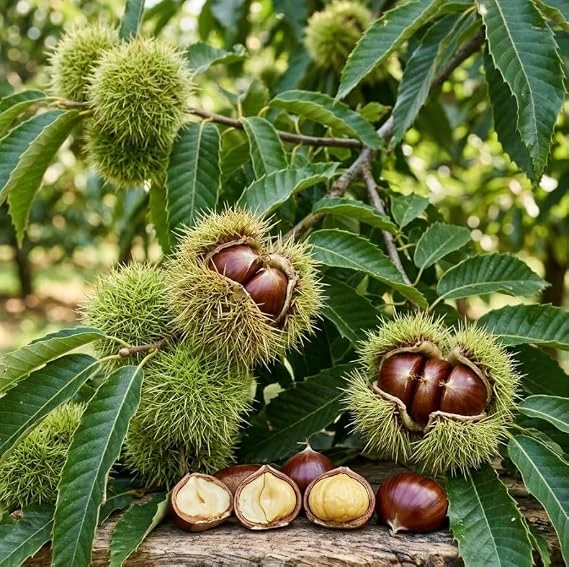
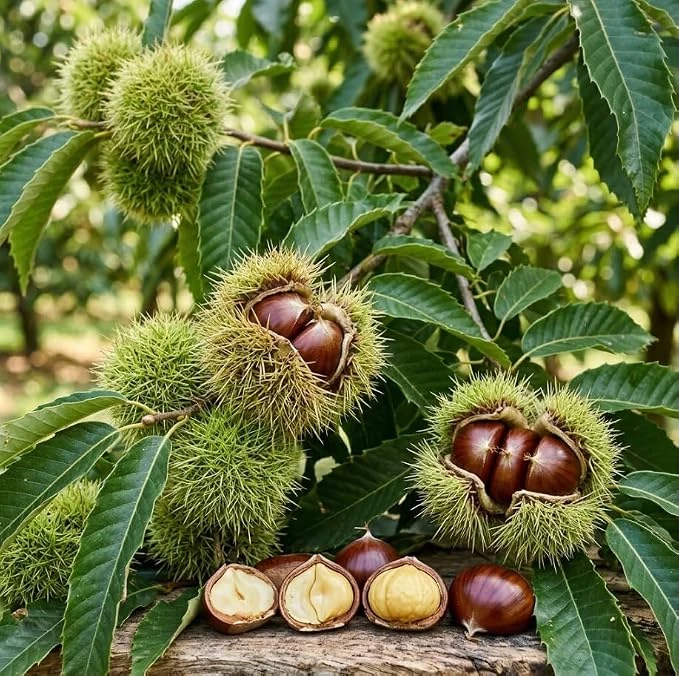
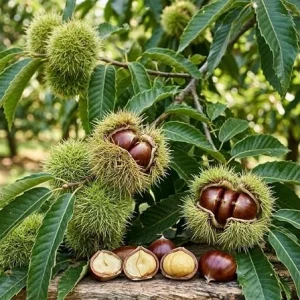
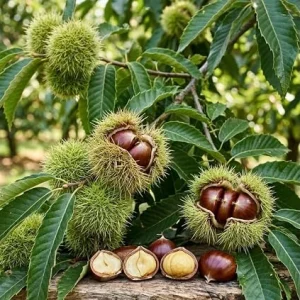
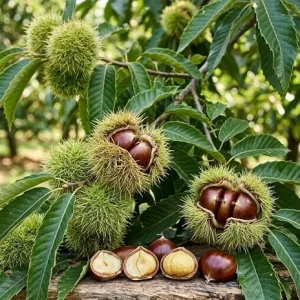
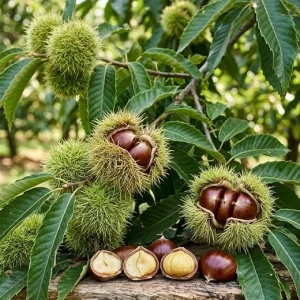
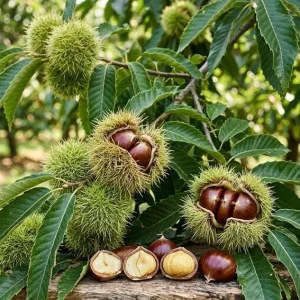
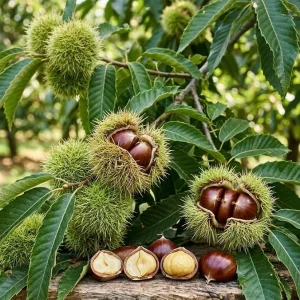
Chestnut Tree Live Plant – Sweet Fruit, Deciduous Shade Tree, 6-10 Inch Tall, 4-Inch Pot
Original price was: $79.98.$39.99Current price is: $39.99.
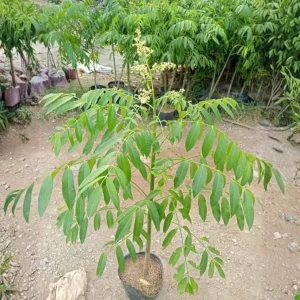
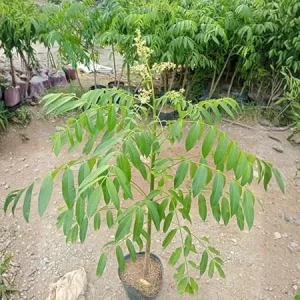
Bring home a beautiful chestnut tree live plant, perfect for adding a deciduous shade tree to your landscape. This young nut tree stands 6-10 inches tall in a 4-inch pot, ready to establish in your garden or yard and eventually produce delicious sweet fruit.
-
USDA Hardiness Zone
USDA zones 4-8 -
Soil Type
Well-draining, slightly acidic to neutral soil -
Sunlight Exposure
Full sun -
Expected Planting Period
Spring to early fall

You can track your order HERE
Oct 30
Nov 04 - Nov 06
Nov 09 - Nov 13
Shipping and return policies: Our Alive & Thrive Guarantee covers issues with your plants within the first 30 days. Reach out to us. Our team will answer your questions and help you find the plants that are truly suitable for your environment, climate, and personal preferences.

Overview
Cultivate your own source of delicious nuts and enjoy the beauty of a magnificent shade tree with this chestnut tree live plant. This young deciduous nut tree is carefully cultivated and shipped as a healthy, vibrant specimen, approximately 6-10 inches tall and potted in a 4-inch container. Ideal for planting in yards, gardens, or open spaces, the chestnut tree is known for its seasonal foliage and the sweet, edible nuts it produces once mature. While this young plant may not bear fruit immediately, it provides a strong foundation for future harvests and serves as a stunning addition to any landscape. Embrace the rewarding experience of growing your own sweet chestnut tree, a true garden treasure.
This particular offering is a young, vigorous chestnut tree live plant, ready to be nurtured and grown. It is a deciduous species, meaning it will shed its leaves in the fall and enter a natural dormancy during winter, only to burst forth with new growth in the spring. This natural cycle is essential for the tree’s health and future fruit production. Planting a chestnut tree is an investment in both the aesthetic appeal of your property and the potential for a bountiful harvest of fresh, homegrown nuts.
Key Benefits
Adding a chestnut tree to your property offers a multitude of benefits, from ecological contributions to personal enjoyment. This deciduous nut tree is a fantastic choice for many gardeners.
- Future Nut Production: Once mature, your chestnut tree live plant will produce delicious, edible nuts, offering a rewarding harvest that can be enjoyed fresh, roasted, or incorporated into various culinary dishes.
- Stunning Shade Tree: With its broad canopy and vibrant green foliage during the growing season, the chestnut tree provides ample shade, making it a perfect addition for creating cool, inviting outdoor living spaces.
- Seasonal Beauty: Enjoy the distinct seasonal changes, from lush green leaves in spring and summer, to beautiful fall colors before the leaves drop, adding dynamic visual interest to your landscape.
- Wildlife Attraction: Chestnut trees can attract various wildlife, including squirrels and birds, contributing to the biodiversity of your garden or yard.
- Long-Term Investment: A well-cared-for chestnut tree can live for many decades, becoming a lasting feature of your property and a legacy for future generations.
- Air Purification: Like all trees, chestnut trees contribute to a healthier environment by absorbing carbon dioxide and releasing oxygen, improving air quality around your home.
- Soil Health: The deep root system of a mature chestnut tree can help stabilize soil and prevent erosion, contributing to overall soil health and structure.
Plant Care & Growing Tips
Caring for your chestnut tree live plant is a rewarding experience that requires understanding its specific needs. These trees generally thrive in well-draining soil and prefer full sun exposure to ensure robust growth and future fruit production. When you first receive your young tree, it’s crucial to acclimate it to its new environment gradually before planting. Choose a site with at least 6-8 hours of direct sunlight per day. Good air circulation is also beneficial to prevent fungal issues.
Watering is critical, especially during the first few years as the tree establishes. Keep the soil consistently moist but not waterlogged. Deep watering encourages deep root growth, which makes the tree more resilient. For soil, a slightly acidic to neutral pH (6.0-7.0) is ideal. Ensure the planting site has good drainage; if your soil is heavy clay, amending it with organic matter like compost can significantly improve drainage and fertility. Fertilize sparingly in the first year, using a balanced, slow-release fertilizer in subsequent years as the tree matures. Understanding how to grow chestnut tree successfully involves consistent care and attention to these environmental factors.
Chestnut trees are generally hardy in USDA Zones 4-8, depending on the specific variety. Protect young trees from harsh winter winds and extreme cold. During winter dormancy, it’s normal for the plant to arrive without leaves; this is a natural protective mechanism. Pruning should focus on removing dead, damaged, or crossing branches to maintain a strong structure and encourage healthy growth. While this young deciduous nut tree is relatively low-maintenance once established, consistent care in its early years will ensure a healthy, productive tree.
Size & Details
This offering includes one healthy chestnut tree live plant, standing approximately 6-10 inches tall from the base of the soil to the tip of the highest growth. It arrives pre-potted in a 4-inch nursery container, providing a protective environment for its root system and giving it an excellent head start for growth upon arrival. The plant is a young specimen, carefully grown to ensure vigor and health. While it is a young tree, it has established roots and is ready for transplanting into a larger pot or directly into your garden. Expect initial growth to focus on root establishment before significant vertical growth. Fruit production typically begins once the tree reaches maturity, which can take several years, depending on growing conditions and specific variety. This is a robust young plant, perfect for anyone looking for a chestnut tree for sale to cultivate their own sweet nuts.
Frequently Asked Questions
- Q: How big does this plant get? A: This young chestnut tree live plant arrives 6-10 inches tall in a 4-inch pot. Mature chestnut trees can grow quite large, often reaching heights of 50-100 feet with a similar spread, providing substantial shade.
- Q: Is this an indoor or outdoor plant? A: Chestnut trees are primarily outdoor plants. They are large deciduous trees that require significant space and exposure to natural light and seasons to thrive and produce fruit.
- Q: How much sunlight does it need? A: Chestnut trees require full sun, meaning at least 6-8 hours of direct sunlight per day, for optimal growth and fruit production.
- Q: Is this plant easy to care for? A: While young trees require consistent watering and protection, once established, deciduous nut tree varieties like the chestnut are relatively low-maintenance, needing adequate sunlight, well-draining soil, and occasional pruning.
- Q: What condition will it arrive in? A: Your chestnut tree live plant will arrive carefully packaged, standing 6-10 inches tall in its 4-inch pot. During winter, it may arrive dormant with no leaves, which is normal for a deciduous tree.
- Q: How long until it produces fruit? A: Young chestnut trees typically take several years to mature and begin producing fruit. Patience and consistent care are key to enjoying a harvest from your sweet chestnut tree.
- Q: What’s the best time to plant a chestnut tree? A: The best time to plant a young chestnut tree is usually in the spring or early fall, allowing the roots to establish before extreme summer heat or winter cold.
- Q: What type of soil is best for chestnut trees? A: Chestnut trees prefer well-draining, slightly acidic to neutral soil (pH 6.0-7.0). Avoid heavy clay soils that retain too much water.
- Q: Will it survive winter in my zone? A: Chestnut trees are generally hardy in USDA Zones 4-8. Check your local hardiness zone to ensure it’s suitable for your climate.
- Q: How often should I water my young chestnut tree? A: Keep the soil consistently moist for young chestnut trees, especially during dry periods. Water deeply when the top inch of soil feels dry to the touch, but avoid overwatering.
Be the first to review “Chestnut Tree Live Plant – Sweet Fruit, Deciduous Shade Tree, 6-10 Inch Tall, 4-Inch Pot”
People Also Viewed


Flower Plants
Sold 79 products
$26.40






Sold 77 products
From $51.80




Reviews
There are no reviews yet.