
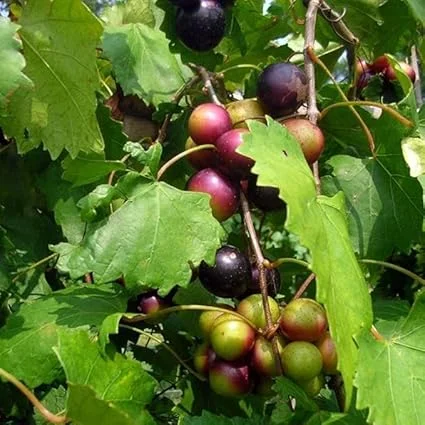
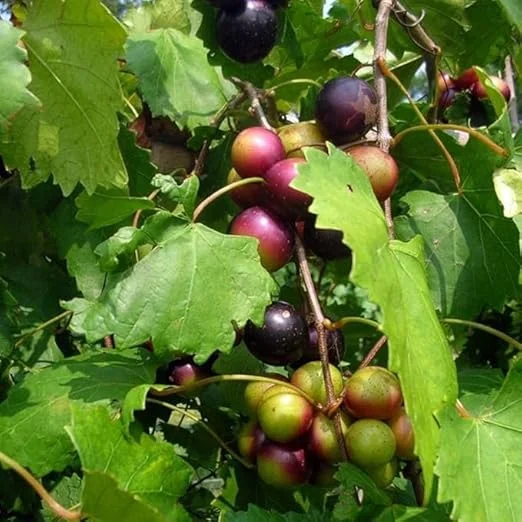
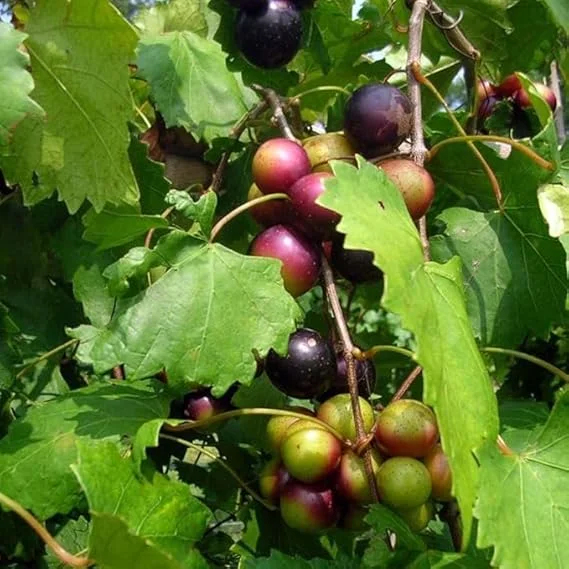
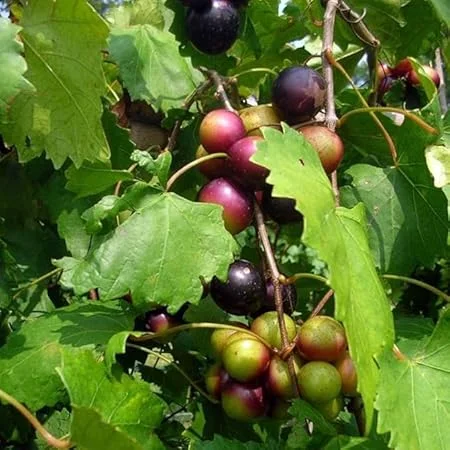
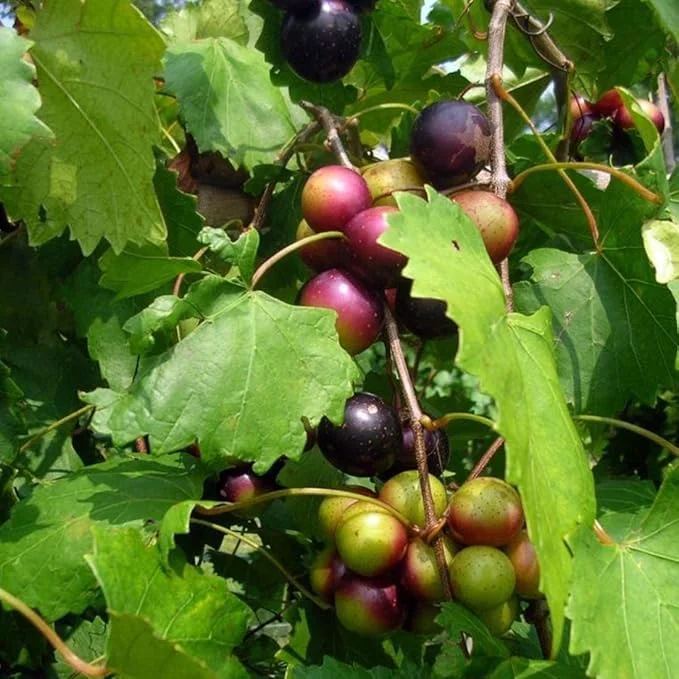
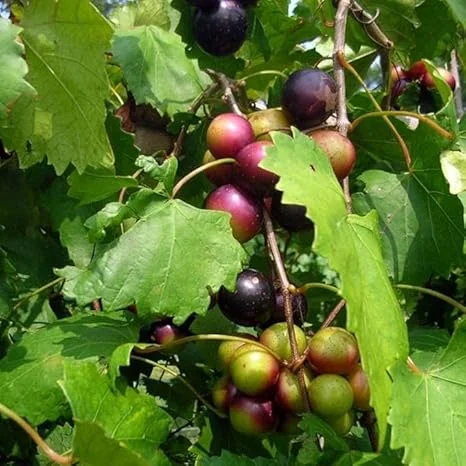
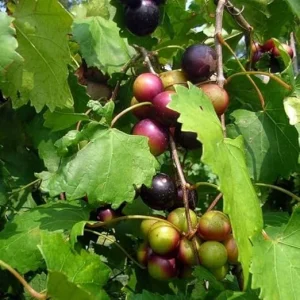
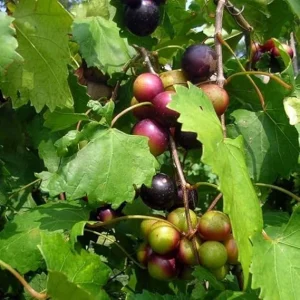
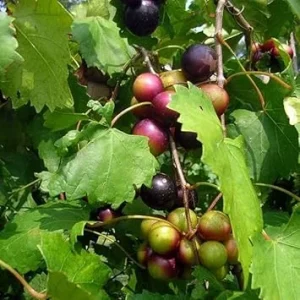
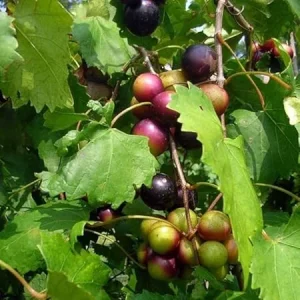
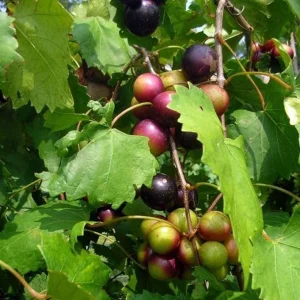
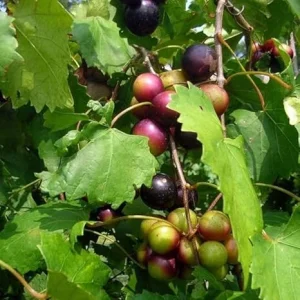
Black Muscadine Grape Vine Plant – 2 Year Old Sweet Grape Vine, Live Plant, Outdoor, USDA Zones 6-10
Original price was: $103.60.$51.80Current price is: $51.80.
Cultivate delicious, sweet black muscadine grape vines in your garden. This 2-year-old live plant is ready to thrive, offering abundant fruit and ornamental appeal. Perfect for trellises and pergolas, it’s a robust choice for outdoor growing.
-
USDA Hardiness Zone
6-10 -
Soil Type
Loam Soil, well-draining -
Sunlight Exposure
Full Sun -
Expected Planting Period
Spring to Fall blooming (plant in early spring)

You can track your order HERE
Mar 24
Mar 29 - Mar 31
Apr 03 - Apr 07
Shipping and return policies: Our Alive & Thrive Guarantee covers issues with your plants within the first 30 days. Reach out to us. Our team will answer your questions and help you find the plants that are truly suitable for your environment, climate, and personal preferences.

Overview
Bring the joy of fresh, homegrown fruit to your garden with a black muscadine grape vine. This robust 2-year-old live plant is specifically cultivated to produce sweet, flavorful muscadine grapes, renowned for their thick skin and juicy pulp. Muscadine grapes (Vitis rotundifolia) are native to the southeastern United States and are celebrated for their disease resistance and adaptability to warm climates. This particular variety offers a dark, rich fruit that is excellent for eating fresh, making jams, jellies, or even homemade wine. Planting a black muscadine grape vine is a rewarding experience, providing both a beautiful landscape feature and a bountiful harvest year after year. Our healthy, established vines ensure a strong start for your vineyard dreams, whether you’re a seasoned gardener or just beginning your fruit-growing journey.
Key Benefits
Choosing a black muscadine grape vine for your garden offers numerous advantages, from delightful harvests to impressive resilience. These vines are an excellent investment for any edible landscape.
- Abundant Sweet Fruit: Enjoy a generous yield of delicious, dark muscadine grapes, perfect for fresh eating, preserves, or homemade beverages. The sweetness and unique flavor of these grapes are highly prized.
- Disease Resistance: Muscadine grape plants are naturally more resistant to common grape diseases and pests compared to traditional grape varieties, reducing the need for extensive chemical treatments.
- Hardy and Adaptable: These vines are well-suited for a wide range of climates (USDA Zones 6-10) and can tolerate various soil conditions, making them a reliable choice for many gardeners. A healthy grape vine live plant provides years of enjoyment.
- Attractive Landscape Feature: Beyond their fruit, muscadine vines offer beautiful foliage and can be trained over arbors, pergolas, or trellises to create stunning, shaded living spaces.
- Long-Lived Production: With proper care, a muscadine grape vine can produce fruit for many decades, becoming a lasting and valuable addition to your home garden.
- Nutritional Value: Muscadine grapes are packed with antioxidants and vitamins, offering a healthy and delicious snack straight from your garden.
- Low Maintenance Once Established: While initial care is important, established muscadine vines are relatively low-maintenance, requiring less fuss than many other fruit-bearing plants.
Plant Care & Growing Tips
Caring for your black muscadine grape vine is straightforward, ensuring a successful harvest of sweet grapes. These vines thrive in specific conditions that promote vigorous growth and fruit production. For optimal results, plant your muscadine vine in a location that receives full sun, meaning at least 6-8 hours of direct sunlight per day. Adequate sunlight is crucial for fruit development and sweetness. The ideal soil type is a well-drained loam soil. Muscadines do not like ‘wet feet’, so ensure good drainage to prevent root rot. If your soil is heavy clay, amend it with organic matter like compost to improve drainage and aeration.
Watering needs are moderate. While establishing, water regularly to keep the soil consistently moist but not waterlogged. Once established, muscadine vines are relatively drought-tolerant but will benefit from deep watering during dry spells, especially when fruit is developing. A good rule of thumb is to check the soil moisture a few inches down; if it feels dry, it’s time to water. Providing sturdy trellis support is essential for a muscadine grape plant. These vines are vigorous growers and need a strong structure to climb on. Space multiple vines 10-20 feet apart, allowing ample room for growth and air circulation. Pruning is vital for fruit production and vine health; typically, muscadines are pruned in late winter or early spring to shape the vine and encourage new fruiting wood.
Fertilize your muscadine vine in early spring with a balanced fertilizer, avoiding high nitrogen formulas which can promote foliage growth at the expense of fruit. A soil test can help determine specific nutrient deficiencies. Monitor for common pests and diseases, though muscadines are generally quite resistant. Ensuring good air circulation through proper spacing and pruning helps prevent fungal issues. Following these care guidelines will ensure your sweet muscadine grapes thrive and produce a bountiful harvest.
Size & Details
This offering is for one healthy black muscadine grape vine, cultivated to be 2 years old, providing a strong foundation for rapid growth and fruit production. The plant is typically shipped with an expected height of approximately 2 feet, ready for planting upon arrival. It comes as a live plant, carefully packaged to ensure its health during transit. Muscadine vines are known for their vigorous growth rate, and with proper care, they will quickly establish and begin producing fruit within a few years of planting. The mature size of a muscadine vine can be quite large, often spreading 20 feet or more when supported by a sturdy trellis or arbor. Expect blooming to occur from spring to fall, with fruit ripening in late summer to early fall, depending on your specific climate zone. This grape vine live plant is designed for outdoor cultivation.
Frequently Asked Questions
- Q: How big does this black muscadine grape vine get? A: This 2-year-old vine typically ships at about 2 feet tall. Mature muscadine vines are vigorous growers and can spread over 20 feet, requiring substantial support like a trellis or arbor.
- Q: Is this an indoor or outdoor plant? A: This black muscadine grape vine is an outdoor plant, best suited for planting directly in the ground where it can receive full sun and proper support.
- Q: How much sunlight does it need? A: Muscadine grapes require full sun exposure, meaning at least 6-8 hours of direct sunlight per day, for optimal growth and fruit production.
- Q: Is this plant easy to care for? A: Once established, muscadine vines are relatively low-maintenance. They are known for their hardiness and disease resistance, making them a good choice for both experienced and novice gardeners.
- Q: What condition will the muscadine grape plant arrive in? A: Your muscadine grape plant will arrive as a live, healthy 2-year-old vine, carefully packaged to protect it during shipping. It will be ready for immediate planting.
- Q: When is the best time to plant a black muscadine grape vine? A: The best time to plant muscadine vines is in late winter or early spring, after the last frost, to allow them to establish before the heat of summer.
- Q: Will it survive winter in my zone? A: This black muscadine grape vine is hardy in USDA zones 6-10. If you are in zone 6, some winter protection may be beneficial during exceptionally cold periods.
- Q: What is the expected blooming period for sweet muscadine grapes? A: Muscadine vines typically bloom from late spring into early fall, with the fruit ripening and being ready for harvest in late summer to early fall.
- Q: What kind of soil does this muscadine grape plant prefer? A: Muscadine vines thrive in well-drained loam soil. Ensure the planting site has good drainage to prevent waterlogging.
Be the first to review “Black Muscadine Grape Vine Plant – 2 Year Old Sweet Grape Vine, Live Plant, Outdoor, USDA Zones 6-10”
People Also Viewed
Sold 57 products
From $22.99
Sold 55 products
Original price was: $37.35.$12.94Current price is: $12.94.
Sold 68 products
Original price was: $58.00.$46.40Current price is: $46.40.

Sold 86 products
Original price was: $346.76.$173.38Current price is: $173.38.

Sold 65 products
From $33.98
Sold 95 products
Original price was: $147.16.$73.58Current price is: $73.58.
Sold 75 products
Original price was: $91.20.$72.96Current price is: $72.96.
Sold 72 products
Original price was: $31.98.$22.38Current price is: $22.38.
Vegetable Seeds
Michihili Chinese Cabbage Seeds – Non-GMO Vegetable Garden Seeds
Sold 61 products
Original price was: $8.52.$4.26Current price is: $4.26.
Sold 55 products
Original price was: $71.98.$35.99Current price is: $35.99.
Sold 67 products
From $7.90
Sold 58 products
Original price was: $152.00.$76.00Current price is: $76.00.
Sold 62 products
$43.32
Sold 85 products
Original price was: $47.58.$23.79Current price is: $23.79.
Sold 73 products
Original price was: $63.98.$31.99Current price is: $31.99.
Sold 72 products
Original price was: $201.60.$100.80Current price is: $100.80.
Sold 72 products
Original price was: $79.96.$39.98Current price is: $39.98.
Sold 51 products
Original price was: $47.98.$23.99Current price is: $23.99.


Reviews
There are no reviews yet.