
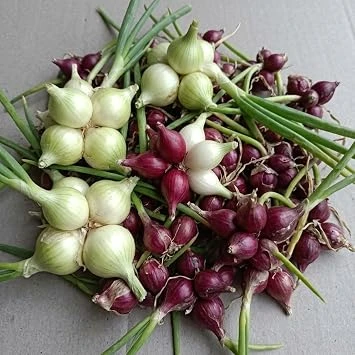
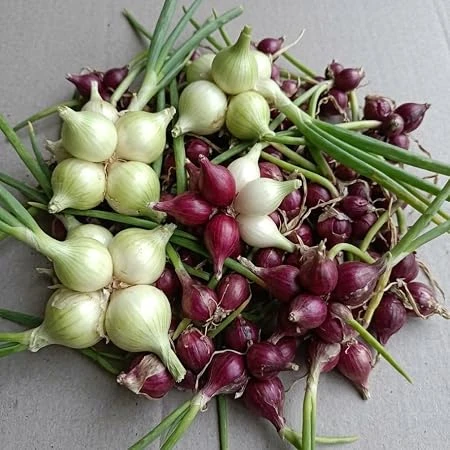
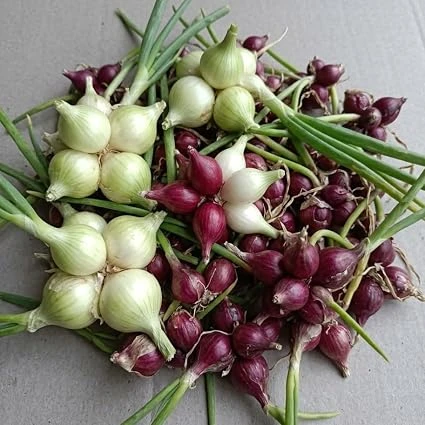
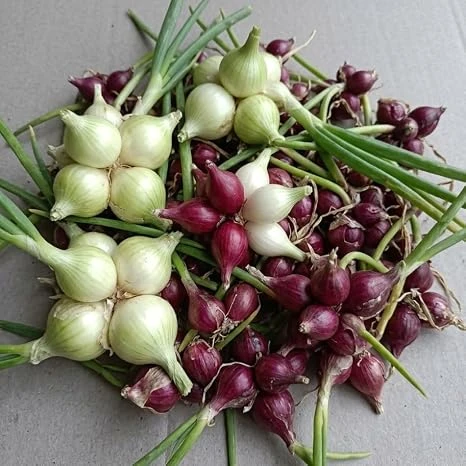
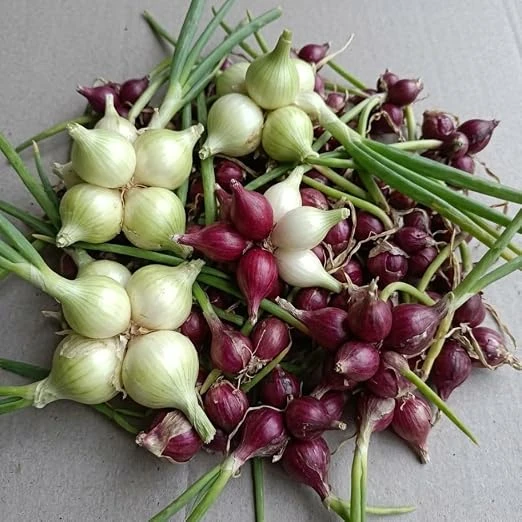
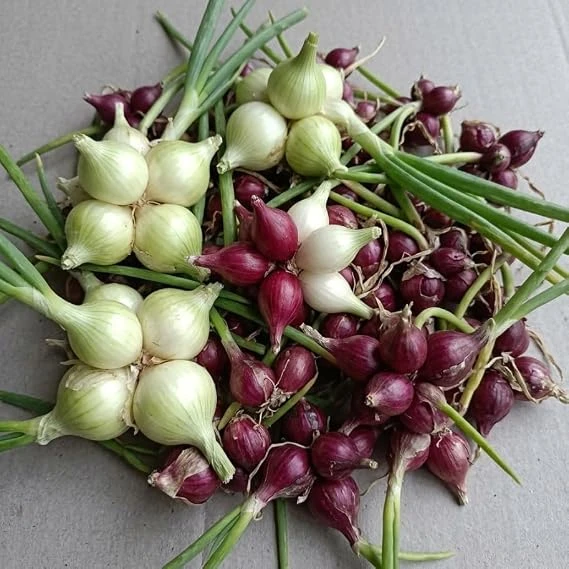
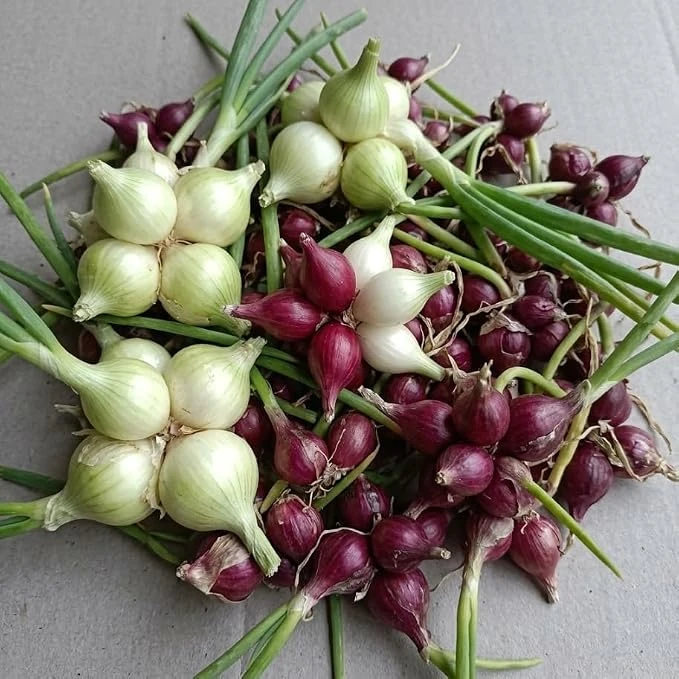
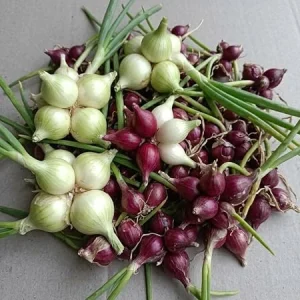
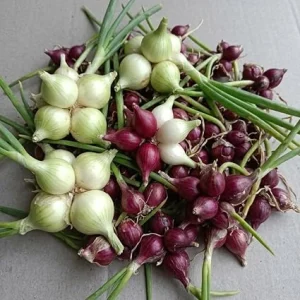
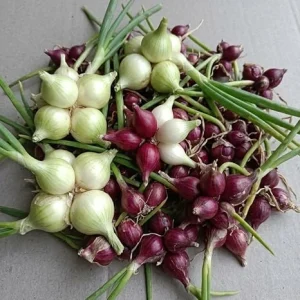
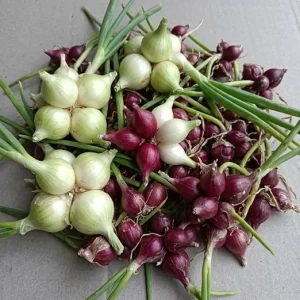
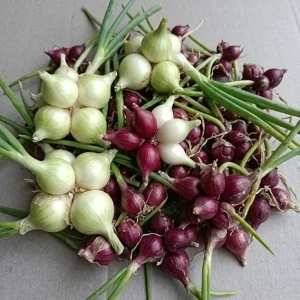
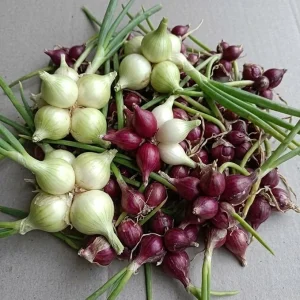
7 Egyptian Walking Onion Bulbs for Planting – Red & White Topsetting Perennial
Original price was: $31.98.$15.99Current price is: $15.99.
Receive 7 Egyptian Walking Onions bulblets, a unique perennial onion that ‘walks’ across your garden. These walking onion topsetting varieties produce edible bulblets at the top of their stalks, re-rooting to spread year after year. Easy to plant and low maintenance, they’re perfect for any garden.
-
USDA Hardiness Zone
USDA zones 3-9 -
Soil Type
Well-draining, loamy soil -
Sunlight Exposure
Full sun to partial shade -
Expected Planting Period
Early spring or fall

You can track your order HERE
Oct 30
Nov 04 - Nov 06
Nov 09 - Nov 13
Shipping and return policies: Our Alive & Thrive Guarantee covers issues with your plants within the first 30 days. Reach out to us. Our team will answer your questions and help you find the plants that are truly suitable for your environment, climate, and personal preferences.

Overview
Discover the fascinating world of Egyptian Walking Onions, a truly unique and resilient perennial vegetable that brings both novelty and practicality to your garden. Unlike traditional onions that grow from a single bulb in the ground, these remarkable plants produce clusters of small, edible bulblets at the top of their stalks. As the stalks mature and bend under the weight of these ‘topsetting’ bulblets, they touch the ground and naturally take root, allowing the plant to literally ‘walk’ across your garden bed over time. This characteristic gives them their distinctive name and makes them a self-propagating, low-maintenance addition to any edible landscape. Our offering includes 7 healthy bulblets, ready for planting, ensuring you get a great head start on cultivating this intriguing species. You’ll receive a random selection of red and/or white varieties, adding aesthetic diversity to your garden. These onions are not only a conversation starter but also provide a continuous harvest of greens and bulblets year after year with minimal effort.
The Egyptian Walking Onions (Allium × proliferum) are a natural hybrid, believed to be a cross between the common onion (Allium cepa) and the Welsh onion (Allium fistulosum). This genetic blend results in a hardy plant that thrives in various conditions and offers a continuous supply of green onions, small bulbs, and the unique topsetting bulblets. They are an excellent choice for gardeners looking for sustainable food sources and those interested in permaculture principles. Their ability to spread naturally without aggressive invasion makes them a welcome resident in garden beds, providing fresh produce from early spring until late fall.
Key Benefits
Planting Egyptian Walking Onions offers a multitude of benefits for both the novice and experienced gardener. Their unique growth habit and culinary versatility make them a rewarding crop:
- Self-Propagating & Perennial: Enjoy a continuous harvest year after year without replanting. The bulblets root themselves, ensuring your patch of perennial onions expands naturally, saving you time and effort.
- Low Maintenance & Hardy: These onions are incredibly resilient and require minimal care once established. They are tolerant of various soil types and climates, making them an easy-to-grow option for busy gardeners.
- Unique Culinary Ingredient: Both the green tops and the bulblets are edible. The greens have a mild onion flavor, perfect for salads and cooking, while the bulblets offer a stronger, more pungent taste, ideal for pickling or stir-fries.
- Extended Harvest Season: Unlike annual onions, Egyptian Walking Onions provide fresh greens from early spring through late fall, and the bulblets can be harvested throughout the growing season.
- Space-Saving Growth: Their upright growth habit and ability to ‘walk’ means they efficiently utilize garden space, spreading gradually without becoming invasive.
- Educational & Engaging: A fantastic plant for teaching children about gardening and plant life cycles, demonstrating a unique form of propagation.
- Versatile Use: Suitable for garden beds, containers, or even as an edible border, these walking onion bulblets adapt well to different planting scenarios.
Plant Care & Growing Tips
Growing Egyptian Walking Onions is straightforward, making them an excellent choice for gardeners of all skill levels. These resilient plants thrive with basic care, ensuring a bountiful harvest season after season. For optimal growth, choose a location with at least 6-8 hours of direct sunlight daily; they prefer full sun but can tolerate partial shade, though production may be reduced. When planting your walking onion topsetting bulblets, ensure the soil is well-draining. While they are not overly particular about soil type, a rich, loamy soil with a neutral pH (6.0-7.0) will yield the best results. Amend heavy clay soils with compost or sand to improve drainage, and sandy soils with organic matter to enhance water retention and nutrient availability.
Watering should be consistent, especially during dry spells, to encourage vigorous growth. Aim for about 1 inch of water per week, either from rainfall or irrigation. Once established, they are somewhat drought-tolerant but will perform best with regular moisture. Fertilize in early spring with a balanced organic fertilizer or compost to support new growth. These perennial onions are cold-hardy and can withstand winter temperatures down to USDA Zone 3. In colder climates, a layer of mulch can provide additional protection, though it’s often not strictly necessary. Pests and diseases are rarely an issue, but keep an eye out for common onion pests like thrips or onion maggots, although their unique growth habit often deters many typical onion problems. Harvesting can begin when the green tops are 6-12 inches tall; simply snip them off as needed. The topsetting bulblets can be harvested when they are fully formed, typically in mid to late summer, and can be replanted, eaten fresh, or stored.
Size & Details
This offering includes 7 individual walking onion bulblets, carefully selected and ready for immediate planting. These bulblets are the small, pea-sized to marble-sized propagules that form at the top of the mature onion stalks. They are chosen at random from our red and/or white Egyptian Walking Onion stock, providing a delightful mix and ensuring genetic diversity. Upon planting, these bulblets will quickly establish roots and begin to grow their characteristic green tops. Typically, Egyptian Walking Onions grow to an average height of 18-36 inches (45-90 cm), with the stalks eventually bending over to root the topsetting bulblets. They have a moderate growth rate, establishing themselves within the first growing season and beginning to produce their unique aerial bulblets in mid-summer.
The plants are shipped as dormant or semi-dormant bulblets, ensuring they arrive in optimal condition for planting. Expect to see vigorous growth once planted in favorable conditions. These resilient plants will return year after year, providing a continuous supply of fresh onions. The initial bulblets are typically small, but they quickly grow into mature plants that will then produce their own clusters of bulblets, allowing your patch of topsetting onions to expand and flourish over time. They are ideal for gardeners seeking a sustainable and low-effort edible plant.
Frequently Asked Questions
- Q: How big do these Egyptian Walking Onions get? A: The green stalks of Egyptian Walking Onions typically grow 18-36 inches (45-90 cm) tall. The bulblets formed at the top are generally pea-sized to marble-sized, varying slightly between red and white varieties.
- Q: Is this an indoor or outdoor plant? A: Egyptian Walking Onions are primarily grown outdoors. They are very cold-hardy and thrive in garden beds, providing fresh greens and bulblets throughout the growing season. While they can be started indoors, they perform best when planted directly in the garden.
- Q: How much sunlight do these perennial onions need? A: For optimal growth and bulb production, perennial onions prefer full sun, meaning at least 6-8 hours of direct sunlight per day. They can tolerate partial shade, but yields may be slightly reduced.
- Q: Are these walking onion bulblets easy to care for? A: Yes, these onions are incredibly easy to care for, making them perfect for beginners and experienced gardeners alike. Once established, they are very low maintenance, self-propagating, and resistant to many common pests and diseases.
- Q: What condition will the bulblets arrive in? A: You will receive 7 healthy walking onion bulblets, selected at random from red and/or white varieties, ready for planting. They will be dormant or semi-dormant, ensuring they transplant well and establish quickly in your garden.
- Q: When is the best time to plant Egyptian Walking Onions? A: The best time to plant Egyptian Walking Onions is in early spring or fall. Planting in these seasons allows the bulblets to establish roots before extreme summer heat or winter cold, though they are quite adaptable.
- Q: Can I eat the entire plant? A: Yes, all parts of the Egyptian Walking Onions are edible. The green tops can be used like scallions, the small bulblets at the top can be eaten raw, cooked, or pickled, and the underground bulb (though smaller than common onions) is also edible.
- Q: Will these walking onion topsetting plants survive winter in my zone? A: Yes, walking onion topsetting plants are extremely hardy and can survive winters in USDA Hardiness Zones 3-9. They are very resilient to cold temperatures and will re-emerge in spring.
- Q: What kind of soil do they prefer? A: They prefer well-draining soil that is rich in organic matter. While adaptable, amending heavy clay or sandy soils with compost will greatly benefit their growth and overall health.
- Q: How long until they start producing bulblets? A: After planting the walking onion bulblets, they will typically grow green tops throughout the spring. You can expect the first aerial bulblets to begin forming at the top of the stalks in mid to late summer of the first year.
Be the first to review “7 Egyptian Walking Onion Bulbs for Planting – Red & White Topsetting Perennial”
People Also Viewed


Sold 50 products
$47.90



Sold 69 products
Original price was: $60.00.$48.00Current price is: $48.00.













Reviews
There are no reviews yet.