
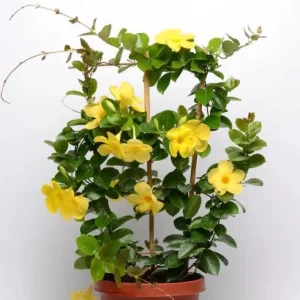
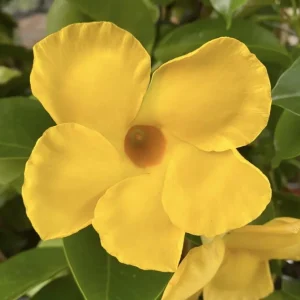
Yellow Mandevilla Live Plant – Tropical Flowering Vine, 5-9 Inch Tall
Original price was: $43.99.$23.99Current price is: $23.99.
Add a splash of vibrant color with this beautiful yellow mandevilla live plant. This tropical flowering vine is perfect for adding vertical interest to your garden or patio, known for its continuous bright blooms and easy-care nature.
-
USDA Hardiness Zone
USDA zones 9-11 -
Soil Type
Well-draining soil -
Sunlight Exposure
Full sun -
Expected Planting Period
Spring to early summer

You can track your order HERE
Mar 21
Mar 26 - Mar 28
Mar 31 - Apr 04
Shipping and return policies: Our Alive & Thrive Guarantee covers issues with your plants within the first 30 days. Reach out to us. Our team will answer your questions and help you find the plants that are truly suitable for your environment, climate, and personal preferences.

Overview
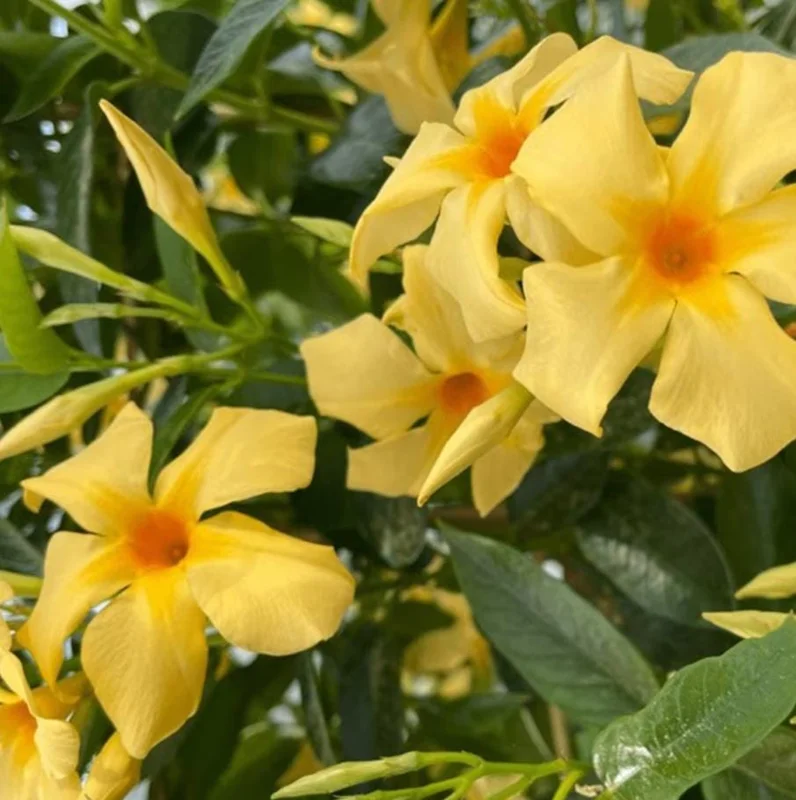
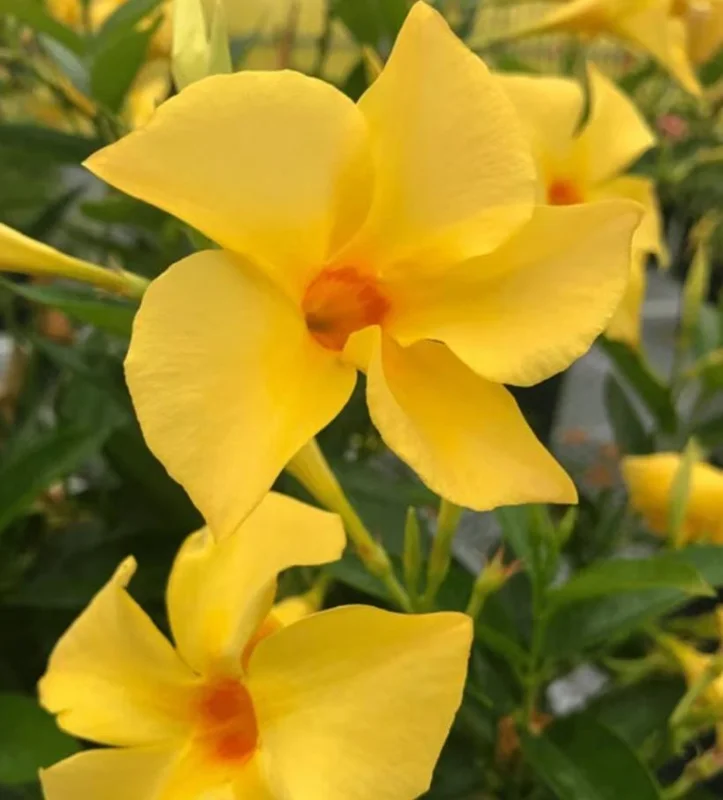
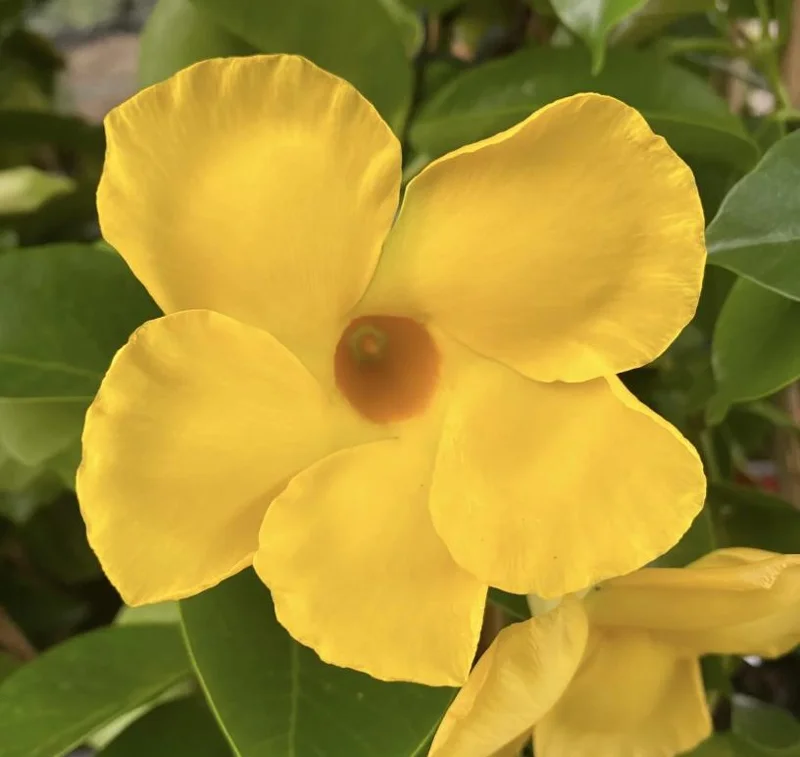
Introduce a burst of sunshine and tropical elegance to your outdoor space with this stunning yellow mandevilla live plant. Also known as Dipladenia or Brazilian Jasmine, this vigorous climbing vine is celebrated for its abundant, trumpet-shaped yellow flowers that bloom prolifically throughout the warmer months. Originating from the tropical regions of South America, Mandevilla sanderi is a fast-growing plant that effortlessly transforms trellises, arbors, and hanging baskets into a cascade of vibrant color. This particular specimen arrives as a healthy, young plant, ready to establish itself and bring a touch of the exotic to your landscape. Whether you’re an experienced gardener or just starting, a yellow mandevilla live plant is a rewarding choice for its visual impact and relatively straightforward care requirements.
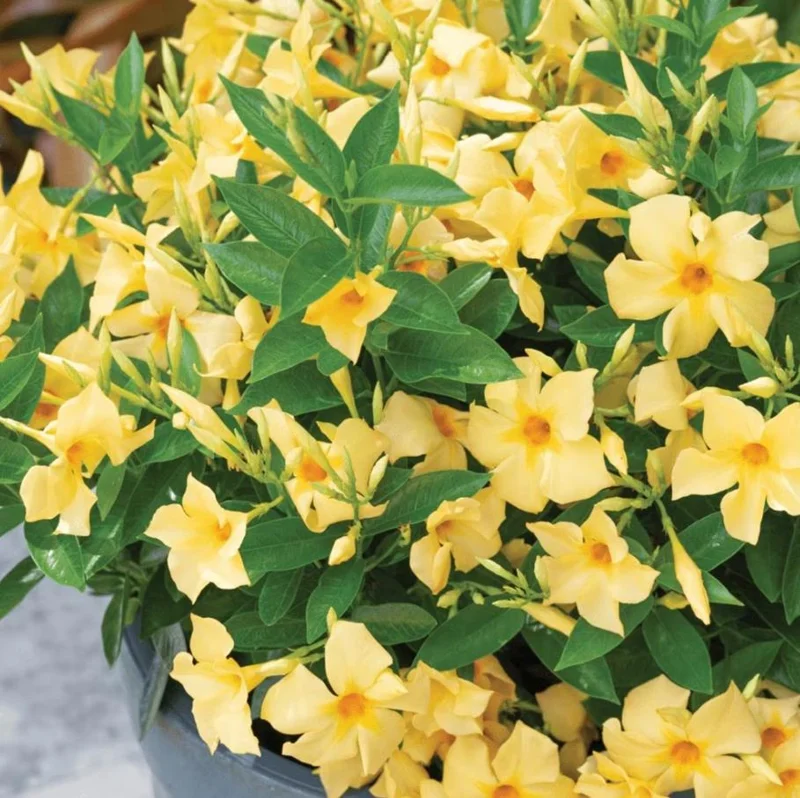
The Mandevilla vine features glossy, dark green foliage that provides a beautiful backdrop to its cheerful yellow blossoms. These plants are known for their ability to thrive in full sun, making them an excellent choice for bright, exposed locations where other plants might struggle. With its natural climbing habit, this tropical beauty adds height and dimension to any garden design, creating a focal point that captures attention. Enjoy the continuous display of its radiant flowers, attracting pollinators and adding life to your garden from spring until the first frost.
Key Benefits
The yellow mandevilla live plant offers numerous advantages for any plant enthusiast, combining beauty with resilience. Its vibrant blooms and vigorous growth make it a garden favorite.
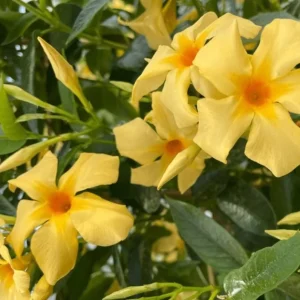
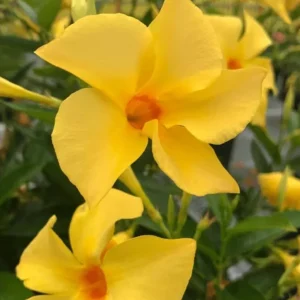
- Continuous, Bright Blooms: Enjoy a spectacular display of large, funnel-shaped yellow flowers that bloom consistently from late spring through fall, providing long-lasting color to your garden or patio.
- Attractive Foliage: The glossy, deep green leaves create a lush backdrop, enhancing the visual appeal of the bright flowers and adding a tropical feel even when not in bloom.
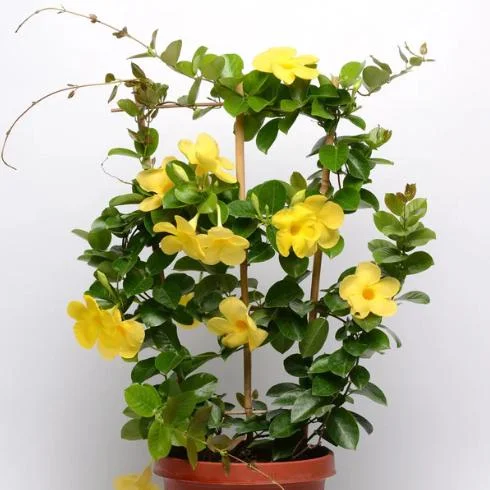
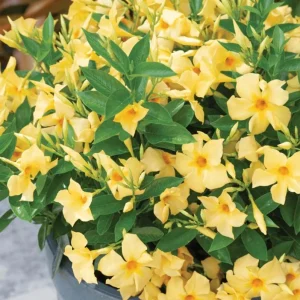
- Versatile Growth Habit: Ideal for climbing structures like trellises, arbors, and fences, or for spilling gracefully from hanging baskets and containers. Its flexible nature makes it perfect for various garden designs.
- Drought Tolerant: Once established, the yellow mandevilla live plant is surprisingly tolerant of dry periods, thanks to its tuberous root system that stores water, reducing the need for constant watering.
- Attracts Pollinators: The vibrant flowers are a magnet for hummingbirds and butterflies, bringing delightful activity and enhancing the ecological diversity of your garden.
- Low Maintenance: Despite its exotic appearance, mandevilla plant care is relatively simple, requiring minimal pruning and general attention to thrive, making it suitable for busy gardeners.
- Tropical Aesthetic: Instantly create a resort-like atmosphere with this exotic vine, perfect for adding a touch of the tropics to any outdoor living space.
Plant Care & Growing Tips
Proper mandevilla plant care is essential for ensuring your plant thrives and produces abundant blooms. This tropical vine enjoys warmth and plenty of light. For optimal growth, plant your Mandevilla in a location that receives at least six hours of full sun daily. While it can tolerate some partial shade, especially in hotter climates, more sun generally means more flowers. If growing indoors, place it near a bright, south-facing window. The ideal temperature range for Mandevilla is between 70-90°F (21-32°C); temperatures below 50°F (10°C) can cause damage.
Water consistently, especially during dry spells, ensuring the soil remains moist but not waterlogged. Mandevillas are sensitive to overwatering, which can lead to root rot. Allow the top inch or two of soil to dry out slightly between waterings. Use a well-draining potting mix if planting in containers. A good quality all-purpose potting mix amended with some perlite or sand will work well. Fertilize every 2-4 weeks during the growing season with a balanced liquid fertilizer to encourage continuous blooming. Provide a support structure like a trellis, stake, or fence for your growing mandevilla vine to climb, as it is a natural climber.
Pruning is generally light, mainly to shape the plant and remove any dead or leggy growth. Pinching back the tips of young stems can encourage bushier growth and more flowers. While generally robust, keep an eye out for common pests like spider mites or mealybugs, especially if mandevilla outdoor plant is brought indoors for winter. Treat any infestations promptly with insecticidal soap. With proper attention to sunlight, watering, and occasional feeding, your Mandevilla will reward you with a spectacular show of color all season long.
Size & Details
This yellow mandevilla live plant is shipped as a healthy, young specimen, typically measuring between 5-9 inches tall from the base of the stem to the top of the foliage. It arrives without a pot, ready for immediate planting in your chosen container or garden bed. Mandevillas are fast-growing vines, and with proper care, this plant will quickly establish itself and begin to climb. Expect a moderate to fast growth rate, with mature vines reaching lengths of 10-20 feet depending on growing conditions and support. The plant will begin producing its vibrant yellow flowers in late spring or early summer, continuing until the first frost. Its rapid development makes it a rewarding choice for gardeners looking to quickly add significant visual impact to their outdoor spaces.
Frequently Asked Questions
- Q: How big does this plant get? A: This yellow mandevilla live plant is shipped 5-9 inches tall. With proper care and support, it can grow into a vigorous vine reaching 10-20 feet in length, depending on its environment and growing conditions.
- Q: What are the sunlight requirements for Mandevilla? A: Mandevilla thrives in full sun, requiring at least 6 hours of direct sunlight per day to produce the most abundant blooms. It can tolerate some partial shade, especially in very hot climates.
- Q: Is this an indoor or outdoor plant? A: Mandevilla is primarily grown as an mandevilla outdoor plant in USDA Zones 9-11. In cooler climates, it can be grown as an annual or overwintered indoors as a houseplant.
- Q: How much water does a Mandevilla need? A: Water your Mandevilla consistently, keeping the soil moist but not soggy. Allow the top inch or two of soil to dry out between waterings, as it is sensitive to overwatering.
- Q: Is this plant easy to care for? A: Yes, mandevilla plant care is considered relatively easy, making it suitable for gardeners of all experience levels. It requires consistent sunlight, regular watering, and a support structure for climbing.
- Q: What condition will it arrive in? A: Your Mandevilla plant will arrive as a healthy, bare-root specimen, carefully packaged to ensure its safe journey. It will be ready for immediate planting upon arrival.
- Q: When is the best time to plant a Mandevilla? A: The best time to plant Mandevilla is in spring after all danger of frost has passed, when temperatures are consistently warm. This allows the plant ample time to establish before blooming.
- Q: Will it survive winter in my zone? A: Mandevillas are tropical plants and are hardy in USDA Zones 9-11. In colder zones, they will not survive winter outdoors and must be brought indoors or treated as annuals.
Be the first to review “Yellow Mandevilla Live Plant – Tropical Flowering Vine, 5-9 Inch Tall”
People Also Viewed
Sold 96 products
Original price was: $319.96.$159.98Current price is: $159.98.
Shrub Seeds
50 White Hydrangea Seeds – Oakleaf Bush, Hedge, Shrub | Hydrangea quercifolia Outdoor Perennial
Sold 64 products
Original price was: $13.96.$6.98Current price is: $6.98.
Sold 68 products
Original price was: $130.00.$104.00Current price is: $104.00.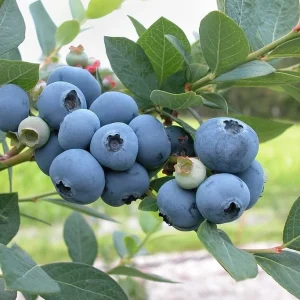
Fruits
Bluecrop Northern Highbush Blueberry Plants – 5 Bare Root, 2 Year Old, Sweet Mid-Season Berries
Sold 72 products
Original price was: $339.80.$169.90Current price is: $169.90.
Sold 74 products
Original price was: $39.96.$19.98Current price is: $19.98.
Sold 87 products
Original price was: $56.00.$44.80Current price is: $44.80.
Sold 63 products
Original price was: $65.48.$39.28Current price is: $39.28.
Sold 82 products
Original price was: $90.00.$72.00Current price is: $72.00.
Sold 72 products
$81.38
Sold 61 products
Original price was: $62.76.$31.38Current price is: $31.38.
Sold 93 products
Original price was: $13.96.$6.98Current price is: $6.98.
Sold 83 products
Original price was: $28.76.$14.38Current price is: $14.38.
Sold 61 products
From $41.20
Sold 74 products
Original price was: $147.16.$73.58Current price is: $73.58.
Sold 69 products
Original price was: $47.96.$23.98Current price is: $23.98.

Sold 73 products
Original price was: $30.76.$15.38Current price is: $15.38.
Sold 99 products
From $4.26
Sold 90 products
Original price was: $18.76.$9.38Current price is: $9.38.



Reviews
There are no reviews yet.