
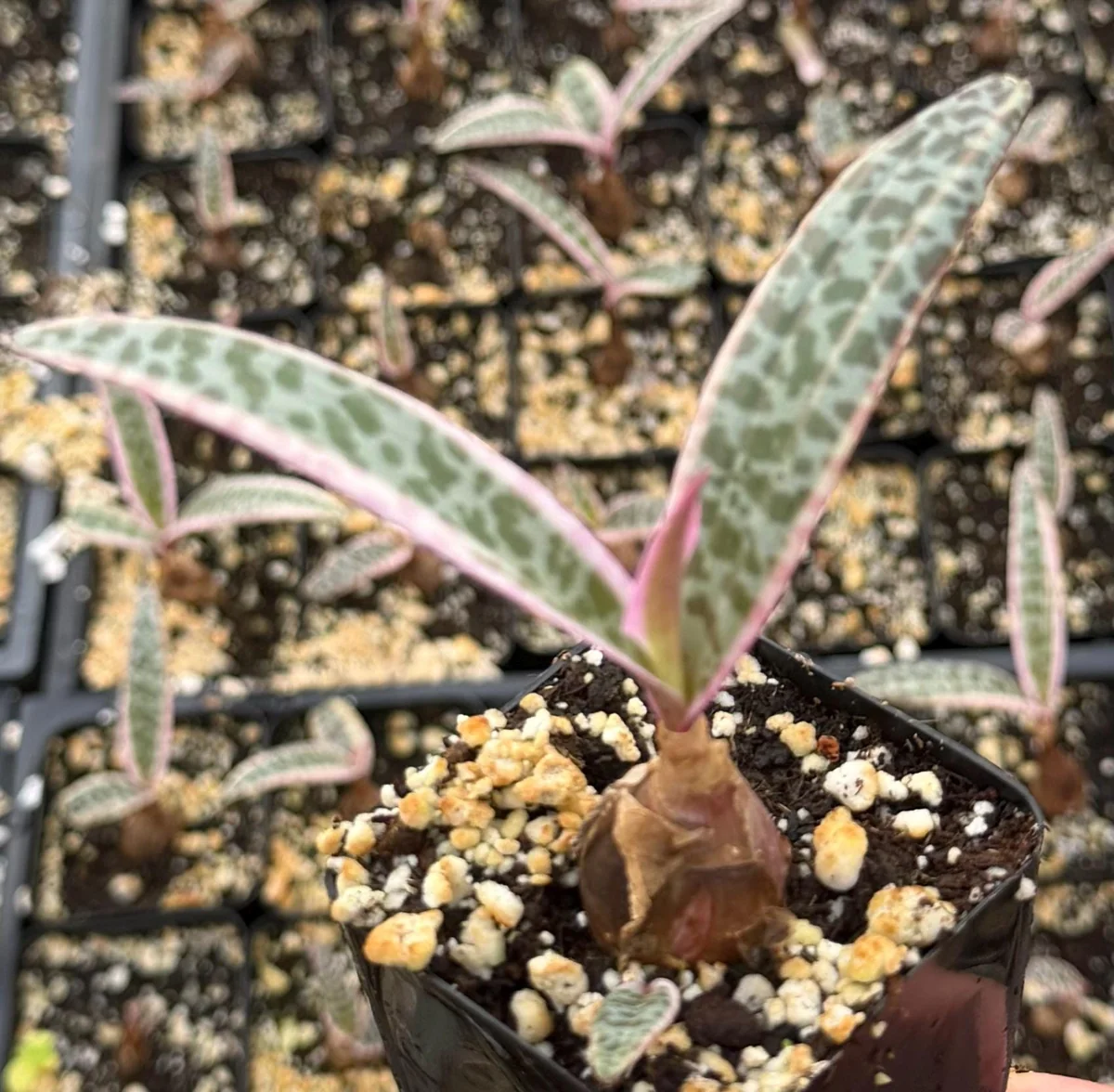
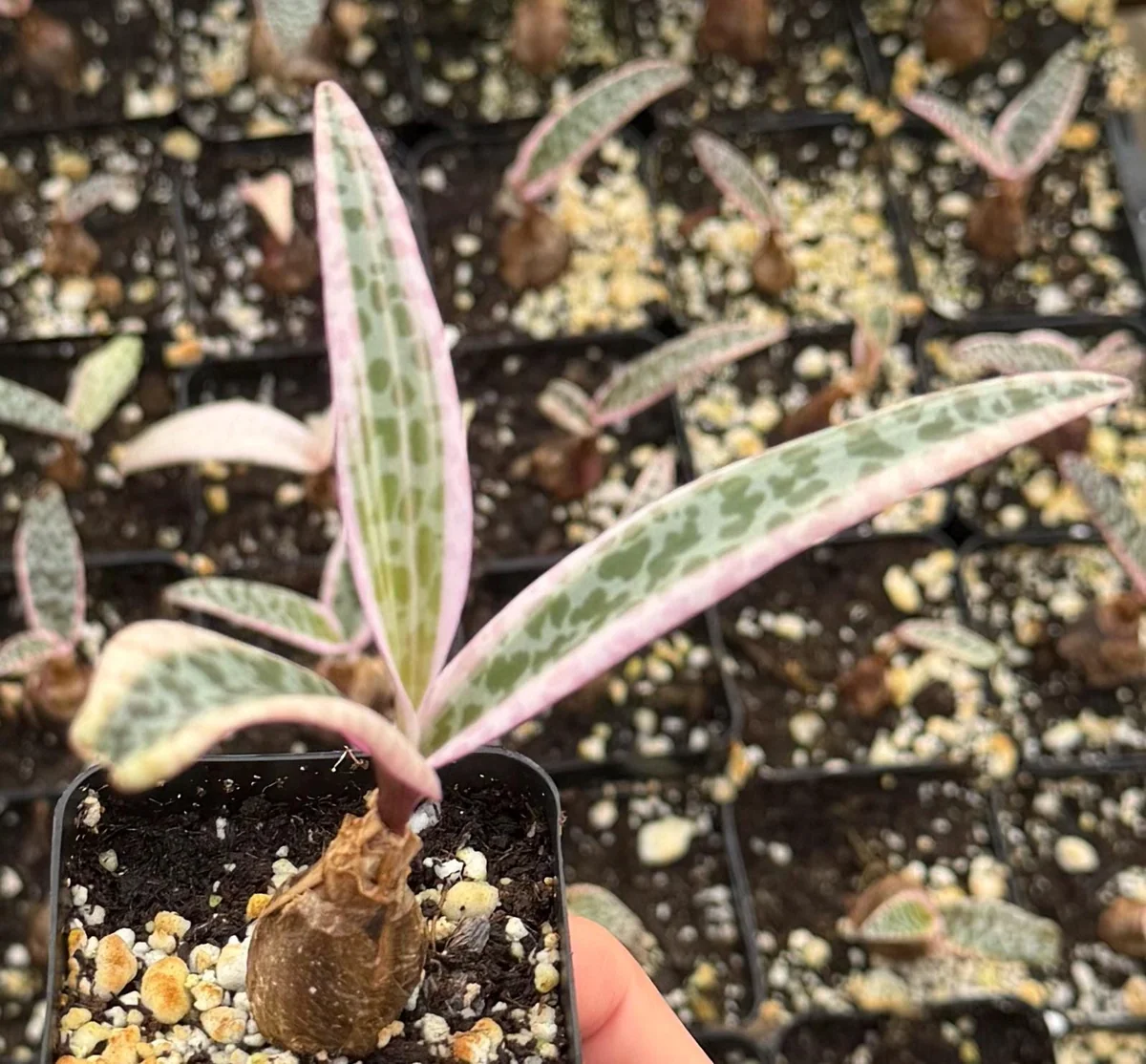
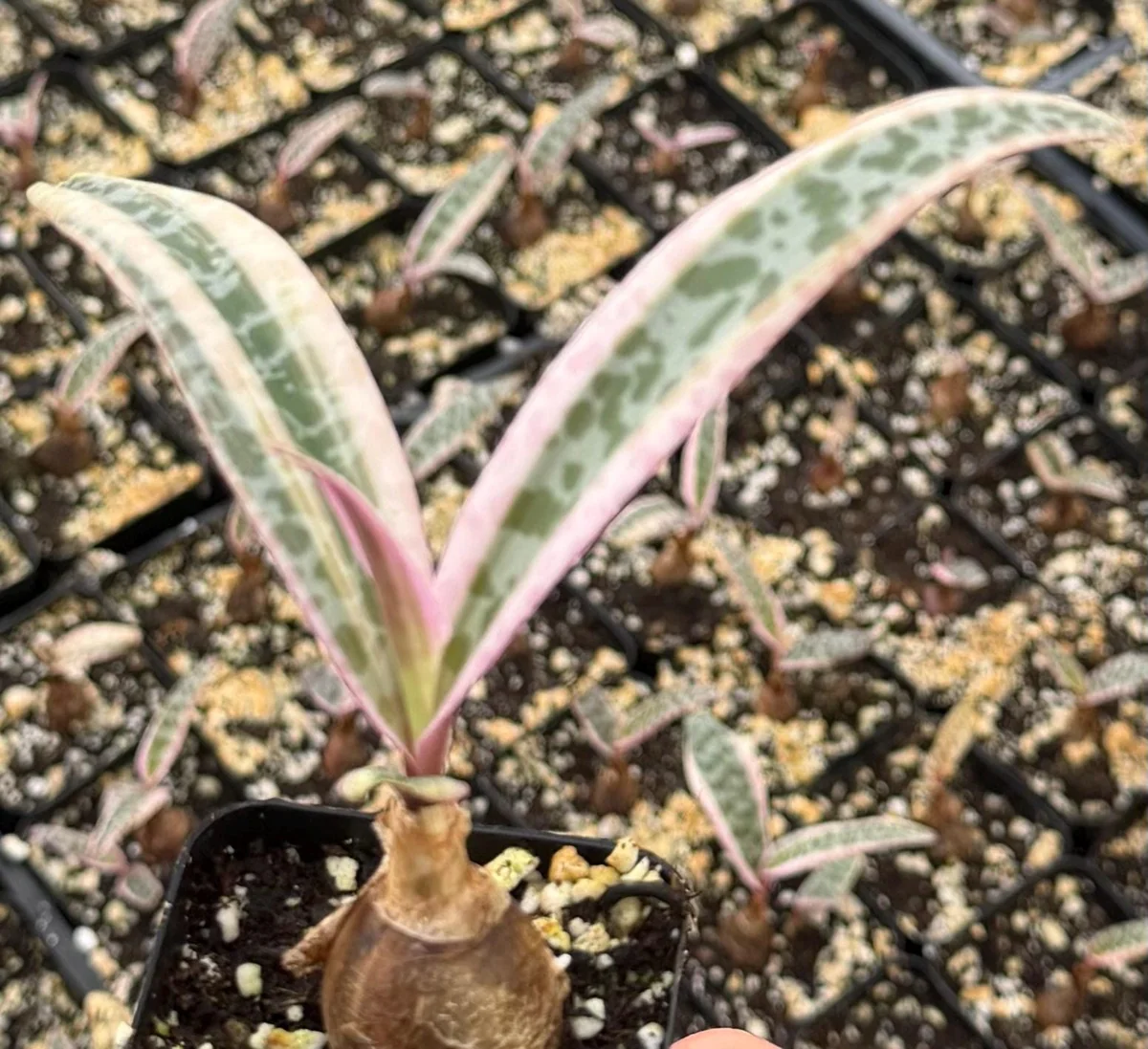
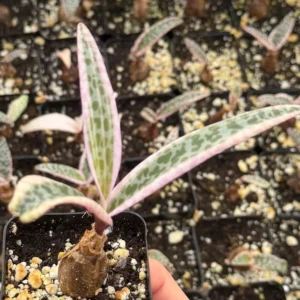
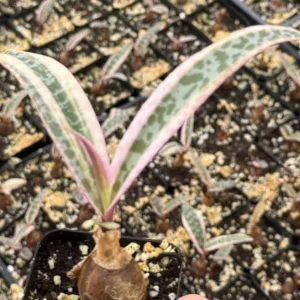
Variegated Silver Squill Ledebouria Socialis Live Plant – 2 inch Pot Indoor
Original price was: $30.76.$15.38Current price is: $15.38.
Bring home a beautiful variegated silver squill, also known as Ledebouria socialis care. This rare 2 inch potted live plant features striking foliage with creamy white and light green variegation, perfect for adding a touch of color to any indoor space.
-
USDA Hardiness Zone
unknown (typically grown indoors) -
Soil Type
well-draining potting mix -
Sunlight Exposure
bright indirect light -
Expected Planting Period
year-round indoors

You can track your order HERE
Mar 01
Mar 06 - Mar 08
Mar 11 - Mar 15
Shipping and return policies: Our Alive & Thrive Guarantee covers issues with your plants within the first 30 days. Reach out to us. Our team will answer your questions and help you find the plants that are truly suitable for your environment, climate, and personal preferences.

Overview
Introduce a touch of unique beauty to your indoor plant collection with the variegated silver squill, a captivating form of Ledebouria socialis care. This small, bulb-forming live plant is cherished for its distinctive foliage, which deviates from the typical silvery-green leaves of the classic Silver Squill. Instead, you’ll find leaves exquisitely streaked or marbled with creamy white, pale yellow, and light green, creating a visually stunning display. Each leaf gracefully emerges from a small, partially exposed bulb, contributing to its charming clustered appearance. As a compact and slow-growing specimen, this plant is an excellent choice for windowsills, desks, or any bright indoor spot where its unique variegation can be admired. It’s a truly collectible item for plant enthusiasts seeking something out of the ordinary, and its easy-care nature makes it suitable for both novice and experienced gardeners.
The variegated silver squill is a rare find, offering an exciting alternative to more common houseplants. Its vibrant colors and interesting growth habit make it a fantastic conversation starter. This particular variety of Ledebouria socialis care thrives in indoor conditions when provided with the right light and watering regimen. Its ability to form clumping colonies over time adds to its visual interest and makes it a rewarding plant to observe as it matures. Embrace the beauty of this decorative foliage plant and elevate your living space with its natural elegance.
Key Benefits
The variegated silver squill offers numerous advantages that make it a highly desirable addition to any home. Its unique characteristics provide both aesthetic appeal and ease of maintenance.
- Striking Variegated Foliage: Unlike its common counterpart, this Ledebouria socialis boasts leaves streaked with creamy white, pale yellow, or light green, creating a captivating visual display that stands out in any collection. This unique coloring ensures your variegated silver squill is always a focal point.
- Compact & Slow Growth: Ideal for small spaces, apartments, or office desks, this plant maintains a manageable size and grows slowly, requiring minimal pruning and making it a perfect desk-friendly companion.
- Bulb-Forming Charm: Each leaf grows from a small, partially exposed bulb, giving the plant a distinctive clustered look and adding an interesting textural element to its appearance.
- Drought-Tolerant: This plant prefers to dry out between waterings, making it an excellent choice for those who occasionally forget to water or prefer low-maintenance options. Its resilience is a key aspect of Ledebouria socialis care.
- Collectible & Visually Interesting: Over time, it forms a clumping colony of bulbs, increasing its appeal to collectors and providing ongoing visual interest as it matures and expands.
- Air Purifying Qualities: Like many houseplants, the silver squill plant contributes to a healthier indoor environment by helping to filter airborne toxins.
- Adaptable to Indoor Conditions: Thrives indoors with bright, indirect light, making it a versatile plant that can be placed in various rooms of your home.
Plant Care & Growing Tips
Proper Ledebouria socialis care is straightforward, ensuring your variegated silver squill thrives and maintains its vibrant foliage. For optimal growth, provide bright, indirect light. The variegation on the leaves makes this plant more sensitive to low light conditions, so ensuring adequate brightness will keep the colors vivid and prevent the plant from reverting to a greener hue. A spot near an east or west-facing window is often ideal, or a few feet away from a south-facing window where it receives diffused light.
When it comes to watering, the variegated silver squill is quite forgiving and prefers to dry out thoroughly between waterings. Overwatering is a common issue for this plant, as its bulbs are susceptible to rot. Always check the soil moisture before watering; if the top inch or two of soil feels dry, it’s time to water. Reduce watering frequency during the cooler, darker winter months when the plant’s growth naturally slows. A well-draining potting mix is essential to prevent waterlogged conditions. A mix formulated for succulents or cacti, or a standard potting mix amended with perlite or coarse sand, will provide the necessary drainage. The ideal temperature range for this plant is between 60-80°F (15-27°C), and it can tolerate average household humidity levels.
Fertilize sparingly, typically once or twice during the growing season (spring and summer) with a balanced liquid fertilizer diluted to half strength. Repotting is generally only needed when the plant becomes root-bound or the colony of bulbs outgrows its container, usually every 2-3 years. When repotting, choose a pot only slightly larger than the current one to avoid excessive soil moisture. This silver squill plant is relatively pest-resistant, but keep an eye out for common houseplant pests like mealybugs or spider mites, especially if conditions are stressful. With these simple tips, your variegated silver squill will flourish.
Size & Details
This variegated silver squill live plant is supplied in a 2 inch nursery pot, a perfect starter size for establishing in your home. The plant typically stays compact, making it an excellent choice for tabletops, shelves, or terrariums. While individual plant heights may vary slightly upon arrival, you can expect a healthy, well-rooted specimen ready to thrive. The silver squill plant is known for its slow growth rate, ensuring it remains a manageable size for many years. It will gradually form a clumping colony of bulbs, adding density and character to its appearance over time. This particular variety, a form of Ledebouria socialis care, is prized for its unique foliage and collectible nature.
As a rare indoor plants, it is shipped in its nursery pot with soil to minimize stress during transit, ensuring it arrives healthy and ready for its new home. Expect it to continue its slow, consistent growth, gradually filling its pot with more bulbs and foliage. The vibrant variegation will become more pronounced with consistent bright, indirect light. This plant does not typically produce showy flowers, as its appeal lies primarily in its stunning foliage and unique bulb structure. Its compact nature and decorative leaves make it a fantastic addition to any indoor gardening collection, providing year-round beauty.
Frequently Asked Questions
- Q: How big does this plant get? A: The variegated silver squill is a compact, slow-growing plant. It typically reaches a height of 4-6 inches and will gradually spread to form a clumping colony of bulbs rather than growing tall.
- Q: What size pot does it come in? A: This variegated silver squill live plant is delivered in a 2 inch nursery pot, which is an ideal size for a young plant to establish itself in your home.
- Q: Is this an indoor or outdoor plant? A: This silver squill plant is primarily grown as an indoor houseplant in most climates. It thrives in bright, indirect light conditions found indoors and is not tolerant of frost.
- Q: How much sunlight does it need? A: The variegated silver squill requires bright, indirect light. Direct harsh sunlight can scorch its leaves, while too little light can cause the variegation to fade.
- Q: Is this plant easy to care for? A: Yes, the variegated silver squill is considered an easy-care plant, especially for those who tend to under-water. Its preference for dry conditions between waterings makes Ledebouria socialis care relatively simple.
- Q: Is it good for beginners? A: Absolutely! Its low-maintenance requirements and tolerance for occasional neglect make it an excellent choice for beginner plant enthusiasts looking for rare indoor plants.
- Q: What condition will it arrive in? A: Your variegated silver squill will arrive safely in its 2 inch nursery pot, carefully packaged to ensure it reaches you healthy and ready to thrive in its new environment.
- Q: Is it shipped in soil? A: Yes, the plant is shipped in its original nursery pot with soil to minimize shock and stress during transit, ensuring a smooth transition to your home.
- Q: Can I use this plant for a ‘pink plant’ collection? A: While this plant is not predominantly pink, its creamy white and pale yellow variegation can sometimes have a subtle pinkish tint under certain light conditions, making it an interesting addition to a diverse collection often including a pink plant.
- Q: How long until it blooms? A: The variegated silver squill is primarily grown for its foliage. While it can produce small, inconspicuous flowers, they are not the main attraction. The plant’s beauty lies in its unique variegated leaves and bulb structure.
Be the first to review “Variegated Silver Squill Ledebouria Socialis Live Plant – 2 inch Pot Indoor”
People Also Viewed
Sold 89 products
Original price was: $162.36.$81.18Current price is: $81.18.
Sold 94 products
From $3.98
Sold 77 products
From $119.80
Sold 61 products
Original price was: $65.98.$32.99Current price is: $32.99.
Sold 62 products
Original price was: $159.96.$79.98Current price is: $79.98.
Sold 91 products
$87.98
Sold 79 products
Original price was: $28.76.$14.38Current price is: $14.38.
Sold 95 products
$43.98
Sold 76 products
Original price was: $252.00.$126.00Current price is: $126.00.
Sold 98 products
From $13.98
Sold 83 products
Original price was: $116.00.$58.00Current price is: $58.00.
Sold 68 products
Original price was: $39.98.$19.99Current price is: $19.99.
Sold 78 products
Original price was: $89.98.$44.99Current price is: $44.99.
Sold 100 products
Original price was: $58.48.$21.39Current price is: $21.39.
Sold 66 products
Original price was: $16.76.$8.38Current price is: $8.38.
Sold 98 products
From $197.96
Sold 71 products
Original price was: $24.35.$7.74Current price is: $7.74.
Sold 68 products
From $61.58



Reviews
There are no reviews yet.