
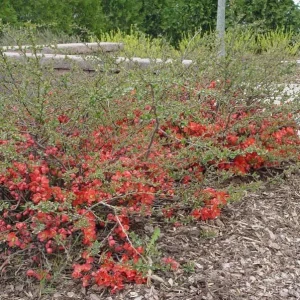

Texas Scarlet Flowering Quince Live Plant – 3 Gallon Pot – Outdoor Shrub
Original price was: $175.96.$87.98Current price is: $87.98.
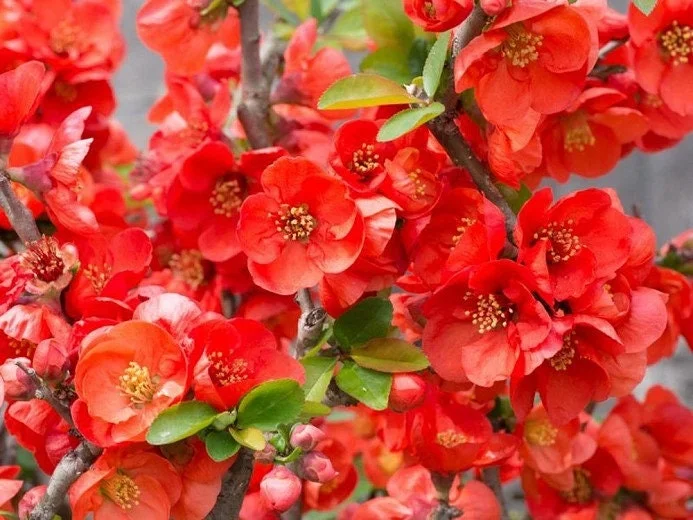
Bring vibrant color to your garden with the Texas Scarlet Flowering Quince. This beautiful dwarf shrub produces stunning watermelon-red flowers in early spring, before its glossy green leaves appear. Ideal for hedges, borders, or mass plantings.
-
USDA Hardiness Zone
USDA Zones 5-9 -
Soil Type
Well-draining soil -
Sunlight Exposure
Full sun to partial shade -
Expected Planting Period
Early spring to fall

You can track your order HERE
Mar 04
Mar 09 - Mar 11
Mar 14 - Mar 18
Shipping and return policies: Our Alive & Thrive Guarantee covers issues with your plants within the first 30 days. Reach out to us. Our team will answer your questions and help you find the plants that are truly suitable for your environment, climate, and personal preferences.

Overview
Introducing the Texas Scarlet Flowering Quince, a truly captivating addition to any landscape. This resilient dwarf shrub is celebrated for being one of the earliest heralds of spring, bursting forth with an abundance of striking watermelon-red flowers even before its foliage emerges. Botanically known as Chaenomeles speciosa, this plant offers not only spectacular early season color but also a robust and adaptable nature, making it a favorite among gardeners. Its spreading branches and glossy dark green leaves provide year-round interest, while the vibrant blooms create an unforgettable display. Whether you’re a seasoned gardener or just starting, the flowering quince shrub is an excellent choice for adding structure and early-season beauty to your outdoor spaces. This live plant arrives ready to thrive in your garden.
Key Benefits
The Texas Scarlet Flowering Quince offers a multitude of benefits that make it a standout choice for various garden designs. Its unique characteristics contribute to a vibrant and resilient landscape:
- Stunning Early Spring Blooms: Enjoy a spectacular display of large, watermelon-red flowers that emerge before the leaves, providing much-needed color after winter. This makes it an invaluable plant for extending the blooming season in your garden.
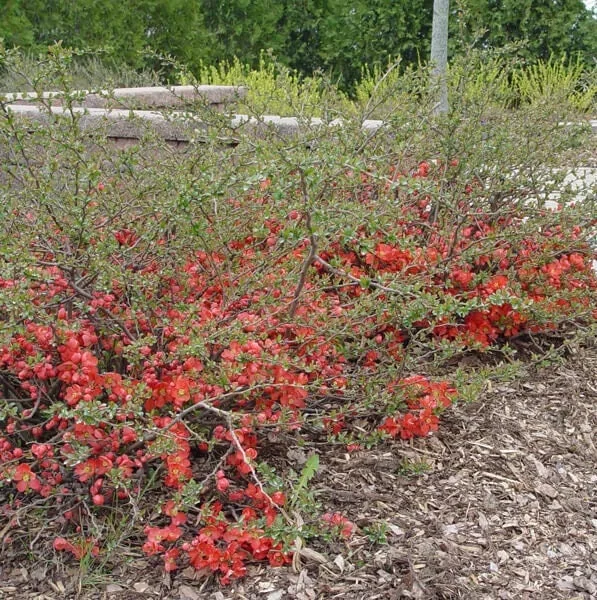
- Versatile Landscape Use: Perfect for creating dense hedges, defining borders, acting as a natural barrier due to its small thorns, or mass planting for a dramatic effect. Its adaptable nature allows it to fit into many garden styles.
- Attractive Foliage: Beyond its flowers, the Chaenomeles speciosa boasts glossy, dark green, oval-shaped leaves that maintain an attractive appearance throughout the growing season, even after the blooms have faded.
- Dwarf & Manageable Size: As a dwarf shrub, it maintains a compact and manageable size, making it suitable for smaller gardens or areas where space is a consideration. It requires less pruning to keep its desired shape.
- Low Maintenance: Once established, the Texas Scarlet Flowering Quince is remarkably low maintenance, requiring minimal care to flourish. It’s an excellent choice for gardeners seeking beauty without constant upkeep.
- Wildlife Interest: Though primarily grown for its ornamental value, it occasionally produces small, yellowish-green quince fruits which can attract local wildlife.
- Hardy and Resilient: This dwarf flowering shrub is known for its hardiness and ability to tolerate a range of growing conditions, ensuring it thrives in many different environments.
Plant Care & Growing Tips
Caring for your Texas Scarlet Flowering Quince is relatively straightforward, ensuring a dazzling display each spring. This resilient shrub thrives with consistent care. For optimal bloom production and overall plant health, choose a location that receives full sun to partial shade. Full sun (at least 6 hours of direct sunlight per day) will encourage the most abundant flowering. While it can tolerate some shade, too much shade may result in fewer blooms. The plant is adaptable to various soil types but performs best in well-draining soil. Avoid heavy, waterlogged soils, as this can lead to root rot. If your soil is clay-heavy, consider amending it with organic matter to improve drainage.
Watering should be consistent, especially during dry spells and in its first year after planting. Once established, the Texas Scarlet Flowering Quince is moderately drought-tolerant, but regular watering during prolonged dry periods will promote healthier growth and more vibrant blooms. Fertilize in early spring with a balanced, slow-release granular fertilizer formulated for flowering shrubs. Pruning is best done after the plant has finished flowering in spring. This allows you to shape the shrub, remove any dead or damaged branches, and encourage new growth for the following season’s blooms. Be mindful of the small thorns when handling. This early spring bloomers shrub is generally pest and disease resistant, making it a robust choice for most gardens.
Size & Details
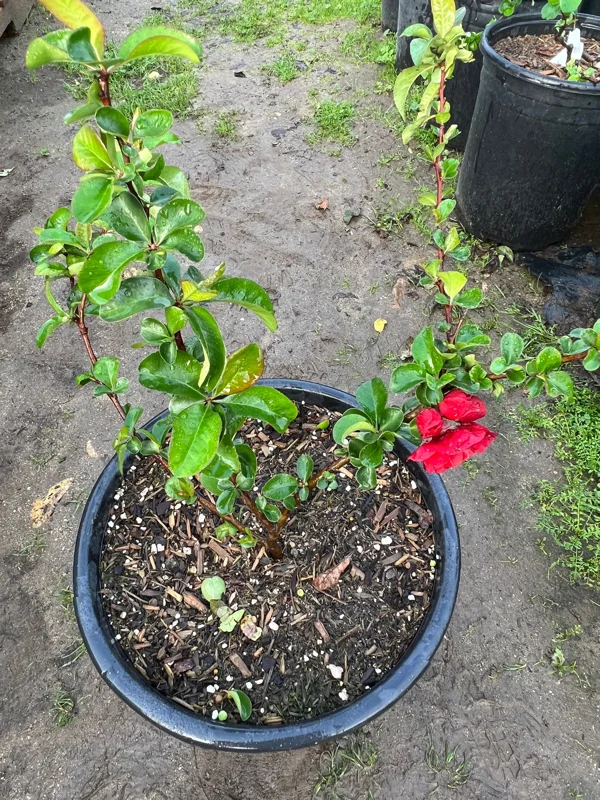
This Texas Scarlet Flowering Quince is shipped as a live plant, ready for immediate planting in your garden. It is supplied in a 1-gallon pot, providing a healthy root system for successful transplanting, with the expectation to grow into a 3-gallon size. As a dwarf shrub, it typically reaches a mature height of 3-5 feet and spreads 4-6 feet wide, creating a dense and attractive form. The growth rate is moderate, allowing it to establish itself well within a few seasons. Expect the vibrant watermelon-red flowers to appear in early spring, often in March or April, depending on your local climate. The plant may or may not be in flower at the time of shipping, depending on the season, but its robust nature ensures it will bloom in its proper time.
Frequently Asked Questions
- Q: How big does the Texas Scarlet Flowering Quince get? A: The Texas Scarlet Flowering Quince typically grows to a mature height of 3-5 feet and spreads 4-6 feet wide, forming a dense dwarf shrub. Its compact size makes it versatile for various garden uses.
- Q: Is this an indoor or outdoor plant? A: This is an outdoor shrub, perfectly suited for garden beds, hedges, and borders. It thrives outdoors in appropriate USDA hardiness zones and requires significant sunlight.
- Q: How much sunlight does it need? A: For the best flowering performance, the flowering quince shrub prefers full sun (at least 6 hours of direct sunlight daily). It can tolerate partial shade, but blooming may be less prolific.
- Q: Is this plant easy to care for? A: Yes, the Texas Scarlet Flowering Quince is considered a low-maintenance shrub. Once established, it is quite hardy and adaptable, requiring minimal care beyond occasional watering and annual pruning after flowering.
- Q: What condition will it arrive in? A: Your live plant will arrive healthy and well-packaged in a 1-gallon nursery pot, with a robust root system ready for planting. It may or may not have flowers at the time of shipping, depending on the season.
- Q: When is the best time to plant this early spring bloomer? A: The best time to plant the Chaenomeles speciosa is in early spring or fall. This allows the plant to establish its root system before the stress of summer heat or winter cold.
- Q: Will it survive winter in my zone? A: The Texas Scarlet Flowering Quince is very hardy and typically thrives in USDA Zones 5-9, making it suitable for a wide range of climates and able to withstand winter temperatures in these zones.
- Q: Does this plant produce fruit? A: Yes, this dwarf flowering shrub can occasionally produce small, yellowish-green quince fruits after its flowering period. These fruits are generally not consumed fresh but can be used for preserves.
- Q: How often should I water my flowering quince? A: Water regularly after planting to help establish the roots. Once established, it is moderately drought-tolerant, but provide supplemental water during extended dry periods, especially during hot summers.
- Q: Can I grow the Texas Scarlet Flowering Quince in a container? A: While it is primarily an in-ground shrub, it can be grown in a large container with good drainage. Ensure the container is big enough to accommodate its mature size and root system, and provide consistent watering.
Be the first to review “Texas Scarlet Flowering Quince Live Plant – 3 Gallon Pot – Outdoor Shrub”
People Also Viewed
Sold 71 products
Original price was: $391.96.$195.98Current price is: $195.98.
Sold 58 products
Original price was: $49.98.$24.99Current price is: $24.99.
Sold 55 products
Original price was: $59.98.$29.99Current price is: $29.99.
Sold 98 products
$48.38
Sold 90 products
Original price was: $16.00.$12.80Current price is: $12.80.
Sold 97 products
Original price was: $18.76.$9.38Current price is: $9.38.

Sold 80 products
Original price was: $51.80.$25.90Current price is: $25.90.
Sold 70 products
Original price was: $47.98.$23.99Current price is: $23.99.
Sold 79 products
Original price was: $99.96.$49.98Current price is: $49.98.
Sold 57 products
Original price was: $115.80.$57.90Current price is: $57.90.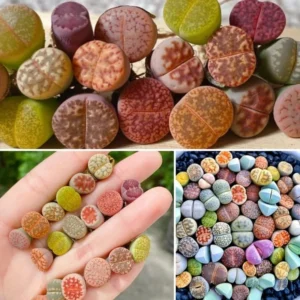
HousePlants
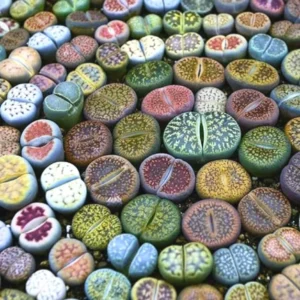
Lithops Live Plants Mix – 10 Large Colorful Living Stones Succulents for Indoor/Outdoor Growing
Sold 68 products
Original price was: $27.98.$13.99Current price is: $13.99.
Sold 81 products
$48.38

Sold 90 products
From $9.98
Sold 72 products
Original price was: $61.56.$30.78Current price is: $30.78.

Sold 68 products
Original price was: $35.98.$17.99Current price is: $17.99.
Sold 81 products
Original price was: $355.96.$177.98Current price is: $177.98.
Sold 92 products
From $197.96
Sold 67 products
Original price was: $183.16.$91.58Current price is: $91.58.



Reviews
There are no reviews yet.