








Sweet Potato Slips Variety Pack – 20 Slips: Purple, Okinawa, Japanese Red, Beauregard – Live Plants
$74.00
Cultivate a diverse and delicious harvest with this pack of sweet potato slips. You’ll receive 20 healthy slips, featuring popular varieties like Purple, Okinawa, Japanese Red, and Beauregard. Perfect for home gardeners looking to grow sweet potatoes with different flavors and textures.
-
USDA Hardiness Zone
USDA zones 9-11 (as perennial), all zones (as annual) -
Soil Type
Well-draining, loose, rich in organic matter -
Sunlight Exposure
Full sun (6-8 hours daily) -
Expected Planting Period
Late spring to early summer

You can track your order HERE
Mar 01
Mar 06 - Mar 08
Mar 11 - Mar 15
Shipping and return policies: Our Alive & Thrive Guarantee covers issues with your plants within the first 30 days. Reach out to us. Our team will answer your questions and help you find the plants that are truly suitable for your environment, climate, and personal preferences.

Overview
Embark on a rewarding gardening journey with our premium sweet potato slips variety pack. This collection includes 20 robust slips, carefully selected to offer a diverse range of colors, flavors, and textures for your culinary adventures. You’ll discover the deep purple hues of the Purple variety, the unique taste of the Okinawa sweet potato, the rich sweetness of the Japanese Red, and the classic, reliable Beauregard sweet potato. These live plant cuttings are ready for planting, providing an excellent foundation for a bountiful harvest of homegrown sweet potatoes. Whether you’re a seasoned gardener or just starting out, learning to grow sweet potatoes from slips is a simple and satisfying process that yields delicious results.
Sweet potatoes (Ipomoea batatas) are a staple crop known for their nutritional value and versatility in the kitchen. Unlike regular potatoes, sweet potatoes are root vegetables with edible leaves, offering an additional culinary benefit. This variety pack allows you to experiment with different types, finding your favorites for baking, roasting, frying, or boiling. Each slip is a young sprout taken from a mature sweet potato, ensuring a strong start for your new plants and a successful growing season.
Key Benefits
Our sweet potato slips offer numerous advantages for the home gardener and culinary enthusiast alike. Planting these slips is an excellent way to ensure a fresh, organic supply of this nutritious vegetable right from your backyard.
- Diverse Harvest: Enjoy a wide array of sweet potato types, including the vibrant Purple, the distinct Okinawa sweet potato, the sweet Japanese Red, and the popular Beauregard sweet potato. This variety ensures you have different options for various dishes and preferences.
- Nutrient-Rich Food Source: Sweet potatoes are packed with vitamins, minerals, and antioxidants, making them a healthy addition to any diet. Growing your own guarantees fresh, high-quality produce.
- Easy to Grow: Sweet potato slips are known for being relatively easy to establish and maintain, even for beginner gardeners. They thrive in warm climates and require minimal fuss once planted.
- High Yield Potential: With proper care, sweet potato plants can produce a generous harvest, providing you with plenty of delicious tubers throughout the season.
- Versatile Culinary Uses: From savory dishes to sweet desserts, each variety offers unique characteristics that lend themselves to a wide range of recipes. Explore new culinary creations with your homegrown bounty.
- Vigorous Growth: These slips are specifically chosen for their strong growth habits, ensuring a healthy start for your sweet potato patch and robust plants that can withstand various growing conditions.
- Sustainable Gardening: Growing your own vegetables reduces your carbon footprint and provides a sustainable food source, connecting you more closely with nature’s cycles.
Plant Care & Growing Tips
To successfully grow sweet potatoes, especially from slips, understanding their basic needs is crucial. Sweet potatoes thrive in warm environments and require a relatively long growing season. Plant your sweet potato slips after all danger of frost has passed and the soil temperature has warmed to at least 60°F (15°C), typically late spring or early summer. Choose a location that receives full sun, meaning at least 6-8 hours of direct sunlight per day. Prepare your soil by ensuring it is loose, well-draining, and rich in organic matter. A slightly acidic to neutral pH (5.5-7.0) is ideal. For optimal growth, avoid heavy clay soils that can impede tuber development.
When planting, bury the bottom half of each slip, leaving the leaves exposed above the soil line. Space slips about 12-18 inches apart in rows that are 3-4 feet apart. Water thoroughly after planting. Consistent moisture is important during the initial establishment phase and during tuber development, but avoid waterlogging the soil. Once established, sweet potatoes are somewhat drought-tolerant. Fertilize sparingly; too much nitrogen can promote lush vine growth at the expense of tuber production. A balanced fertilizer or one higher in phosphorus and potassium is suitable. Watch out for common pests like sweet potato weevils and deer, and implement appropriate organic pest control methods if necessary. The vines can spread a lot, so give them ample room or train them. With proper sweet potato plant care, you’ll be on your way to a fantastic harvest.
Size & Details
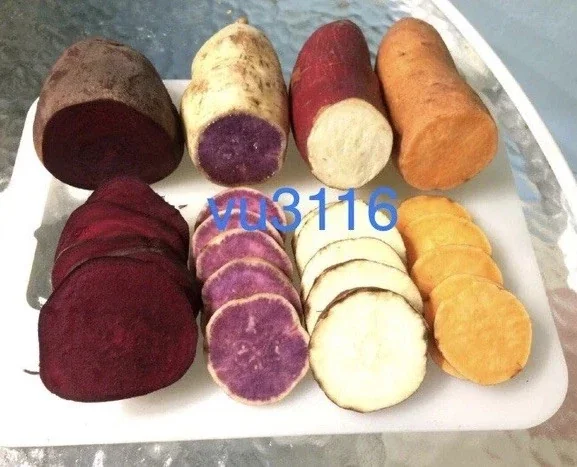
This offering includes a generous pack of 20 sweet potato slips, providing ample opportunity for a substantial harvest. Each slip is a live, rooted cutting, typically measuring between 6 to 10 inches in length, ready to be planted directly into your garden or raised beds. These slips are carefully harvested to ensure they are healthy and viable for successful establishment. Sweet potato plants are known for their vigorous growth, with vines that can spread several feet in all directions. The tubers themselves will develop underground, varying in size and shape depending on the variety and growing conditions. Expect a maturation period of approximately 90-120 days from planting to harvest, depending on your local climate and the specific varieties. The specific colors of the tubers will include purple, light-orange for Okinawa, red skin with white flesh for Japanese Red, and classic orange for Beauregard. These slips are ideal for starting your own sweet potato crop and experiencing the joy of homegrown produce.
Frequently Asked Questions
- Q: How big does this plant get? A: Sweet potato plants are vining crops, and their vines can spread extensively, often covering an area of 3-6 feet or more. The tubers themselves will vary in size, typically ranging from small to medium, depending on the variety and growing conditions.
- Q: Is this an indoor or outdoor plant? A: Sweet potato plants are primarily grown outdoors as a warm-season crop. While you can root the slips indoors, the plants need a long, warm growing season outside to produce tubers.
- Q: How much sunlight does it need? A: Sweet potatoes require full sun, meaning at least 6 to 8 hours of direct sunlight per day, to produce a good harvest. Insufficient light can lead to poor tuber development.
- Q: Is this plant easy to care for? A: Yes, sweet potato plants are generally considered easy to care for, especially once established. They are relatively low-maintenance, making them a great choice for beginner gardeners looking to grow sweet potatoes.
- Q: What condition will it arrive in? A: Your sweet potato slips will arrive as fresh, live cuttings, carefully packaged to ensure their health. They may appear slightly wilted upon arrival but will quickly perk up once planted and watered.
- Q: How long until it blooms? A: While sweet potato plants can produce small, trumpet-shaped flowers, they are primarily grown for their edible tubers. Flowering is not a reliable indicator of tuber maturity, and many varieties may not flower at all in temperate climates.
- Q: Will it survive winter in my zone? A: Sweet potatoes are tender perennials typically grown as annuals in most of the US. They are sensitive to frost and will not survive winter outdoors in cold climates. They thrive in USDA zones 9-11 as perennials, but can be grown as annuals in all other zones.
- Q: Can I grow the Okinawa sweet potato in containers? A: Yes, you can grow sweet potatoes in large containers or grow bags, especially if you have limited garden space. Ensure the container is at least 15-20 gallons to allow for adequate tuber development.
- Q: What’s the difference between Purple and Beauregard sweet potato? A: Purple sweet potatoes have a vibrant purple skin and flesh, offering a distinct, slightly earthy flavor. Beauregard sweet potatoes are the classic orange-fleshed variety, known for their consistent sweetness and creamy texture, making them very popular.
- Q: When is the best time to plant these sweet potato slips? A: The best time to plant sweet potato slips is in late spring or early summer, after all danger of frost has passed and the soil temperatures are consistently warm, typically above 60°F (15°C).
Be the first to review “Sweet Potato Slips Variety Pack – 20 Slips: Purple, Okinawa, Japanese Red, Beauregard – Live Plants”
People Also Viewed
Sold 100 products
Original price was: $67.64.$33.82Current price is: $33.82.

Sold 69 products
Original price was: $30.76.$15.38Current price is: $15.38.
Sold 85 products
Original price was: $76.88.$38.44Current price is: $38.44.
Sold 71 products
$43.98
Sold 100 products
Original price was: $75.98.$37.99Current price is: $37.99.

Sold 79 products
Original price was: $38.36.$19.18Current price is: $19.18.
Sold 87 products
Original price was: $67.96.$33.98Current price is: $33.98.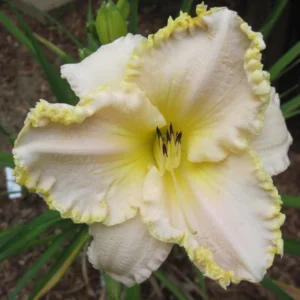

Flower Plants
Marquee Moon Daylily Live Plant – Creamy White Flowers, Gold Edge – 1 Gallon Pot – Outdoor Perennial
Sold 99 products
From $95.80
Sold 77 products
Original price was: $77.98.$38.99Current price is: $38.99.

Sold 91 products
Original price was: $39.98.$31.98Current price is: $31.98.
Sold 78 products
Original price was: $391.96.$195.98Current price is: $195.98.
Sold 93 products
From $75.80
Sold 77 products
Original price was: $49.98.$39.98Current price is: $39.98.
Sold 78 products
Original price was: $51.16.$25.58Current price is: $25.58.
Sold 55 products
Original price was: $47.96.$23.98Current price is: $23.98.
Sold 66 products
Original price was: $90.00.$72.00Current price is: $72.00.
Sold 63 products
Original price was: $69.20.$41.52Current price is: $41.52.
Sold 90 products
$43.98



Reviews
There are no reviews yet.