
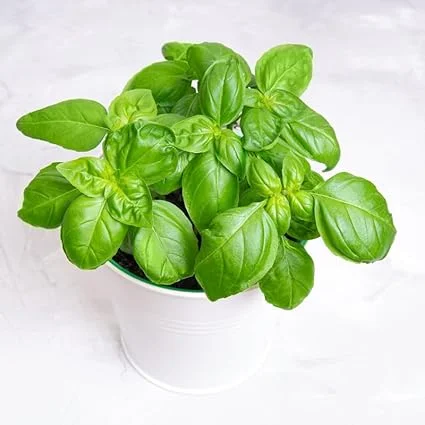
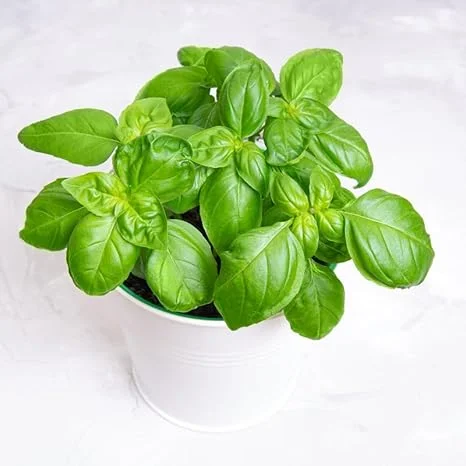
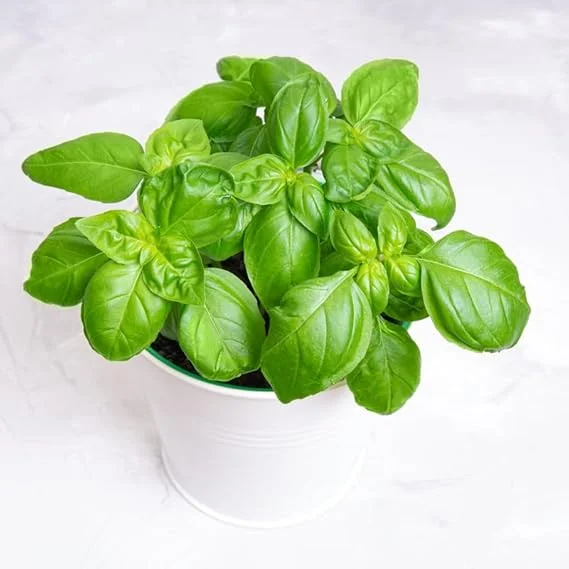
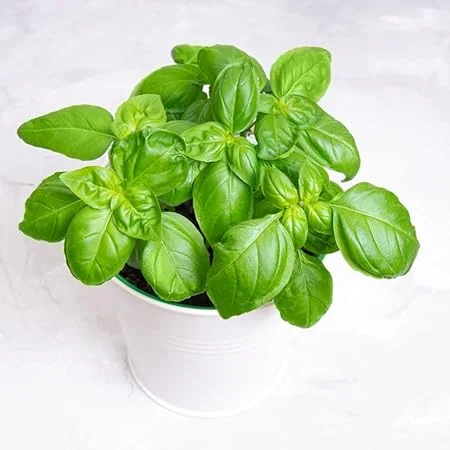
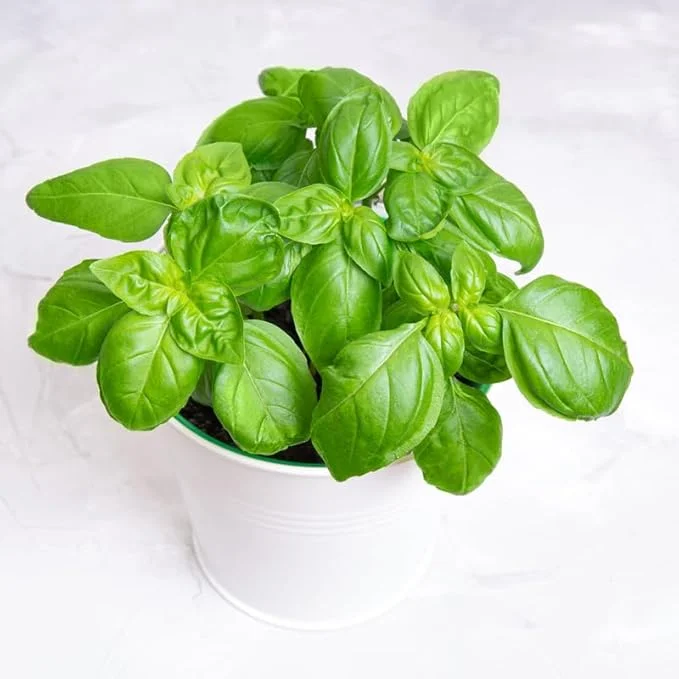
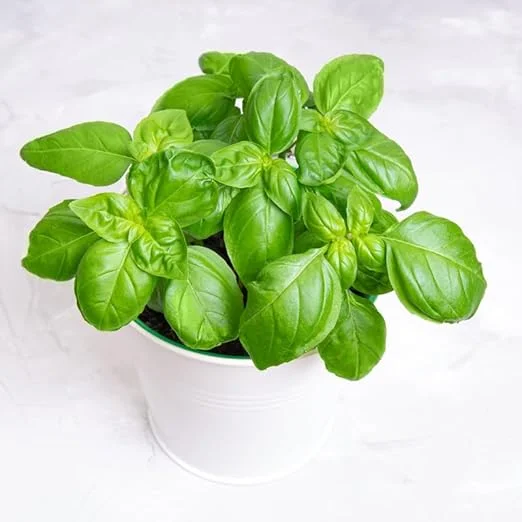
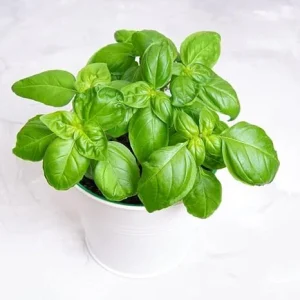
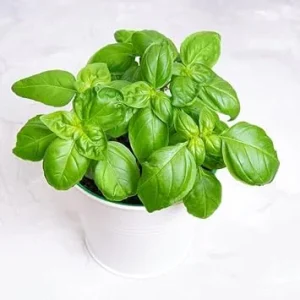
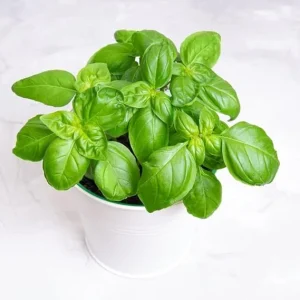
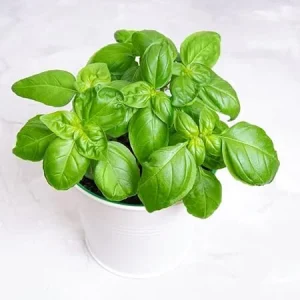
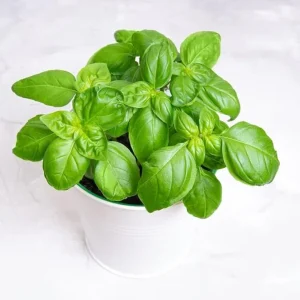
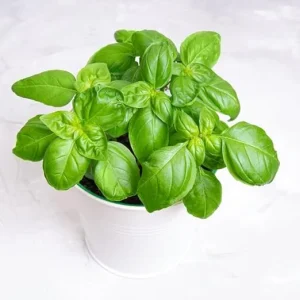
Sweet Basil Live Plant – 2 Pack, 4 Inch Pot Potted Herb for Indoor & Outdoor
$63.78
Bring the delightful aroma and flavor of fresh basil to your home with this 2-pack of sweet basil live plant. Each plant comes in a 4-inch pot, ready for planting indoors or outdoors. Enjoy continuous harvests of this versatile culinary herb.
-
USDA Hardiness Zone
USDA zones 9-11 (perennial), otherwise annual -
Soil Type
Well-drained soil -
Sunlight Exposure
Full Sun -
Expected Planting Period
Spring to early summer (outdoors), year-round indoors

You can track your order HERE
Feb 14
Feb 19 - Feb 21
Feb 24 - Feb 28
Shipping and return policies: Our Alive & Thrive Guarantee covers issues with your plants within the first 30 days. Reach out to us. Our team will answer your questions and help you find the plants that are truly suitable for your environment, climate, and personal preferences.

Overview
Cultivate your own fresh herbs with this convenient 2-pack of sweet basil live plant. Known for its aromatic leaves and distinct flavor, sweet basil (Ocimum basilicum) is a beloved herb in kitchens worldwide. These well-rooted starter plants arrive in 4-inch pots, making them ideal for immediate transplanting into your garden, raised beds, or indoor containers. Growing your own sweet basil live plant ensures a continuous supply of fresh, organic leaves for all your culinary adventures. Whether you’re a seasoned gardener or just starting, basil is a rewarding plant to grow, offering both beauty and utility to your home or garden space.
The vibrant green foliage and delightful fragrance of this sweet basil live plant will invigorate any setting. Perfect for both novice and experienced gardeners, these plants are robust and designed for successful growth. Enjoy the ease of having fresh basil at your fingertips, ready to elevate your favorite dishes from garden to table.
Key Benefits
Bringing a sweet basil live plant into your home or garden offers numerous advantages beyond just culinary delight:
- Fresh Culinary Herb Supply: Enjoy an endless supply of fresh, aromatic basil leaves for cooking. Nothing beats the flavor of freshly picked basil in pesto, pasta, salads, and more. Having a sweet basil live plant ensures peak freshness and flavor for all your dishes.
- Easy to Grow: Sweet basil is known for being an incredibly forgiving and easy-to-grow herb, making it perfect for beginners. It thrives with minimal attention, making it a great choice for those new to gardening or looking for a low-maintenance plant.
- Aromatic & Aesthetic Appeal: The lush green foliage and delightful fragrance of basil can enhance the ambiance of any indoor or outdoor space. It’s not just a food source but also a beautiful addition to your plant collection or garden.
- Promotes Healthy Eating: Having fresh herbs readily available encourages healthier eating habits by making it easy to add flavor to meals without relying on processed ingredients. Growing your own culinary basil herb connects you more deeply with your food.
- Versatile Planting Options: These potted plants are suitable for various growing environments, including indoor pots, outdoor garden beds, raised planters, and window boxes. This versatility makes it easy to find the perfect spot for your basil.
- Continuous Harvest: With proper care, your sweet basil plants will continue to produce leaves throughout the growing season, providing multiple harvests until cold weather arrives. This extended productivity ensures you always have basil when you need it.
- Attracts Pollinators: When allowed to flower, basil can attract beneficial pollinators like bees to your garden, contributing to a healthier ecosystem. This makes growing sweet basil beneficial for your garden as a whole.
Plant Care & Growing Tips
Caring for your sweet basil live plant is straightforward, ensuring a bountiful harvest of fragrant leaves. Basil thrives in locations that receive ample sunlight. For best results, aim for at least 6-8 hours of full sun exposure daily. If growing indoors, place your basil in a south-facing window or under a grow light. Adequate light is crucial for robust growth and flavorful leaves. The ideal temperature range for sweet basil is between 65-80°F (18-27°C); it is sensitive to cold and should be protected from frost. These plants are typically suitable for USDA zones 9-11 as a perennial, but can be grown as an annual in cooler climates.
Watering is key for a healthy sweet basil live plant. Keep the soil consistently moist but not waterlogged. Water deeply when the top inch of soil feels dry to the touch, ensuring proper drainage. Overwatering can lead to root rot, so a well-draining soil mix is essential. Basil prefers a rich, well-drained soil with a pH between 6.0 and 7.0. Incorporating compost or organic matter into your soil will provide necessary nutrients for vigorous growth. Fertilize every 2-4 weeks during the growing season with a balanced liquid fertilizer, especially if you are frequently harvesting. Pinching back the top sets of leaves regularly will encourage bushier growth and prevent the plant from flowering too early, extending your harvest period. This practice is vital for successful sweet basil plant care.
Common problems include fungal diseases like downy mildew, which can be mitigated by ensuring good air circulation and avoiding overhead watering. Pests such as aphids and spider mites can be managed with organic insecticidal soaps or by regularly inspecting and wiping down leaves. Regular harvesting and proper cultural practices are the best defense against many issues, ensuring your indoor basil plant remains healthy and productive. Remember that basil is a heat-loving plant, so ensure it is not exposed to temperatures below 50°F (10°C) for extended periods.
Size & Details
This offering includes a pack of two sweet basil live plant specimens, each carefully nurtured and delivered in its own 4-inch grower’s pot. These starter plants are well-rooted and ready for immediate transplanting upon arrival. Sweet basil typically grows to a mature height of 12-24 inches (30-60 cm) tall and spreads 10-18 inches (25-45 cm) wide, depending on growing conditions and pruning frequency. The compact size of these potted plants makes them perfect for windowsills, kitchen counters, or as additions to your outdoor herb garden. With proper care, you can expect to begin harvesting leaves within weeks of planting, and the plants will continue to produce throughout the warmer months. These plants are green in color and possess the classic aromatic qualities of culinary basil.
The robust root systems ensure a smooth transition to their new home, whether that’s a larger container or directly into your garden soil. They are designed for easy transplanting, making the process of expanding your herb collection simple and rewarding. Enjoy the continuous growth and abundant harvests from these healthy, ready-to-grow basil plants, providing fresh flavor for many meals to come.
Frequently Asked Questions
- Q: How big does this plant get? A: A mature sweet basil live plant typically reaches a height of 12-24 inches (30-60 cm) and spreads about 10-18 inches (25-45 cm) wide. Its final size depends on growing conditions and how often it’s pruned.
- Q: What size pot does it come in? A: Each sweet basil live plant in this pack is delivered in a 4-inch diameter grower’s pot, making it easy to transplant into a larger container or directly into your garden.
- Q: Is this an indoor or outdoor plant? A: Sweet basil is versatile and can be grown both indoors and outdoors. It thrives outdoors in warm weather and can be kept as an indoor basil plant year-round in a sunny spot.
- Q: How much sunlight does it need? A: For optimal growth and flavor, your sweet basil live plant requires at least 6-8 hours of full sun exposure daily. Ensure it gets plenty of bright light, especially if growing indoors.
- Q: Is this plant easy to care for? A: Yes, sweet basil is generally considered an easy-to-care-for herb, making it suitable for gardeners of all experience levels. Consistent watering and adequate sunlight are key to successful sweet basil plant care.
- Q: What condition will it arrive in? A: Your plants will arrive well-rooted and healthy, carefully packaged to ensure they reach you in excellent condition, ready for planting.
- Q: Can I use sweet basil in cooking? A: Absolutely! This is a culinary basil herb, perfect for use in pestos, sauces, salads, pizzas, and many other dishes. Its fresh, aromatic leaves add a delicious flavor to any meal.
- Q: How long until I can harvest leaves? A: You can typically begin harvesting leaves from your sweet basil live plant within a few weeks of planting. Regular pinching encourages bushier growth and more leaves.
- Q: What’s the best soil type for sweet basil? A: Sweet basil prefers rich, well-draining soil with a slightly acidic to neutral pH. A good quality potting mix or garden soil amended with compost works well.
- Q: Will it survive winter in my zone? A: Sweet basil is generally grown as an annual in most climates, as it is sensitive to cold. It can survive winter as a perennial in warmer USDA zones (typically 9-11) or if brought indoors before the first frost.
Be the first to review “Sweet Basil Live Plant – 2 Pack, 4 Inch Pot Potted Herb for Indoor & Outdoor”
People Also Viewed
Sold 59 products
Original price was: $39.98.$19.99Current price is: $19.99.
Sold 84 products
From $43.98
Sold 53 products
Original price was: $355.96.$177.98Current price is: $177.98.
Sold 70 products
$48.38
Sold 64 products
Original price was: $51.80.$25.90Current price is: $25.90.
Sold 98 products
Original price was: $46.99.$26.99Current price is: $26.99.
Sold 71 products
Original price was: $39.98.$19.99Current price is: $19.99.
Sold 100 products
Original price was: $607.96.$303.98Current price is: $303.98.

Sold 75 products
Original price was: $51.96.$25.98Current price is: $25.98.
Sold 73 products
Original price was: $107.80.$53.90Current price is: $53.90.
Sold 78 products
$43.98
Sold 81 products
Original price was: $35.98.$17.99Current price is: $17.99.
Sold 63 products
Original price was: $28.76.$14.38Current price is: $14.38.
Sold 77 products
$35.18
Sold 86 products
Original price was: $107.96.$53.98Current price is: $53.98.
Sold 85 products
Original price was: $59.98.$29.99Current price is: $29.99.
Sold 72 products
Original price was: $39.98.$19.99Current price is: $19.99.
Sold 92 products
$40.90


Reviews
There are no reviews yet.