
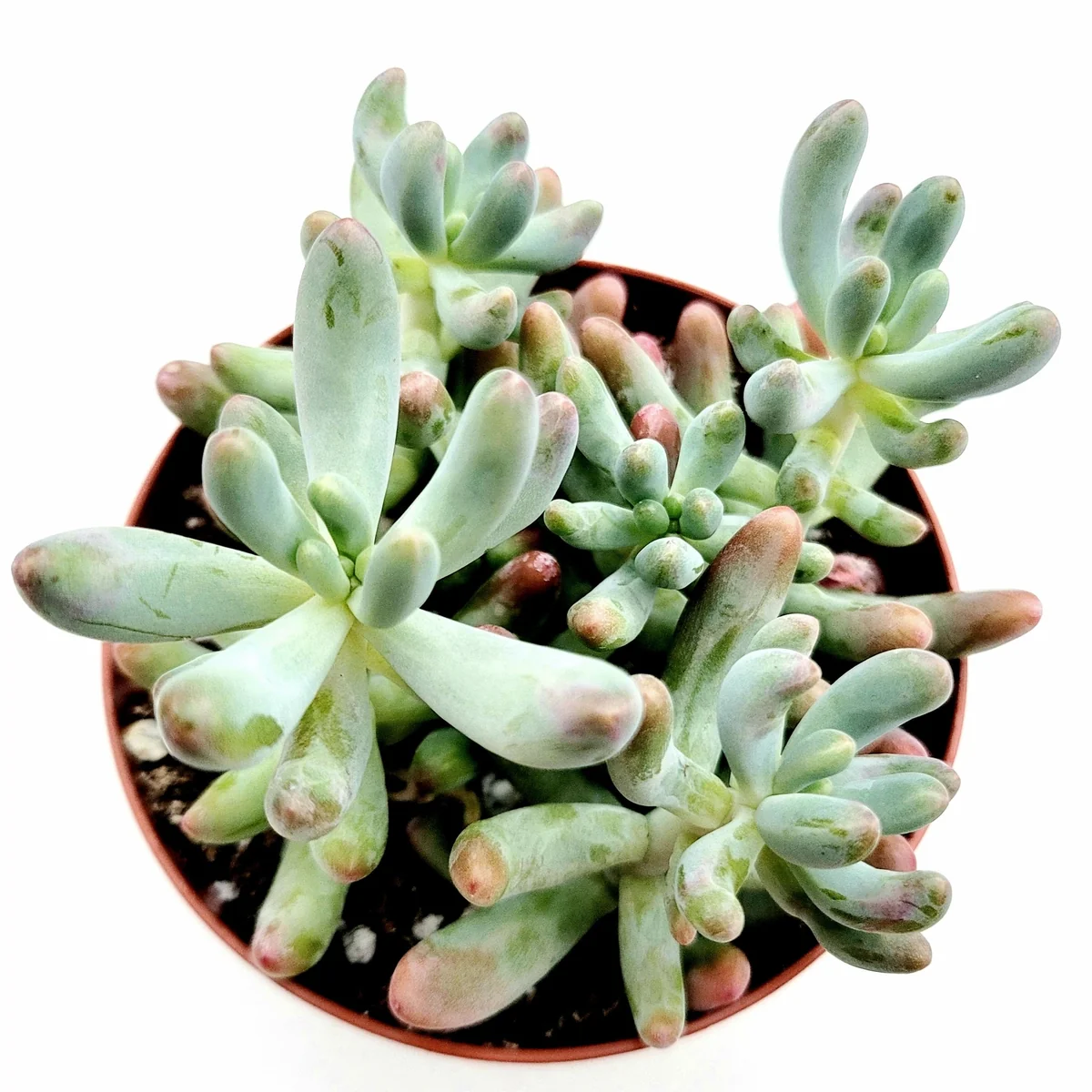
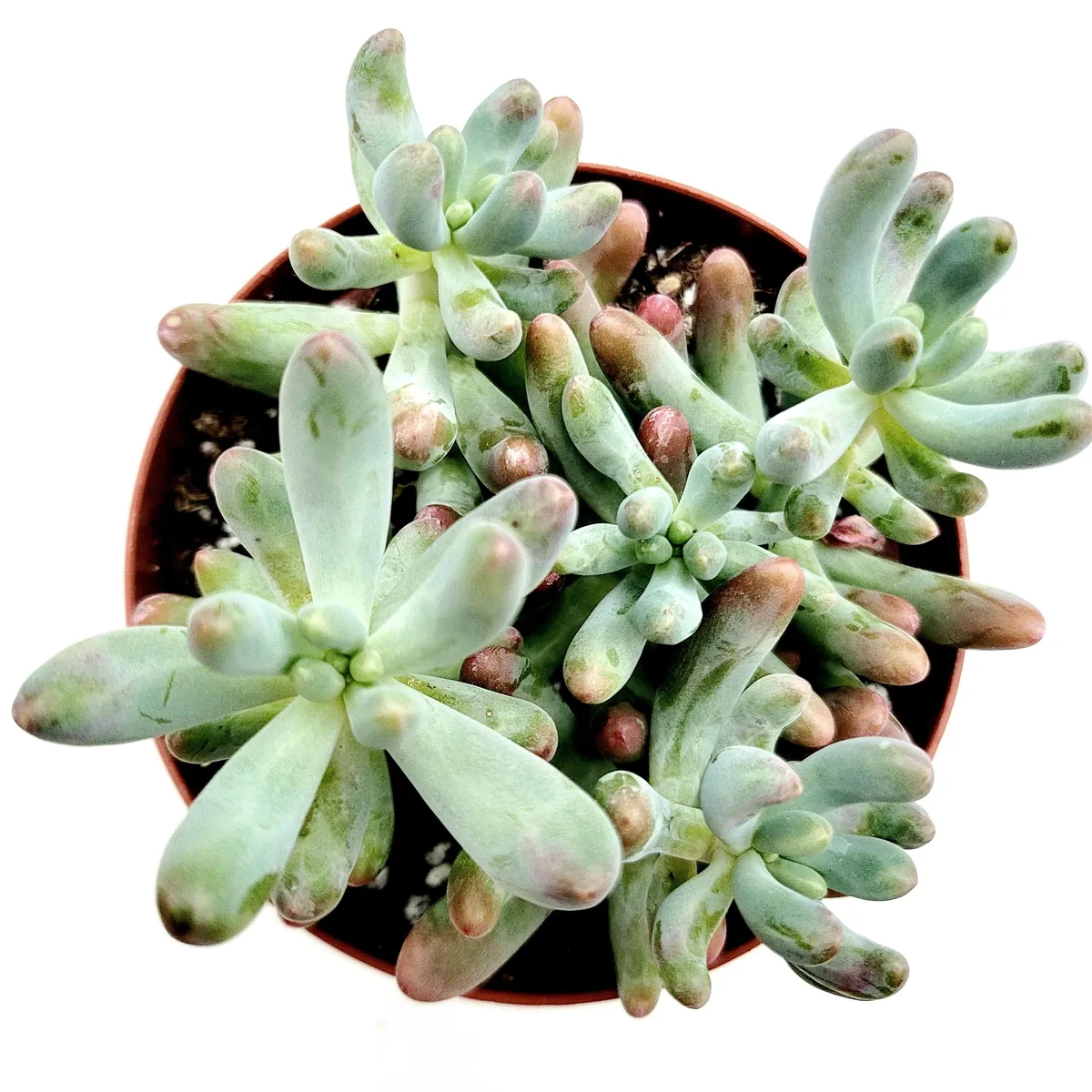
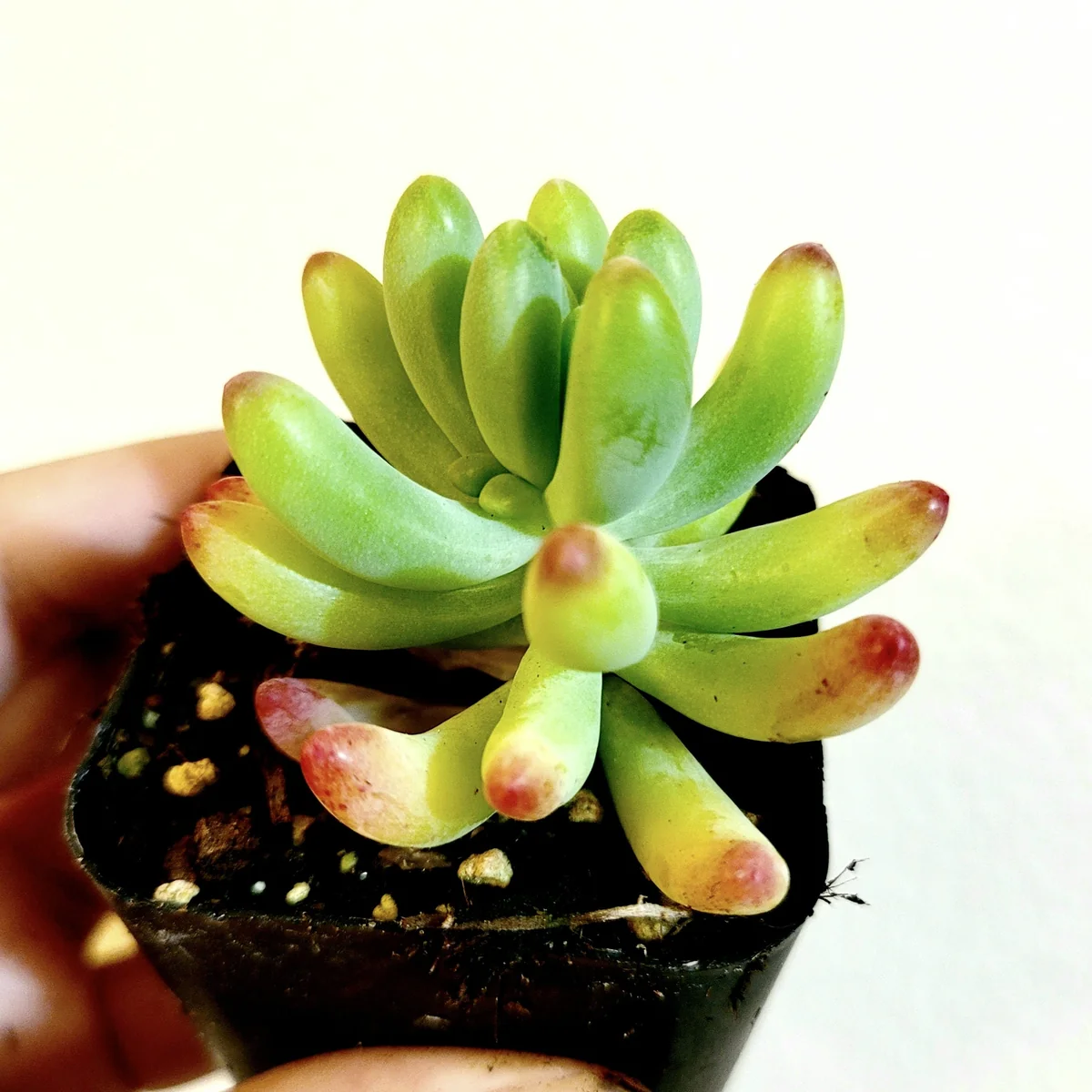
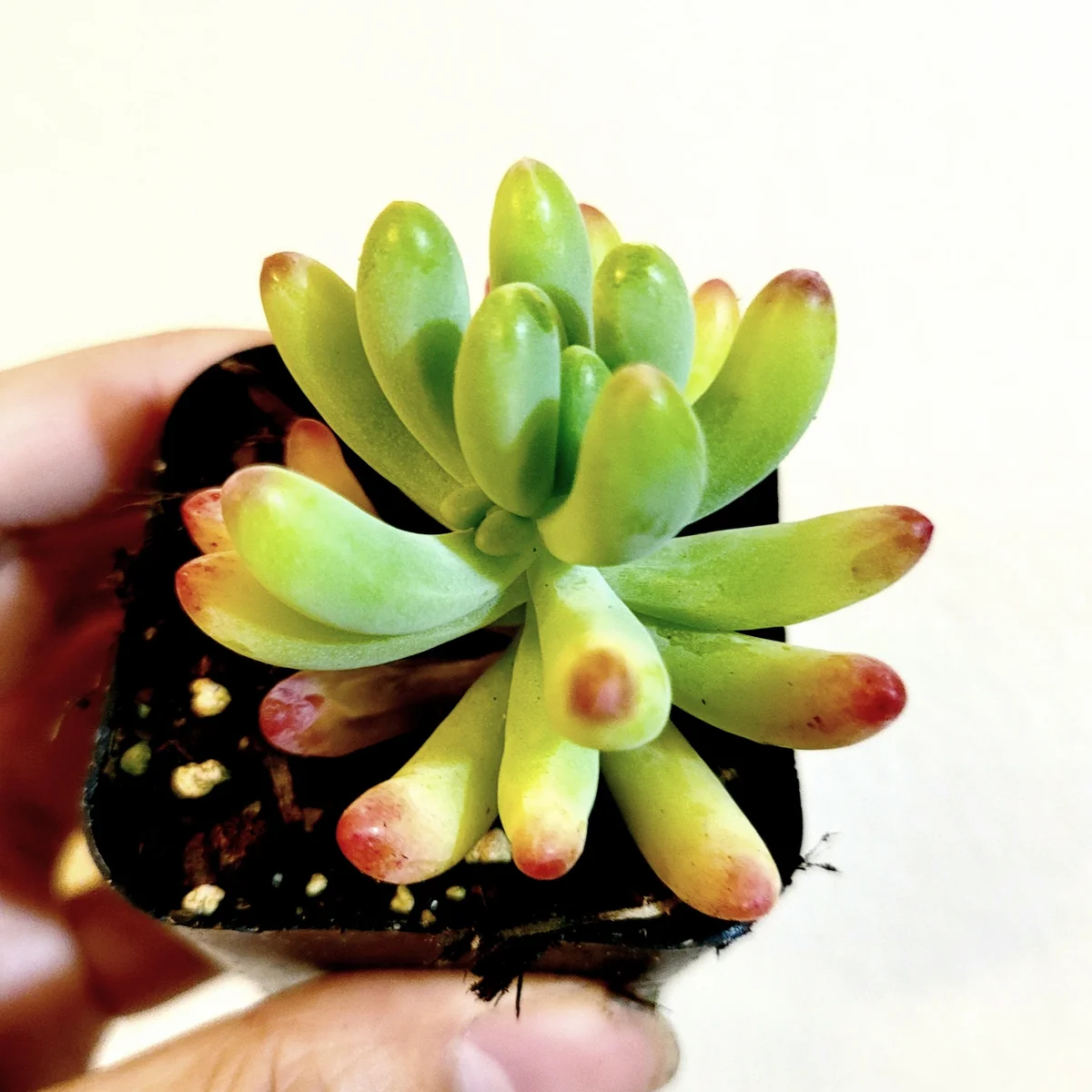
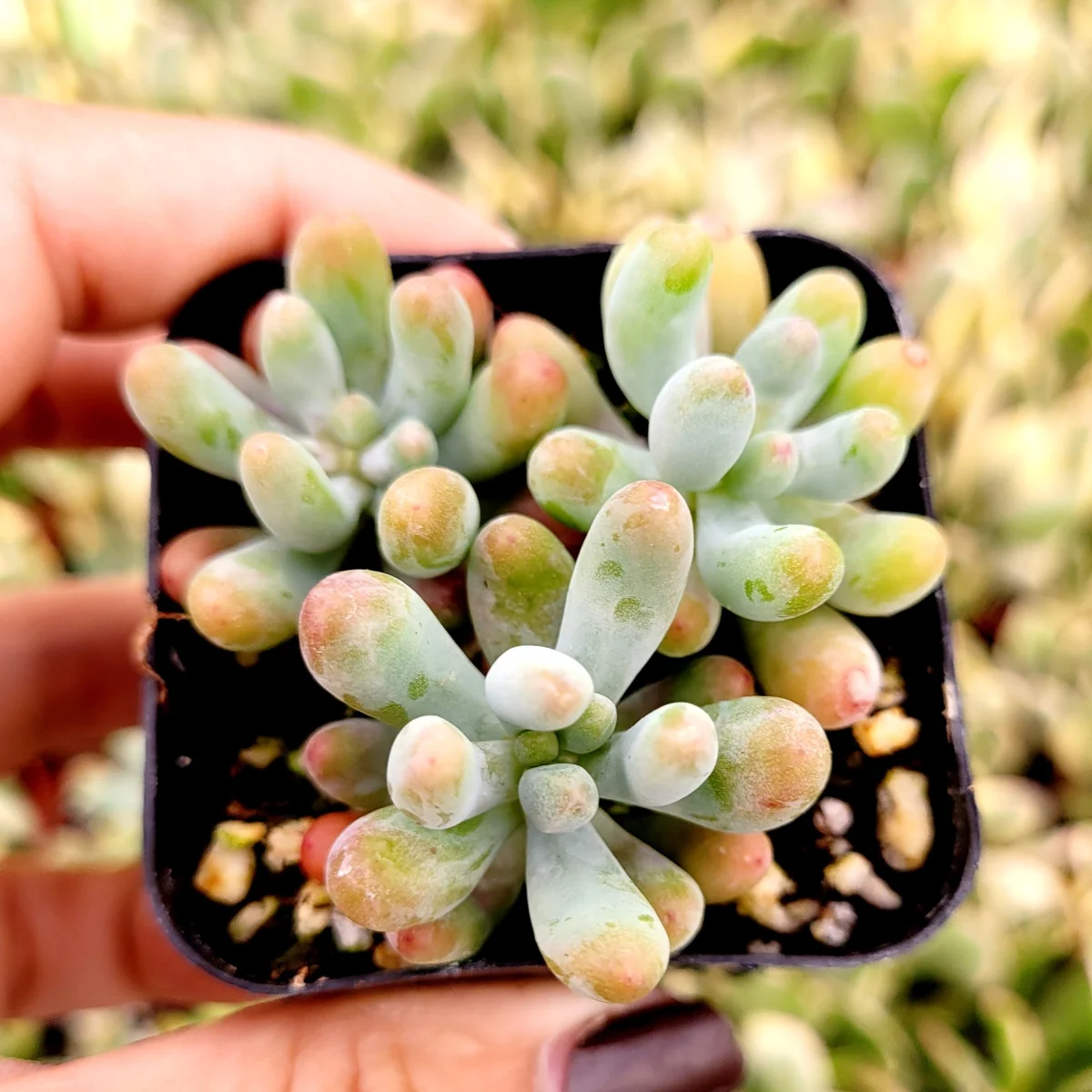
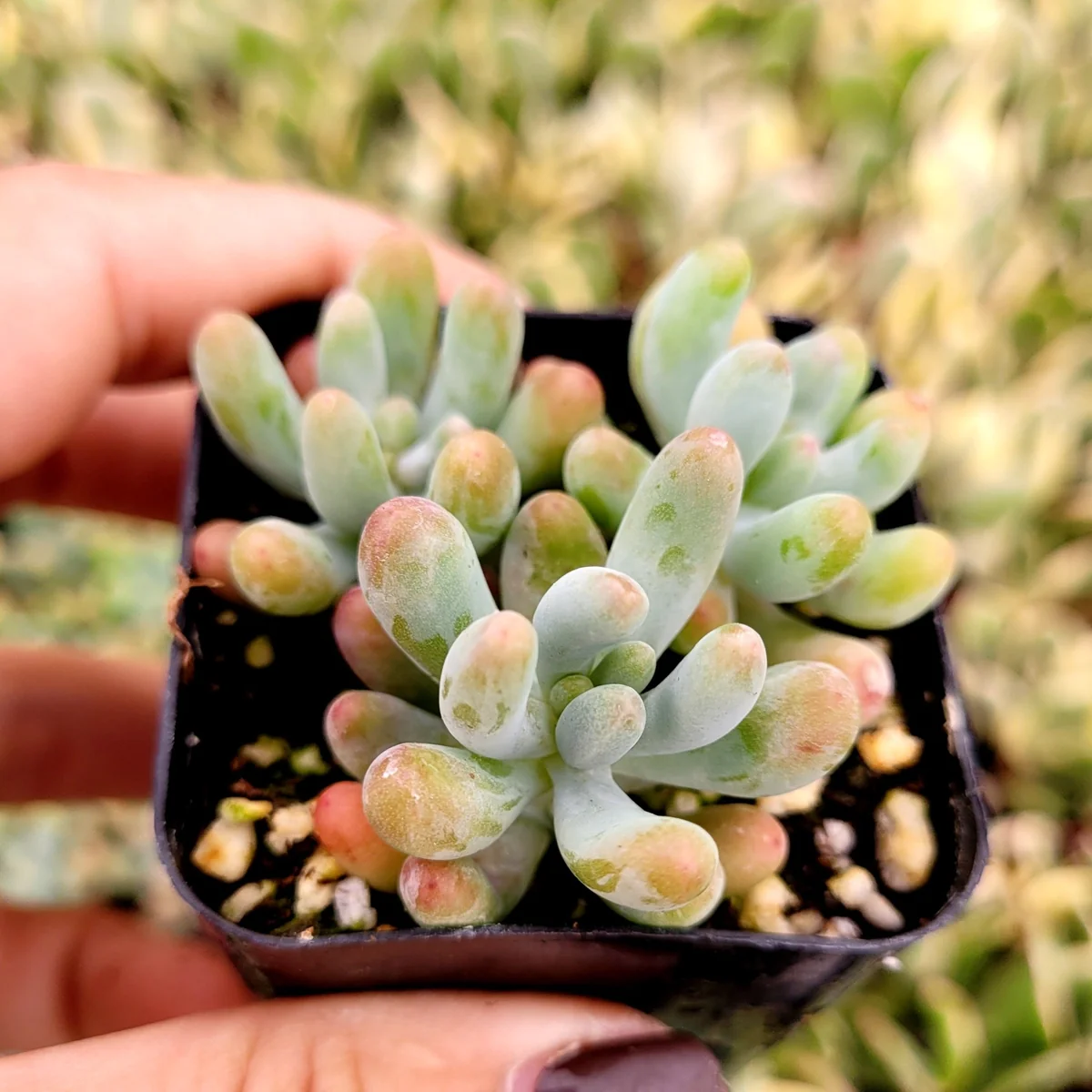
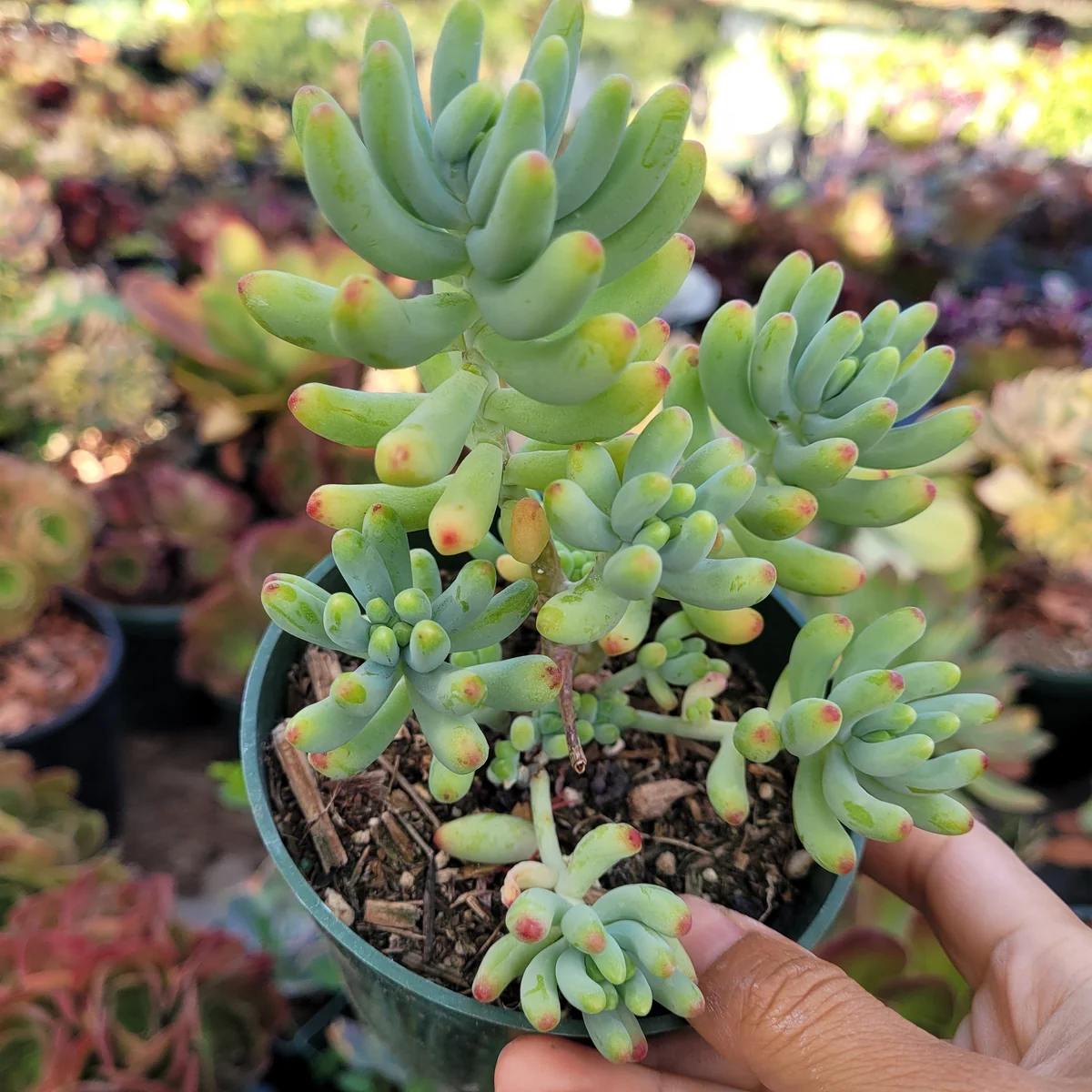
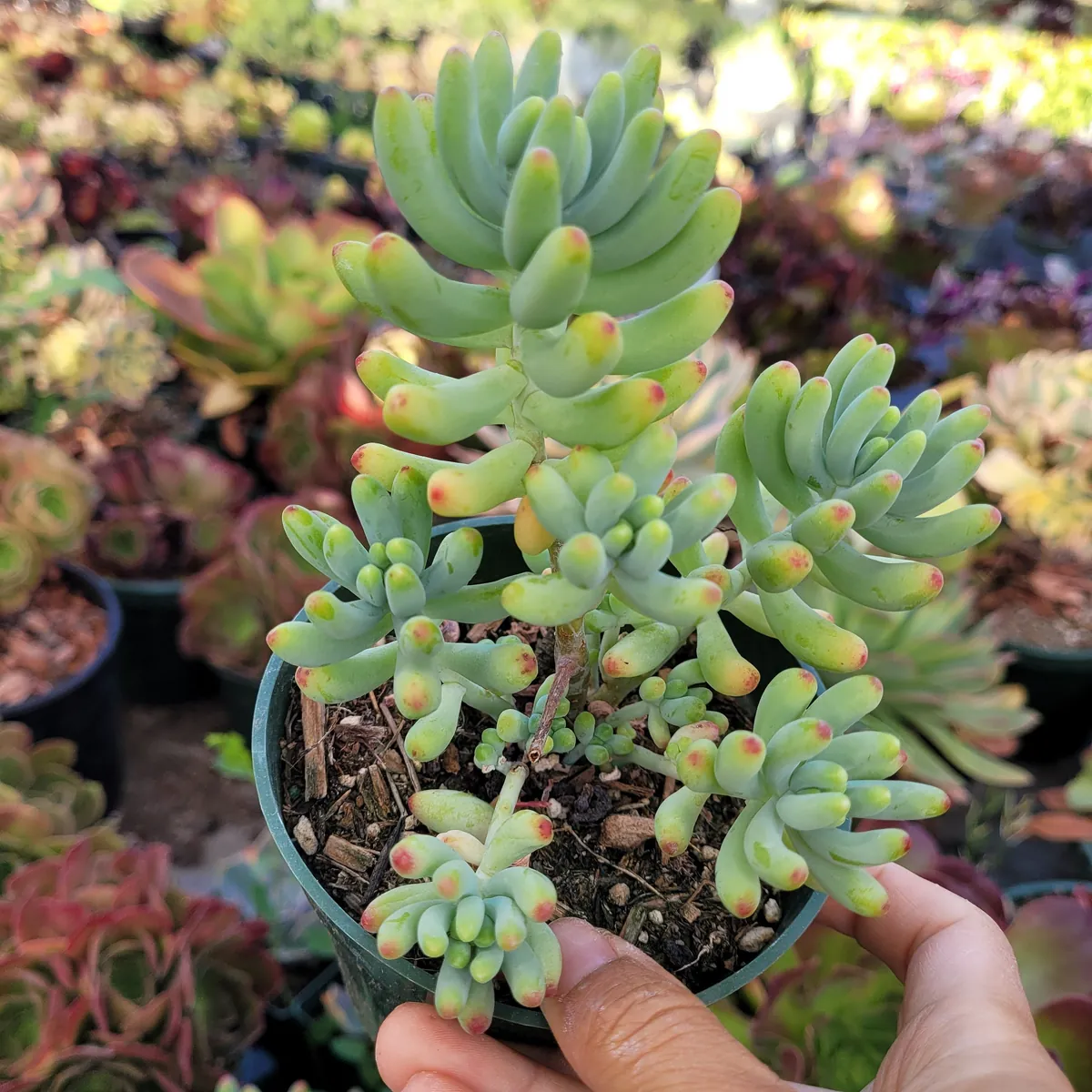
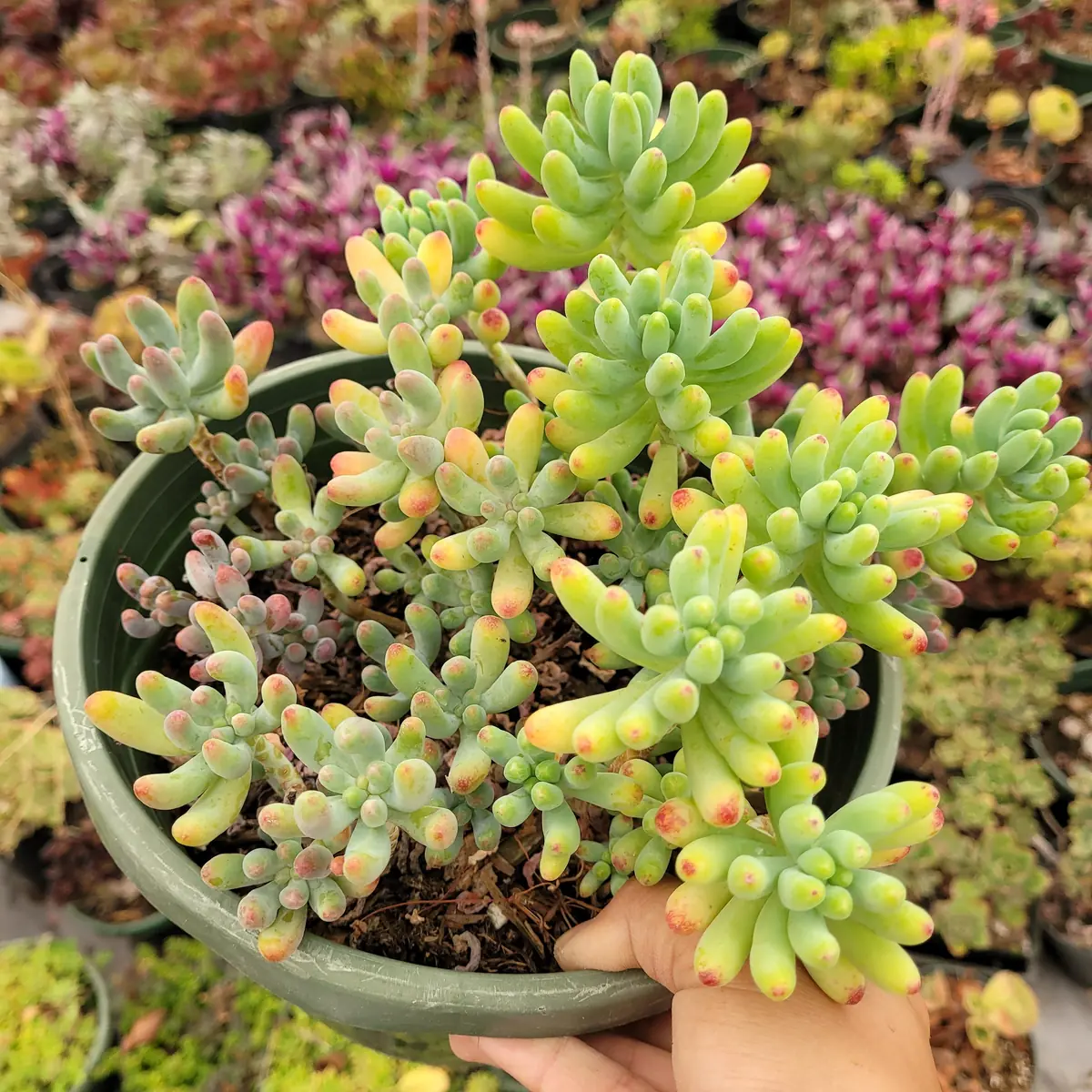
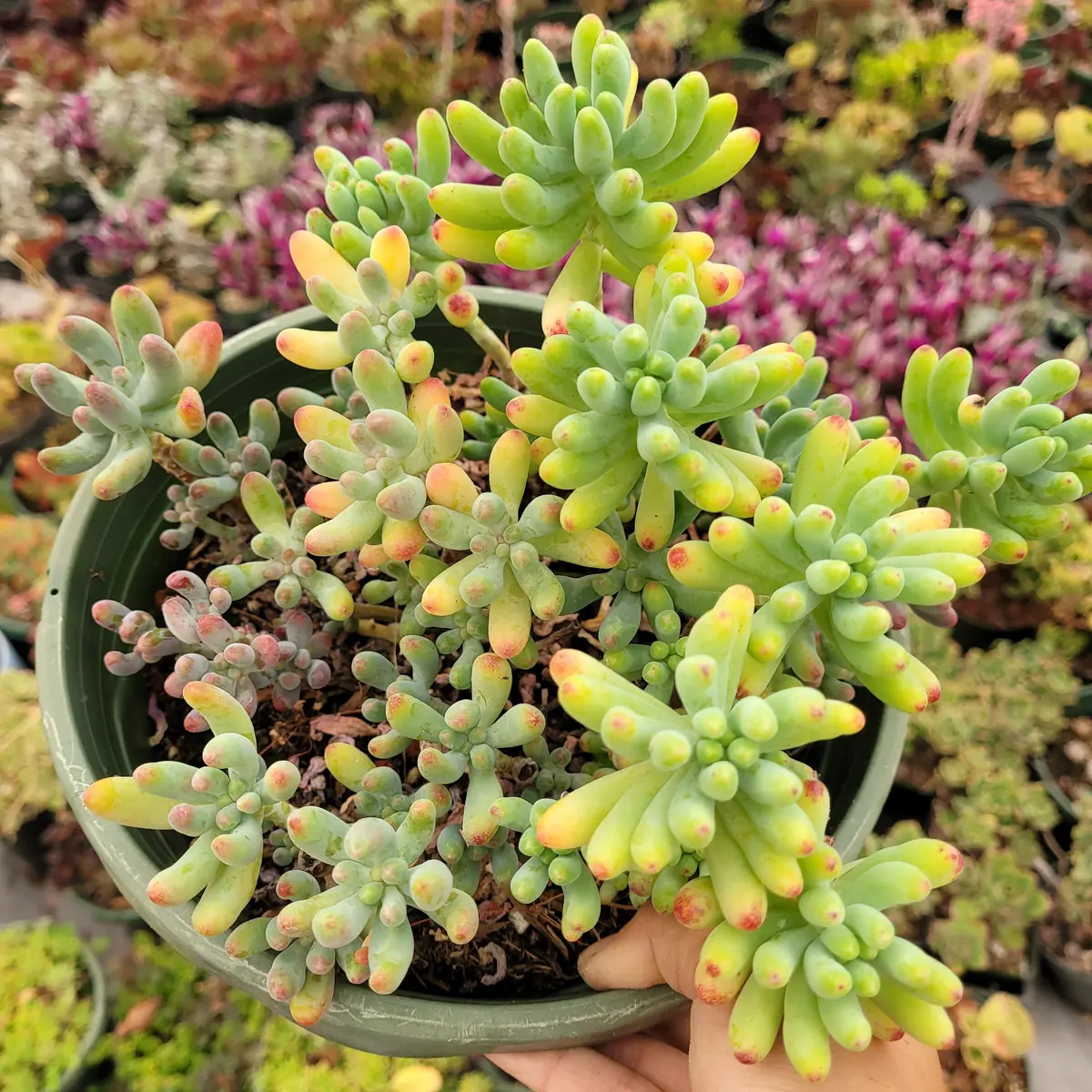


Sedum pachyphyllum ‘Jelly Beans’ Succulent Plant – Live Indoor/Outdoor
From $19.00
Bring charm to your home or garden with the unique Sedum Jelly Beans succulent plant. This beautiful live succulent features distinctive, plump, bean-shaped leaves that blush red in bright sun. It’s a hardy succulent plant, low-maintenance, and perfect for beginners or experienced plant enthusiasts.
-
USDA Hardiness Zone
USDA Zones 9-11 (outdoor) -
Soil Type
Well-draining cactus or succulent mix -
Sunlight Exposure
Full sun to bright indirect light -
Expected Planting Period
Year-round indoors; Spring to Summer outdoors

You can track your order HERE
Feb 28
Mar 05 - Mar 07
Mar 10 - Mar 14
Shipping and return policies: Our Alive & Thrive Guarantee covers issues with your plants within the first 30 days. Reach out to us. Our team will answer your questions and help you find the plants that are truly suitable for your environment, climate, and personal preferences.

Overview
Introducing the captivating Sedum Jelly Beans succulent plant, scientifically known as Sedum pachyphyllum ‘Jelly Beans’. This delightful live succulent is a favorite among plant enthusiasts for its charming appearance and incredibly easy care. Characterized by its short, thick, jelly bean-like leaves that often develop a reddish tint when exposed to ample sunlight, this plant adds a whimsical touch to any collection. As a hardy succulent plant, it thrives in various conditions, making it an excellent choice for both seasoned gardeners and those just beginning their journey with succulents. Native to Mexico, this plant is well-adapted to dry conditions and is renowned for its drought tolerance. Whether placed on a sunny windowsill, incorporated into a rock garden, or displayed in a decorative planter, the Sedum ‘Jelly Beans’ is sure to be a conversation starter.
This particular Sedum pachyphyllum care guide will provide you with all the necessary information to ensure your plant flourishes. Succulents are celebrated for their resilience and ability to store water in their leaves, stems, and roots, allowing them to withstand prolonged periods without hydration. The ‘Jelly Beans’ variety is no exception, offering a beautiful aesthetic with minimal fuss. Its compact growth habit makes it suitable for small spaces, terrariums, or as part of a larger succulent arrangement. Embrace the joy of growing this unique and visually appealing succulent, and watch as its vibrant colors and interesting texture transform your living space.
Key Benefits
The Sedum Jelly Beans succulent plant offers a multitude of benefits, making it an ideal addition to any plant collection. Its unique appearance and low-maintenance nature are just a few reasons why it’s so beloved:
- Aesthetic Appeal: The plump, cylindrical leaves resembling ‘jelly beans’ are incredibly charming. They often turn a beautiful reddish-pink hue on the tips when exposed to strong sunlight, adding a vibrant splash of color to your decor.
- Low Maintenance: This is a truly hardy succulent plant that requires minimal attention. It’s perfect for busy individuals or those new to plant care, as it forgives occasional neglect.
- Drought Tolerance: Like most succulents, the Sedum pachyphyllum care routine is geared towards dry conditions. It stores water efficiently, meaning it can go for extended periods without watering, reducing the risk of overwatering which is often detrimental to succulents.
- Versatile Placement: Suitable for both indoor and outdoor environments (in appropriate climates), it can be grown in pots, rock gardens, succulent arrangements, or as ground cover. Its compact size makes it ideal for windowsills, desks, or small balconies.
- Air Purification: While not as prominent as some other houseplants, succulents do contribute to improving indoor air quality by absorbing toxins and releasing oxygen.
- Easy Propagation: The ‘Jelly Beans’ succulent is remarkably easy to propagate from leaf or stem cuttings, allowing you to expand your collection or share with friends effortlessly.
- Pest Resistance: Generally robust, this plant is less susceptible to common pests and diseases compared to many other houseplants, contributing to its reputation as an easy-care option.
Plant Care & Growing Tips
Proper Sedum pachyphyllum care ensures your ‘Jelly Beans’ succulent thrives and displays its best colors. While it is a hardy succulent plant, understanding its specific needs will help it flourish. The most crucial aspect of succulent care is providing adequate light and preventing overwatering.
Sunlight Requirements
This Sedum Jelly Beans succulent plant loves bright light. For optimal growth and to encourage the characteristic reddish tips on its leaves, provide at least 6 hours of direct sunlight per day. A south-facing window is ideal indoors. If growing outdoors, choose a spot with full sun to partial shade. In extremely hot climates, some afternoon shade can prevent scorching. Insufficient light will cause the plant to stretch and become leggy, losing its compact form.
Watering Schedule and Soil Moisture Preferences
Watering is where most succulent problems arise. The ‘Jelly Beans’ succulent is a drought-tolerant succulent and prefers its soil to dry out completely between waterings. A good rule of thumb is to water thoroughly until water drains from the bottom of the pot, then wait until the soil is bone dry before watering again. This could be every 2-4 weeks depending on temperature, humidity, and pot size. In winter, reduce watering significantly, perhaps once a month or less. Never let the plant sit in standing water, as this will quickly lead to root rot.
Soil Type and Drainage Requirements
Excellent drainage is paramount for this succulent. Use a well-draining cactus or succulent potting mix. You can also create your own by mixing regular potting soil with perlite, pumice, or coarse sand in a 1:1 ratio. The pot should always have drainage holes to prevent water accumulation at the bottom.
Temperature Range and USDA Hardiness Zone
The Sedum Jelly Beans succulent plant prefers warm temperatures, ideally between 65-80°F (18-27°C). It is not frost-tolerant and should be protected from temperatures below 40°F (4°C). If you live in a region with cold winters, it’s best to grow this succulent in a container that can be moved indoors. It is generally suitable for USDA Zones 9-11 for outdoor year-round growth.
Fertilization Schedule and Type
Succulents are not heavy feeders. Fertilize sparingly, if at all. During the growing season (spring and summer), you can use a balanced liquid fertilizer diluted to half strength, once every 2-4 months. Avoid fertilizing in fall and winter when the plant is dormant. Over-fertilization can lead to leggy growth and chemical burn.
Common Problems and Solutions
The most common issues for this indoor succulent plant are related to watering. Overwatering causes mushy, yellowing leaves and root rot. If you notice these signs, reduce watering immediately and check the roots for rot. Underwatering causes shriveled, dry leaves, which will plump up once watered. Leggy growth indicates insufficient light. Move your plant to a brighter location. Pests are rare, but mealybugs can occasionally appear; treat with rubbing alcohol on a cotton swab.
Size & Details
The Sedum Jelly Beans succulent plant typically grows as a small, clumping succulent, reaching a height of about 6-8 inches (15-20 cm) and spreading to a similar width. Its compact nature makes it an excellent choice for a variety of display options, from small decorative pots to intricate succulent arrangements. The individual ‘jelly bean’ leaves are plump and cylindrical, about 0.5 to 1 inch long. This live plant will be shipped bare roots, without a pot or soil, to ensure its health and minimize shipping stress. This method, while requiring a bit more initial effort from the customer, ensures the plant arrives in optimal condition, ready to be potted in your preferred succulent mix. Expect your plant to establish quickly with proper care.
When you receive your plant, you will find a specimen very similar to those pictured, though slight variations in shape and color are natural due to growing conditions. The growth rate is moderate, and with good light and appropriate watering, you will see new growth relatively quickly, especially during the spring and summer months. This particular drought-tolerant succulent is grown with care to ensure high quality upon arrival, providing you with a robust foundation for a thriving plant.
Frequently Asked Questions
- Q: How big does this plant get? A: The Sedum Jelly Beans succulent plant typically grows to about 6-8 inches tall and can spread to a similar width, forming attractive clumps over time. Its compact size makes it versatile for various planting locations.
- Q: Is this an indoor or outdoor plant? A: This plant can thrive both indoors and outdoors. It’s an excellent indoor succulent plant for sunny windowsills, and outdoors it can be grown in gardens in USDA Zones 9-11 or as a potted plant moved indoors during colder months.
- Q: How much sunlight does it need? A: The ‘Jelly Beans’ succulent requires at least 6 hours of bright, direct sunlight daily to maintain its compact shape and vibrant leaf coloration. Insufficient light will lead to leggy growth.
- Q: Is this plant easy to care for? A: Yes, the Sedum pachyphyllum care requirements are very low, making it an ideal choice for beginners. It’s a very forgiving and hardy succulent plant, primarily needing good light and infrequent watering.
- Q: What condition will it arrive in? A: Your succulent will arrive as a bare-root plant, meaning it will be shipped without a pot or soil. This method is standard for succulents to ensure their health during transit and prevent damage from moisture or shifting soil.
- Q: How often should I water my Sedum ‘Jelly Beans’? A: Water only when the soil is completely dry. This could range from every 2-4 weeks during warmer months to once a month or less in winter. Always err on the side of underwatering rather than overwatering for this drought-tolerant succulent.
- Q: Can I propagate this succulent? A: Absolutely! The ‘Jelly Beans’ succulent is very easy to propagate from leaf or stem cuttings. Simply allow the cuttings to callus for a few days before placing them on or in well-draining soil.
- Q: What type of soil is best for this plant? A: A well-draining cactus or succulent potting mix is essential. You can also amend regular potting soil with perlite or pumice to improve drainage.
- Q: Will it survive cold weather? A: No, this succulent is not frost-tolerant. If temperatures drop below 40°F (4°C), it should be brought indoors or protected from the cold.
- Q: Do the leaves really look like jelly beans? A: Yes, the leaves are plump, cylindrical, and have a distinct resemblance to small jelly beans, especially when they develop their characteristic reddish tips in bright sunlight. This unique feature makes the Sedum Jelly Beans succulent plant very appealing.
| Size | 2 Inch #A, 2 Inch #B, 4 Inch #A, 4 Inch #B, 6 Inch, 8 Inch |
|---|
Be the first to review “Sedum pachyphyllum ‘Jelly Beans’ Succulent Plant – Live Indoor/Outdoor”
People Also Viewed
Sold 78 products
Original price was: $76.88.$38.44Current price is: $38.44.
Sold 60 products
Original price was: $1,998.00.$999.00Current price is: $999.00.
Sold 55 products
Original price was: $57.90.$28.95Current price is: $28.95.
Sold 57 products
Original price was: $100.00.$50.00Current price is: $50.00.
HousePlants
Sold 59 products
Original price was: $59.90.$29.95Current price is: $29.95.
Sold 94 products
Original price was: $45.98.$36.78Current price is: $36.78.
Sold 73 products
Original price was: $41.56.$20.78Current price is: $20.78.
Sold 52 products
Original price was: $28.76.$14.38Current price is: $14.38.
Sold 83 products
Original price was: $36.00.$28.80Current price is: $28.80.
Sold 82 products
$54.98
Sold 76 products
From $43.98
Sold 60 products
$48.38
Sold 76 products
Original price was: $112.96.$67.78Current price is: $67.78.
Sold 84 products
From $197.96
Sold 54 products
From $61.58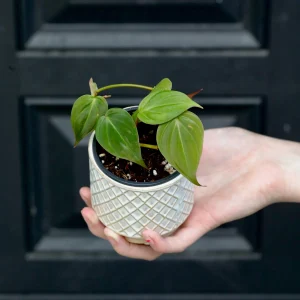
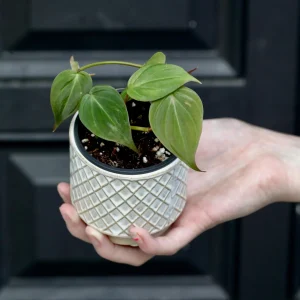
HousePlants
Philodendron Micans Velvet Live Plant – 2 inch Nursery Pot – Heartleaf Philodendron Indoor
Sold 56 products
Original price was: $43.96.$21.98Current price is: $21.98.
Sold 65 products
$329.98
Sold 95 products
Original price was: $340.00.$170.00Current price is: $170.00.



Reviews
There are no reviews yet.