
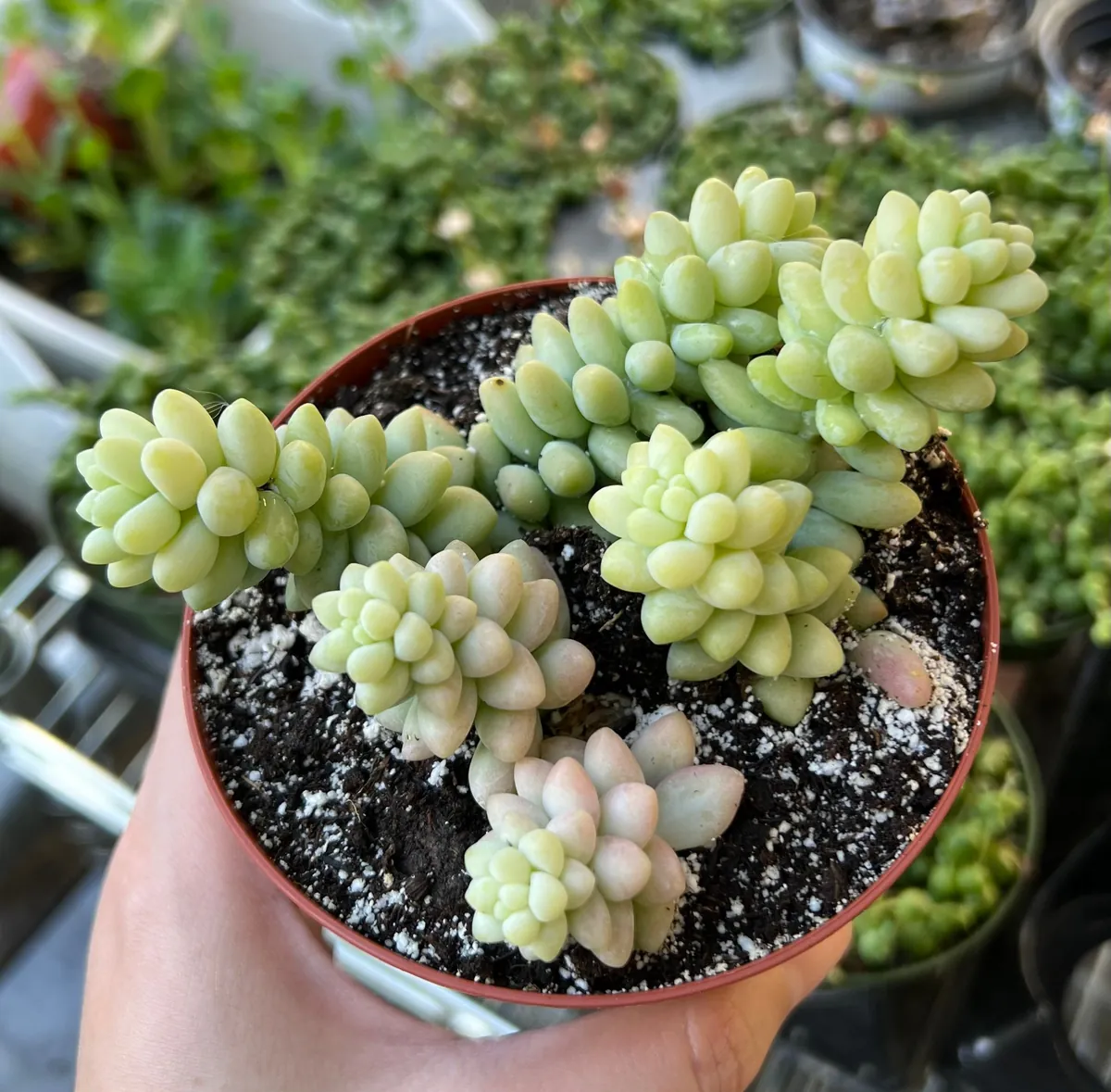
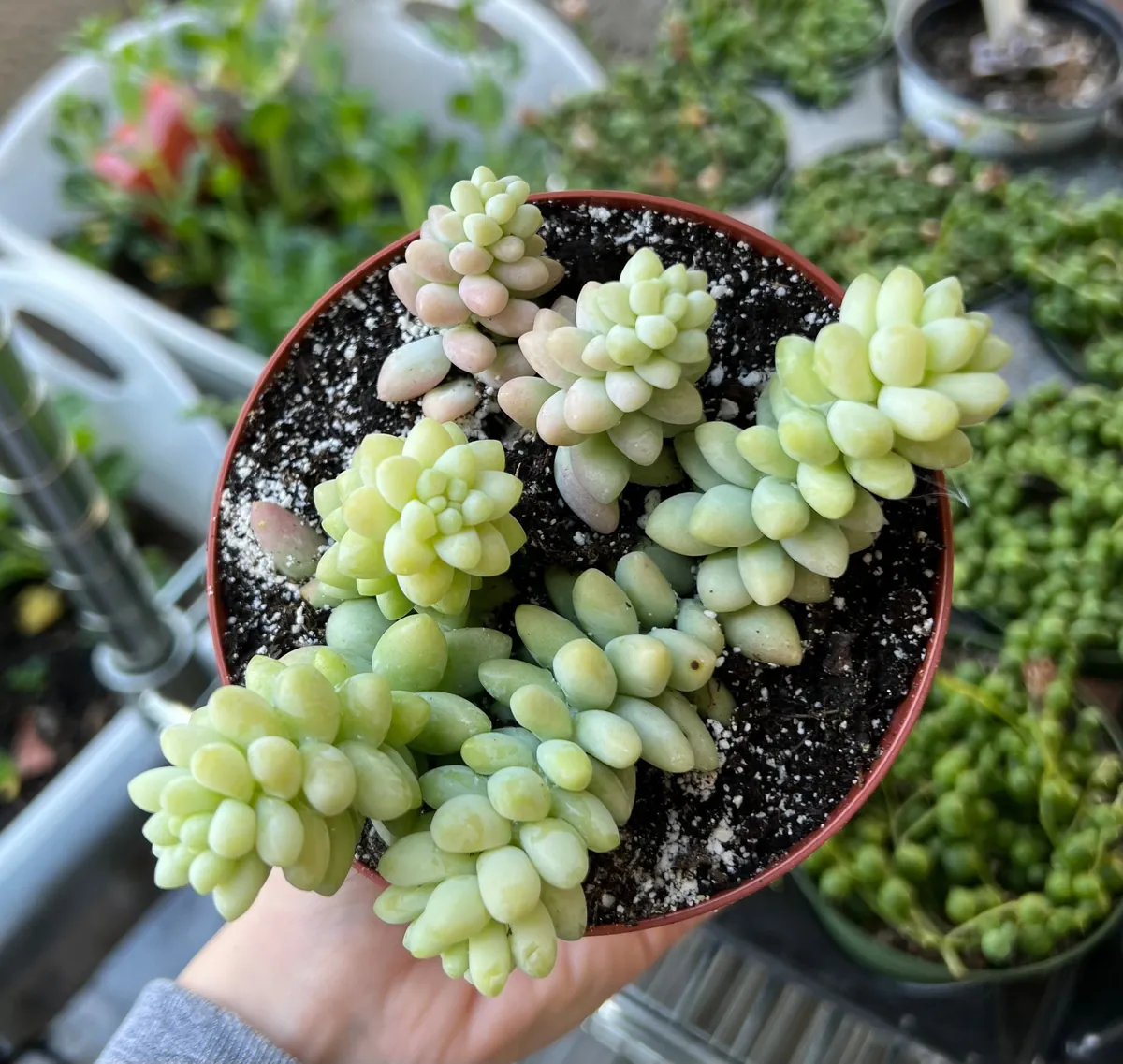
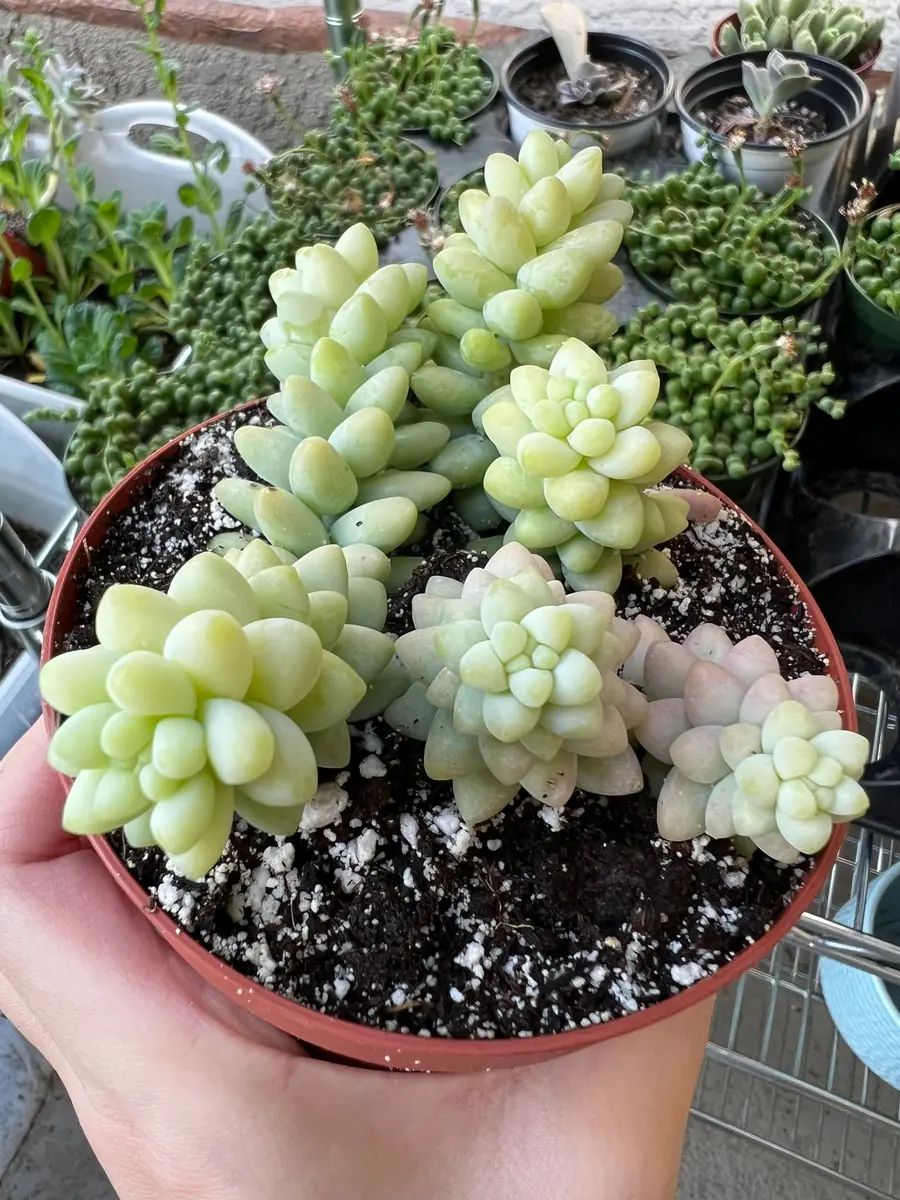
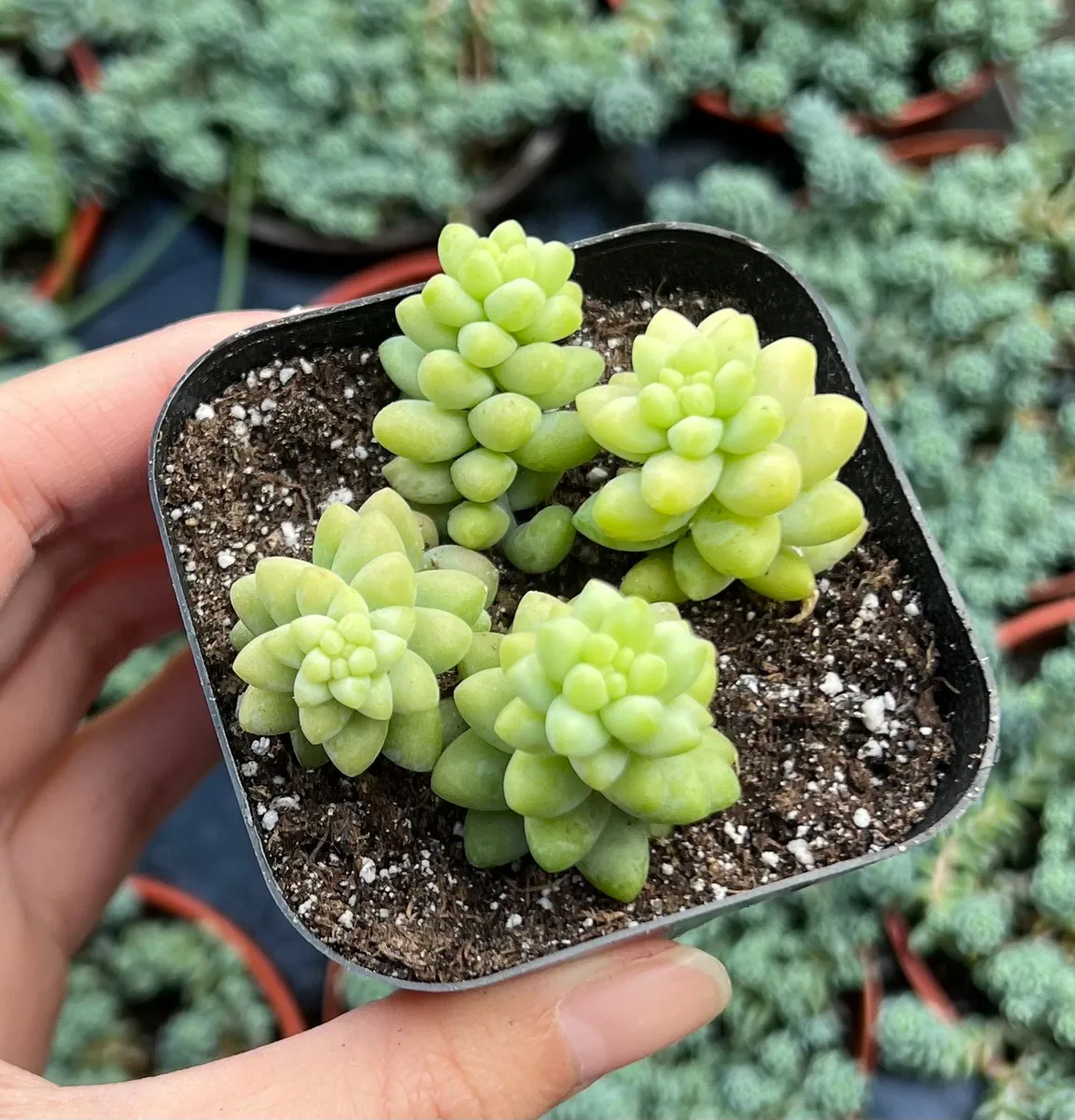
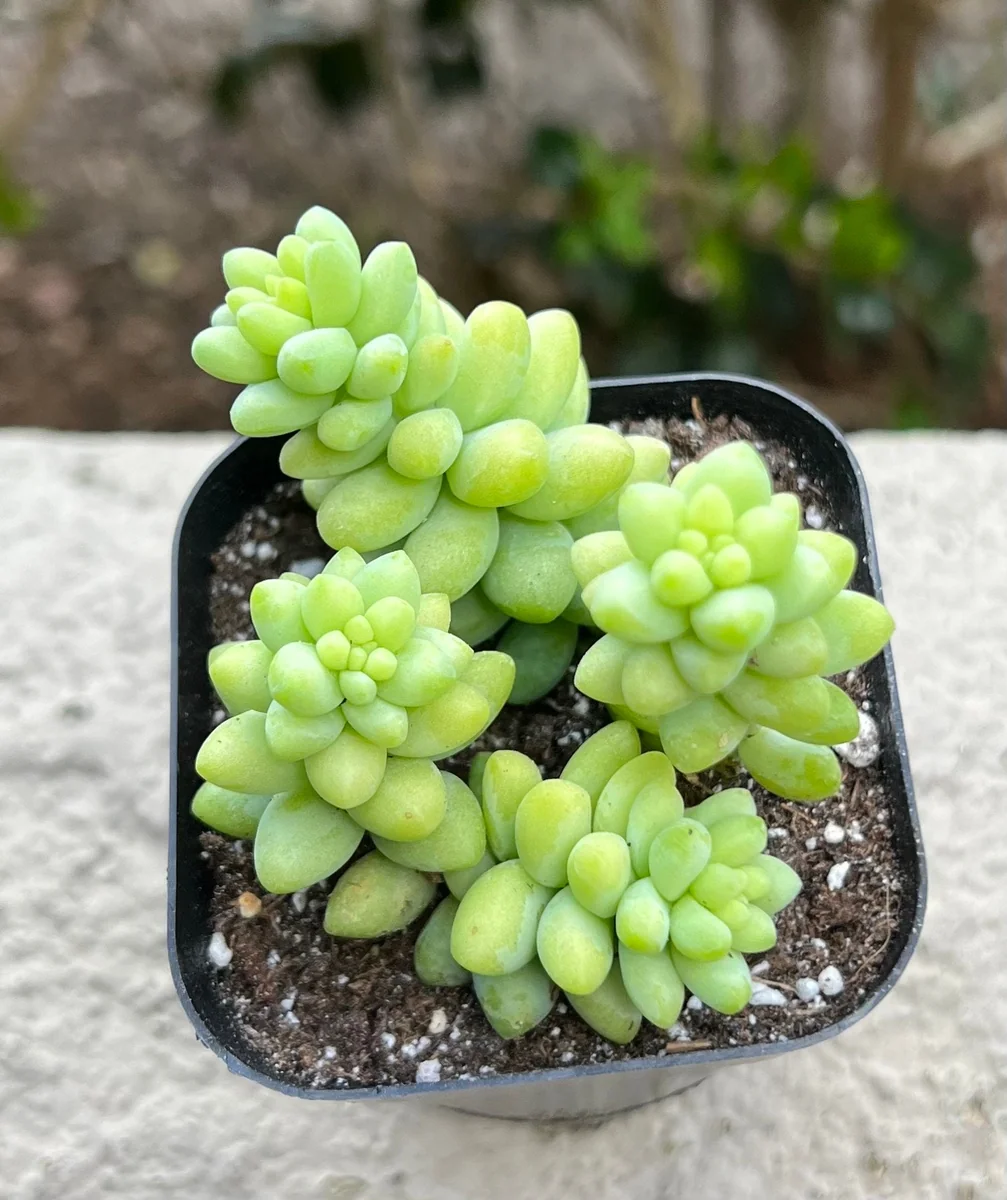
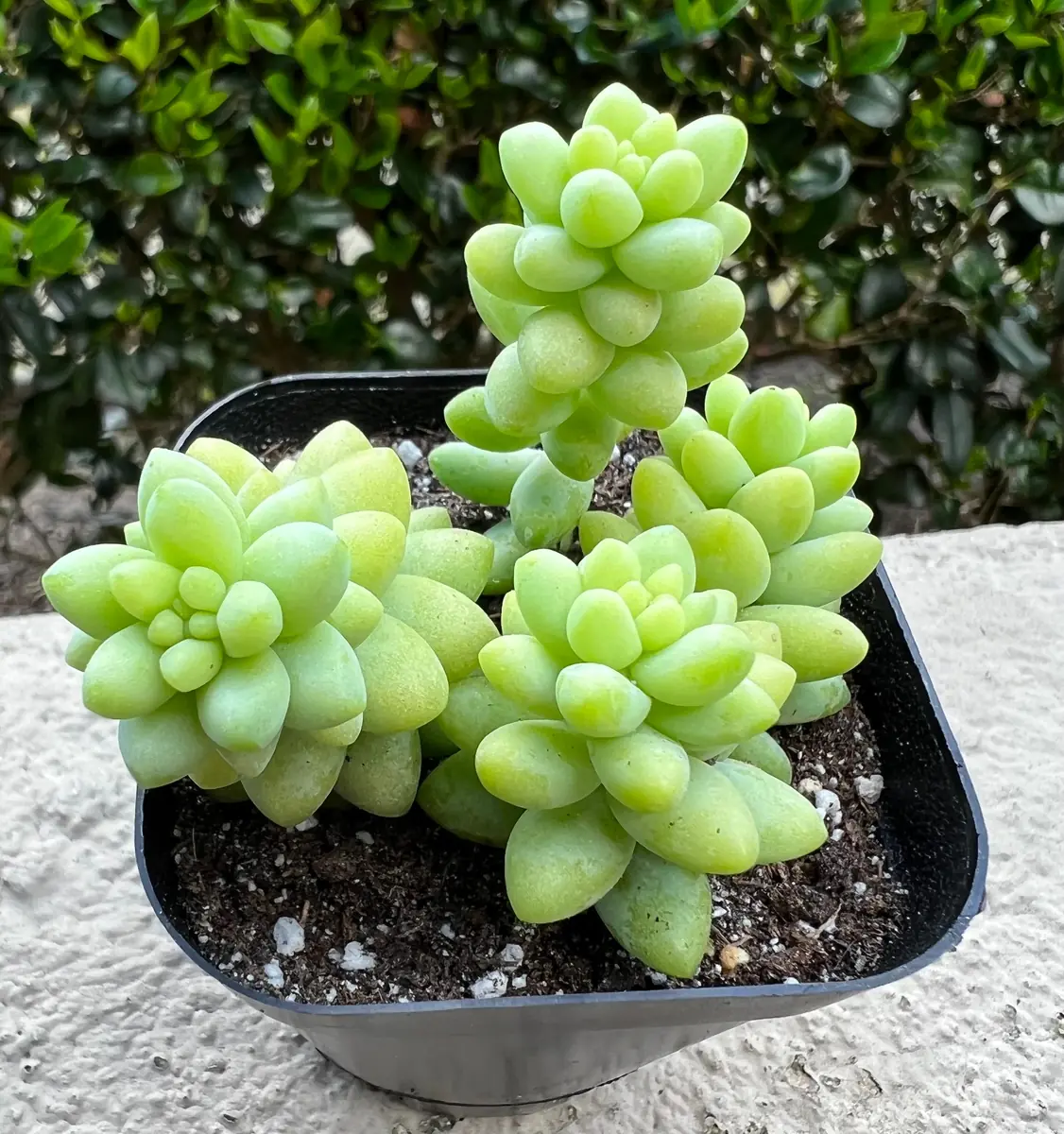
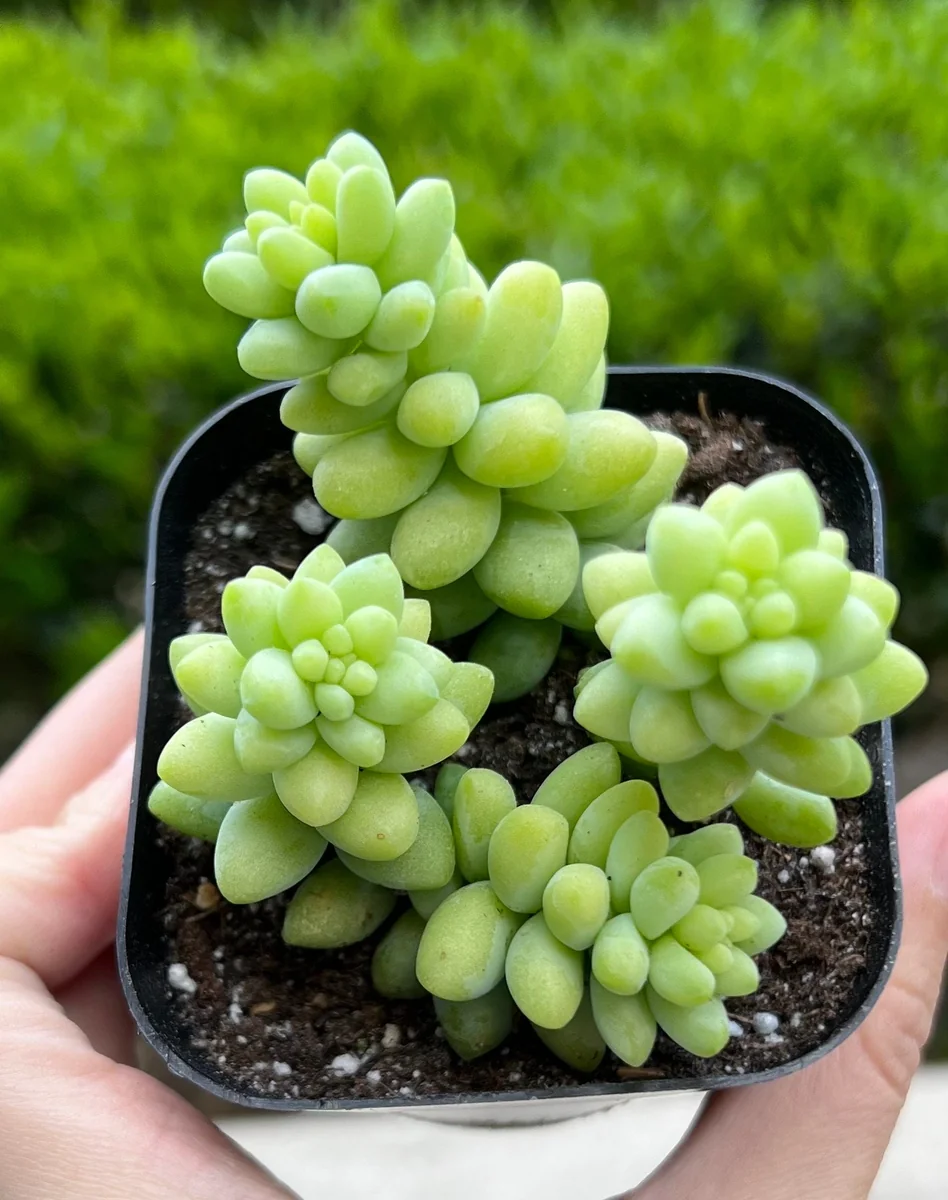
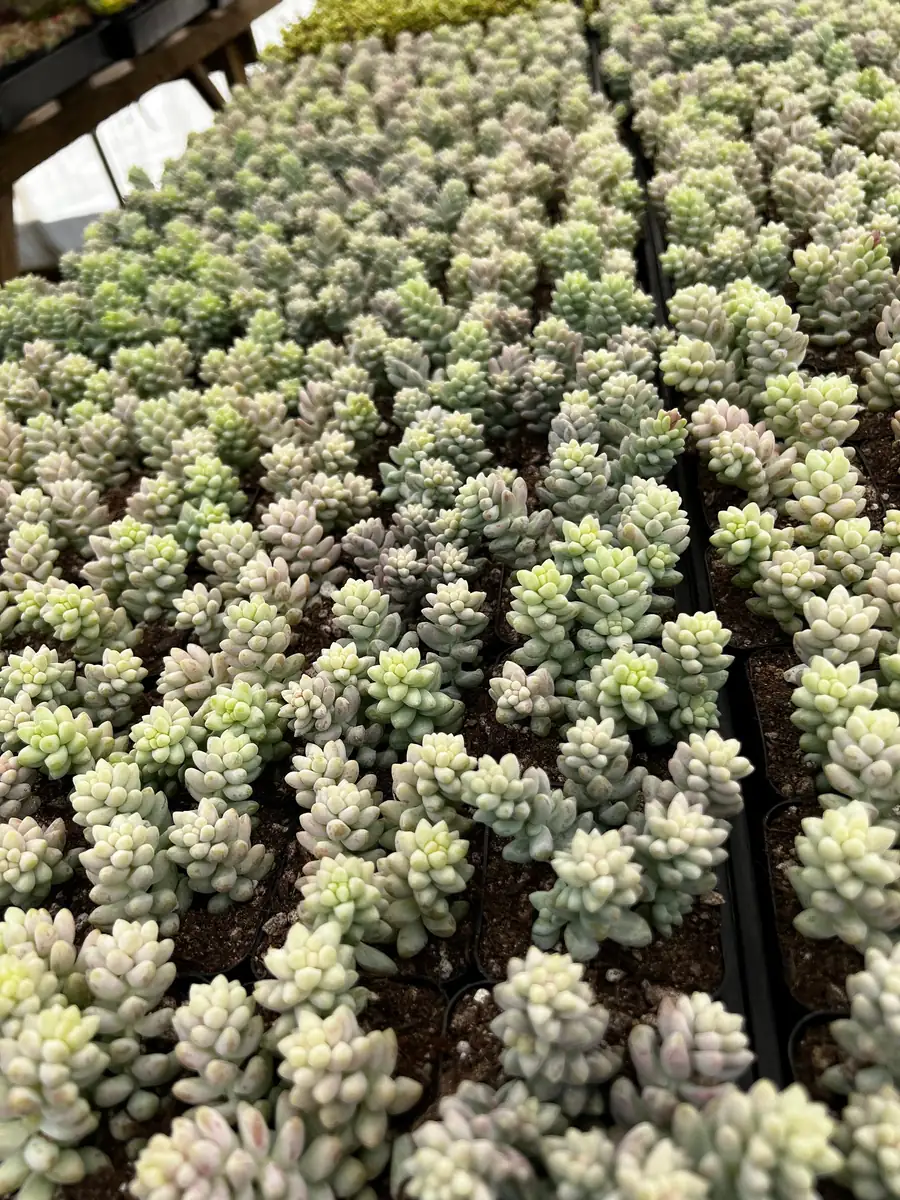
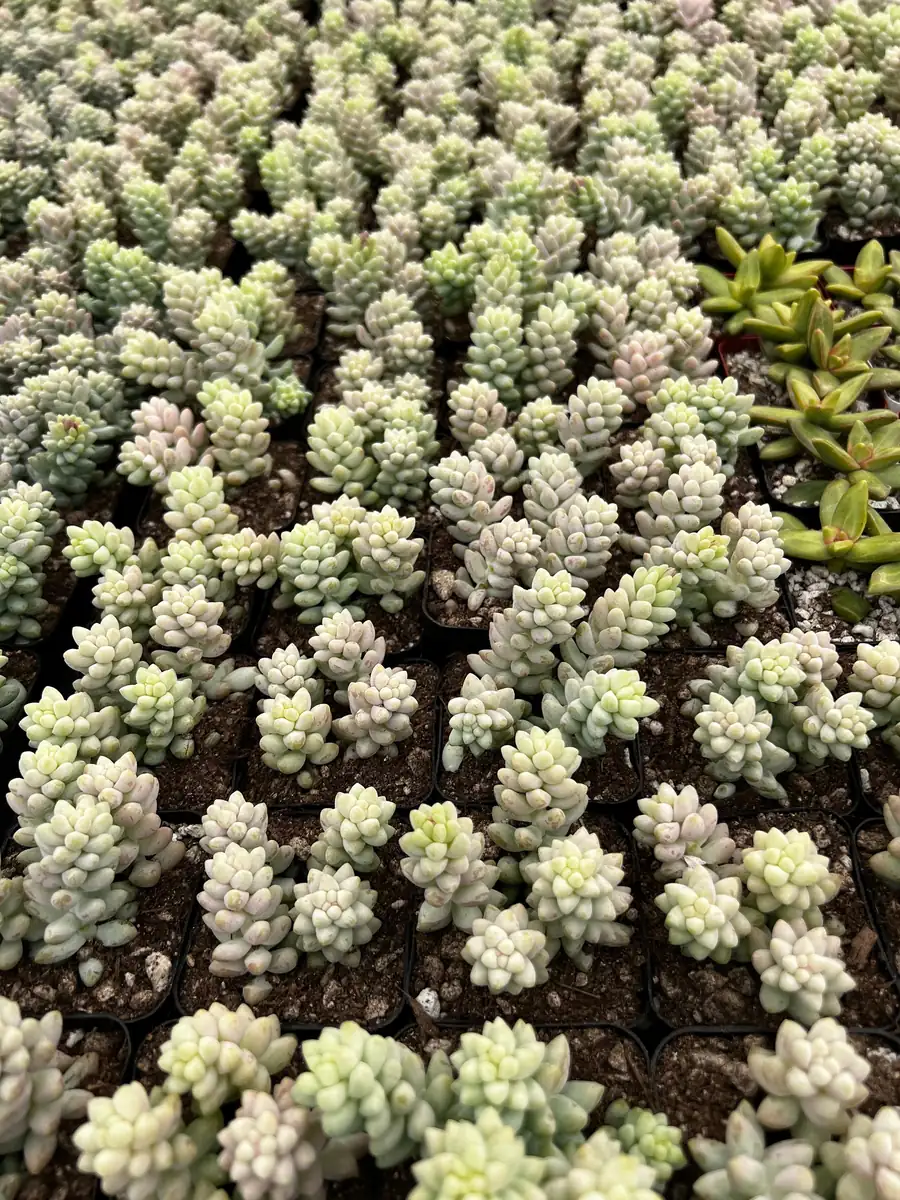
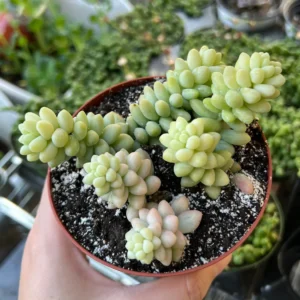
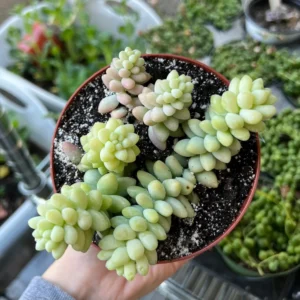
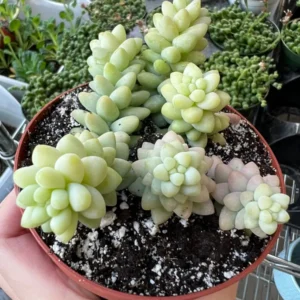
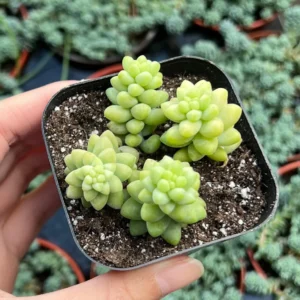
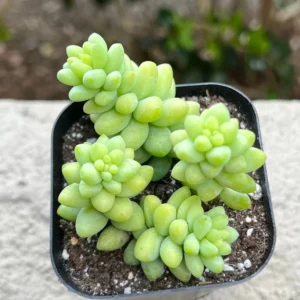
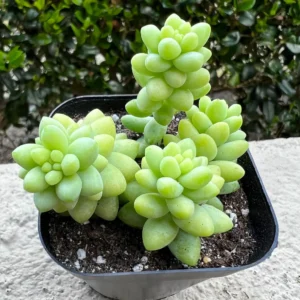
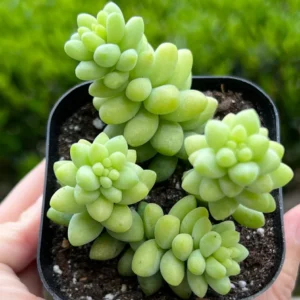
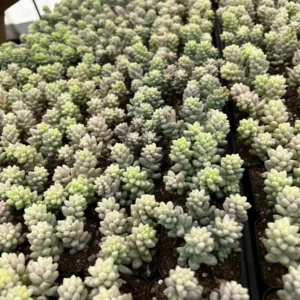
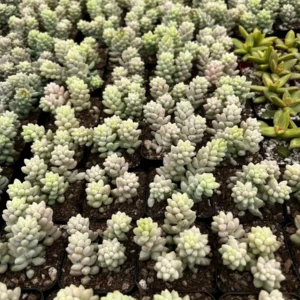
Sedum Burrito Donkey’s Tail Trailing Succulent Live Plant 2″ 4″ Pot Indoor
From $8.38
Add unique charm to your home with the sedum burrito live plant, also known as donkey’s tail succulent. This popular trailing succulent care is easy to grow and perfect for hanging planters, creating a beautiful cascading display. Enjoy its distinctive cylindrical leaves and low-maintenance nature.
-
USDA Hardiness Zone
USDA Zones 10-11 (outdoors) or indoor cultivation -
Soil Type
Well-draining succulent or cactus potting mix -
Sunlight Exposure
Bright indirect light -
Expected Planting Period
Year-round indoors

You can track your order HERE
Feb 26
Mar 03 - Mar 05
Mar 08 - Mar 12
Shipping and return policies: Our Alive & Thrive Guarantee covers issues with your plants within the first 30 days. Reach out to us. Our team will answer your questions and help you find the plants that are truly suitable for your environment, climate, and personal preferences.

Overview
Introduce a touch of exotic beauty to your living space with the exquisite sedum burrito live plant. Also widely known as Donkey’s Tail succulent, this captivating plant (scientific name: Sedum morganianum ‘Burrito’) is celebrated for its lush, cascading growth habit, making it an ideal choice for hanging baskets or elevated planters where its distinctive stems can gracefully trail downwards. Native to regions of Central America, this succulent is a member of the Crassulaceae family, a diverse group that includes many popular and easy-to-care-for succulents. Its unique appearance, characterized by plump, cylindrical leaves arranged tightly along long stems, evokes the image of a donkey’s tail, hence its charming common name. This sedum burrito live plant is not only visually appealing but also remarkably resilient, offering a low-maintenance option for both seasoned plant enthusiasts and beginners alike.
The allure of the donkey’s tail succulent lies in its distinctive foliage and its ability to thrive with minimal fuss. The pale blue-green leaves, sometimes developing a beautiful rainbow hue under specific conditions, are covered in a waxy texture that helps the plant retain moisture. As it matures, the stems can reach impressive lengths, creating an eye-catching focal point in any room. Whether you’re looking to enhance your indoor jungle or add a touch of natural elegance to a bright spot, this trailing succulent promises to deliver beauty and tranquility.
Key Benefits
The sedum burrito live plant offers a multitude of benefits that make it a highly desirable addition to any plant collection. Its unique aesthetics and hardy nature contribute to its widespread appeal, providing both visual pleasure and ease of care.
- Stunning Cascading Display: The long, trailing stems adorned with plump, bead-like leaves create a spectacular waterfall effect, perfect for hanging baskets or shelves. This natural architectural beauty enhances any interior decor.
- Low Maintenance & Drought-Tolerant: This donkey’s tail succulent is incredibly forgiving, requiring infrequent watering and minimal attention. It’s an excellent choice for busy individuals or those new to plant care, as it can withstand periods of neglect.
- Unique Cylindrical Foliage: The distinctive, pale blue-green cylindrical leaves are a conversation starter. Their waxy texture not only protects the plant but also adds to its unique visual appeal, making it stand out among other succulents.
- Easy to Propagate: Enthusiasts will appreciate how simple sedum burrito propagation is. Even fallen leaves can root and grow new plants, allowing you to easily expand your collection or share with friends. This makes it a rewarding plant to cultivate.
- Versatile Decor Piece: Its trailing habit makes it ideal for various display options, from hanging pots to terrariums or as a spiller in mixed succulent arrangements. It adapts well to different indoor settings, adding a touch of natural elegance.
- Air Purifying Qualities: Like many houseplants, the sedum burrito live plant contributes to a healthier indoor environment by helping to filter air and improve oxygen levels, albeit on a smaller scale.
- Potential for Rainbow Hues: With proper temperature fluctuations and ample sunlight, the leaves of this succulent can develop beautiful rainbow colors, adding another layer of visual interest to your plant.
Plant Care & Growing Tips
Caring for your sedum burrito live plant is straightforward, making it an excellent choice for both novice and experienced gardeners. Understanding its basic needs will ensure a thriving and beautiful display of its unique foliage. This trailing succulent care guide will help you maintain optimal health for your plant.
Sunlight Requirements: The donkey’s tail succulent thrives in bright, indirect light. Place it near a south or west-facing window where it can receive several hours of bright light without direct, harsh afternoon sun, which can scorch its leaves. If growing outdoors in a warmer climate, partial shade is often best, especially during the hottest parts of the day. Insufficient light can lead to leggy growth and duller leaf coloration.
Watering Schedule and Soil Moisture: Overwatering is the most common cause of problems for this succulent. It’s crucial to allow the soil to dry out completely between waterings. When you do water, soak the soil thoroughly until water drains from the bottom of the pot. During winter months, reduce watering frequency significantly. A good rule of thumb for trailing succulent care is to check the soil moisture with your finger; if the top two inches are dry, it’s time to water.
Soil Type and Drainage Requirements: This plant requires a well-draining soil mix to prevent root rot. A specialized succulent or cactus potting mix is ideal. You can also create your own by mixing regular potting soil with perlite or coarse sand (50/50 ratio) to improve drainage. Ensure your pot has drainage holes. The waxy leaves of the sedum burrito live plant help protect it from moisture loss, but sitting in wet soil will quickly lead to issues.
Temperature Range and USDA Hardiness Zone: The donkey’s tail succulent prefers temperatures between 65-80°F (18-27°C). It is not frost-tolerant and should be protected from temperatures below 40°F (4°C). For outdoor cultivation, it is generally suited for USDA Zones 10-11, where temperatures rarely drop below freezing. For indoor growing, maintain a consistent room temperature to keep your plant happy.
Fertilization Schedule and Type: Fertilize sparingly, if at all. During the growing season (spring and summer), you can feed your sedum burrito live plant with a diluted succulent or cactus fertilizer once a month. Avoid fertilizing during its dormant period in winter. Over-fertilization can harm the plant.
Common Problems and Solutions: Watch out for mealybugs or aphids, which can sometimes affect succulents. Treat with insecticidal soap or neem oil. If leaves are shriveling, it likely needs more water. If leaves are yellowing or mushy, it’s likely overwatering. The plant may naturally drop leaves if disturbed; this is normal and these leaves can often be used for sedum burrito propagation.
Size & Details
This sedum burrito live plant is available in various sizes, typically offered in 2-inch and 4-inch nursery pots, providing flexibility for different display needs. The exact size of the plant received will be similar to what is pictured, with variations inherent to live plants. These plants are known for their impressive trailing habit, with mature stems capable of reaching lengths up to 24 inches (60 cm) or more, creating a dramatic cascading effect over time. The cylindrical leaves themselves grow to about 1-1.5 inches (3-4 cm) long. This plant exhibits a moderate growth rate, gradually extending its beautiful ‘tails’ over several months to a year, depending on care and environmental conditions.
Plants are typically shipped as bare roots to minimize damage during transit, ensuring they arrive in optimal condition for planting. While some leaf drop during shipping is normal due to their delicate nature, the plant is highly resilient and will quickly recover and thrive once settled into its new home. It does not produce showy flowers but is prized for its unique foliage and form. The goal is to provide a healthy, established donkey’s tail succulent ready to be repotted into your chosen decorative container, where it will continue its graceful trailing growth.
Frequently Asked Questions
- Q: How big does this plant get? A: The sedum burrito live plant is known for its trailing stems, which can grow quite long, typically reaching up to 24 inches (60 cm) or more when mature. The plant itself will spread horizontally as it grows, making it excellent for hanging baskets.
- Q: What size pot does it come in? A: This particular offering is available in either a 2-inch or 4-inch nursery pot. You will receive a plant of similar size to what is shown in the product images, ready for you to transplant into your preferred decorative pot.
- Q: Is this an indoor or outdoor plant? A: While it can thrive outdoors in warm, frost-free climates (USDA Zones 10-11), the donkey’s tail succulent is most commonly grown as an indoor hanging succulent in most regions. It requires bright, indirect light indoors and protection from cold temperatures.
- Q: How much sunlight does it need? A: The sedum burrito live plant prefers bright, indirect sunlight for at least 4-6 hours a day. Direct, intense afternoon sun can scorch its leaves, so a spot near a bright window with some protection is ideal for optimal trailing succulent care.
- Q: Is this plant easy to care for? Is it good for beginners? A: Yes, the donkey’s tail succulent is considered a very easy-care plant and is highly recommended for beginners. Its drought-tolerant nature means it’s forgiving if you occasionally forget to water, making it a great choice for new plant parents.
- Q: What condition will it arrive in? A: To ensure the safest journey and prevent stem breakage, your sedum burrito live plant will be shipped bare-rooted. It is normal for a few leaves to drop during transit, but the plant is resilient and will recover once planted.
- Q: How can I encourage the ‘rainbow color’ in my Sedum Burrito? A: To stimulate the beautiful rainbow coloration, you need to create temperature differences. Good sunshine and high temperatures during the day, followed by cooler temperatures at night, can help bring out these vibrant hues in your sedum burrito live plant.
- Q: How do I propagate this plant? A: Sedum burrito propagation is remarkably easy! Simply place any fallen leaves or stem cuttings on dry, well-draining soil. After about a week, give the soil a few drops of water. New roots and buds will soon emerge, allowing you to grow new plants from your existing one.
- Q: What kind of soil is best for this succulent? A: A well-draining succulent or cactus potting mix is essential for the donkey’s tail succulent. This prevents water from sitting around the roots, which can lead to rot. You can also amend regular potting soil with perlite or coarse sand.
- Q: Is it pet-safe? A: While Sedum Burrito is generally considered non-toxic to pets, it’s always best to keep plants out of reach of curious animals to prevent any potential stomach upset if ingested in large quantities.
| Size - Ship in root ball, no pot | 2", 4", 6" |
|---|
Be the first to review “Sedum Burrito Donkey’s Tail Trailing Succulent Live Plant 2″ 4″ Pot Indoor”
People Also Viewed
Sold 65 products
From $71.96
Trees
Cara Cara Orange Tree Live Plant – Grafted, 1/2 Gallon Pot – Indoor/Outdoor Fruit Tree No ship CA,HI
Sold 93 products
Original price was: $112.96.$67.78Current price is: $67.78.
Sold 59 products
Original price was: $161.56.$80.78Current price is: $80.78.
Sold 82 products
Original price was: $67.96.$33.98Current price is: $33.98.
Sold 80 products
Original price was: $79.96.$39.98Current price is: $39.98.
Sold 75 products
Original price was: $55.98.$27.99Current price is: $27.99.
Sold 65 products
$48.38
Sold 60 products
Original price was: $192.00.$96.00Current price is: $96.00.
Sold 88 products
Original price was: $79.98.$39.99Current price is: $39.99.
Sold 56 products
Original price was: $33.98.$18.49Current price is: $18.49.
Sold 72 products
From $79.80
Sold 79 products
Original price was: $79.98.$39.99Current price is: $39.99.
Sold 92 products
Original price was: $99.96.$49.98Current price is: $49.98.
Sold 93 products
Original price was: $147.16.$73.58Current price is: $73.58.
Sold 77 products
Original price was: $37.48.$18.74Current price is: $18.74.
Sold 69 products
Original price was: $59.98.$29.99Current price is: $29.99.
Sold 95 products
Original price was: $116.00.$58.00Current price is: $58.00.
Sold 95 products
From $35.88



Reviews
There are no reviews yet.