
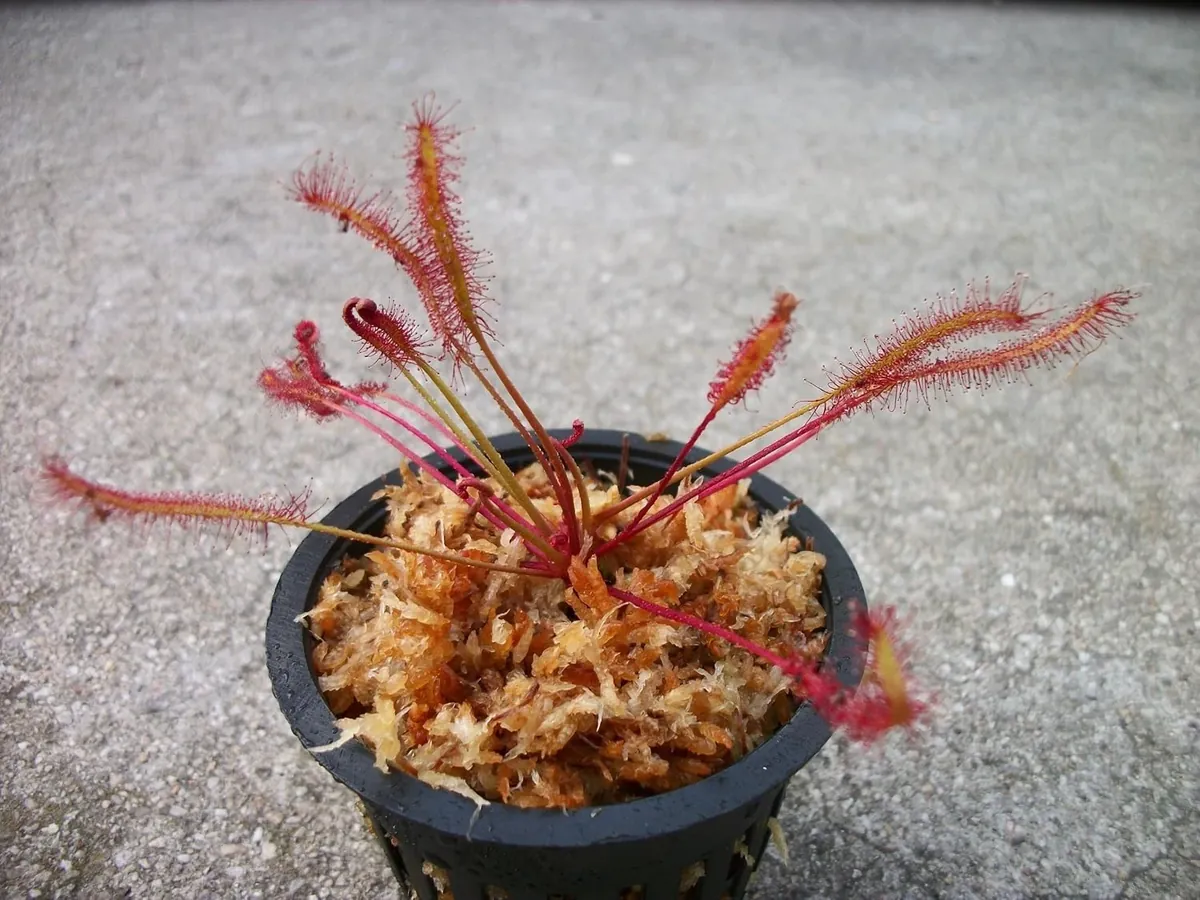
Red Cape Sundew Live Carnivorous Plant – Drosera Capensis – 3 Inch Pot – Indoor/Outdoor
Original price was: $81.96.$40.98Current price is: $40.98.
Bring home a captivating red cape sundew live plant, the Drosera Capensis, known for its vibrant red tentacles and effective insect-catching abilities. This unique carnivorous plant is perfect for both indoor enthusiasts and outdoor bog gardens, thriving in a 3 inch pot.
-
USDA Hardiness Zone
10 -
Soil Type
Peat moss and perlite/sand mix -
Sunlight Exposure
Full sun -
Expected Planting Period
Year-round indoors, Spring to early summer outdoors

You can track your order HERE
Mar 02
Mar 07 - Mar 09
Mar 12 - Mar 16
Shipping and return policies: Our Alive & Thrive Guarantee covers issues with your plants within the first 30 days. Reach out to us. Our team will answer your questions and help you find the plants that are truly suitable for your environment, climate, and personal preferences.

Overview
Introducing the mesmerizing red cape sundew live plant, botanically known as Drosera Capensis. This remarkable carnivorous plant is a true spectacle, featuring long, slender leaves adorned with sticky, dewy tentacles that glisten in the light. Each ‘dewdrop’ is a potent trap, luring and capturing small insects to supplement the plant’s diet. Originating from the Cape region of South Africa, the red cape sundew live plant is celebrated for its robust nature and ease of care, making it an excellent choice for both novice and experienced carnivorous plant enthusiasts. Its striking appearance and active hunting mechanism offer endless fascination, transforming any plant collection into a dynamic ecosystem. This live specimen comes ready to thrive, providing an instant natural pest control solution and a unique aesthetic.
The red cape sundew live plant exhibits a beautiful rosette form, with leaves that can range from green to a deep, vibrant red, especially when exposed to ample sunlight. Its common name, ‘Cape Sundew,’ aptly describes its origin and its characteristic ‘dew-covered’ appearance. Unlike some other carnivorous plants, Drosera Capensis is known for its prolific growth and adaptability, often producing delicate pink flowers that add to its charm. Whether you’re looking to add an exotic touch to your indoor garden or create a captivating outdoor display, this plant promises to be a conversation starter and a fascinating addition to your botanical family.
Key Benefits
The red cape sundew live plant offers a multitude of benefits, combining aesthetic appeal with practical advantages for any plant lover.
- Natural Insect Control: This plant is a highly effective natural predator of small insects like gnats, fruit flies, and mosquitoes, helping to keep your home or garden pest-free without chemicals. The sticky tentacles are incredibly efficient at trapping unwanted visitors.
- Striking Visual Appeal: With its vibrant red hues and glistening ‘dewdrops,’ the red cape sundew live plant is a visually stunning specimen that adds an exotic and unique touch to any plant collection. Its dynamic appearance changes as it captures prey.
- Easy to Care For: Known as a carnivorous plant for beginners, the Drosera Capensis is forgiving and relatively low-maintenance compared to other carnivorous species. It thrives with consistent moisture and bright light, making it an ideal entry point into the world of carnivorous plants.
- Educational Value: Observing the red cape sundew live plant in action provides a fascinating educational experience for all ages, demonstrating the wonders of nature’s adaptations and the intricate processes of a bug eating plant.
- Versatile Placement: Suitable as a sundew plant indoor or as part of an outdoor bog garden, this plant adapts well to various environments, provided its basic needs for light and moisture are met.
- Prolific Growth & Flowering: Under optimal conditions, the Cape Sundew is a vigorous grower and will often produce tall stalks with delicate pink flowers, further enhancing its beauty and offering opportunities for seed collection.
- Unique Hobby Plant: Cultivating a red cape sundew live plant offers a rewarding and engaging hobby, allowing you to connect with nature and expand your botanical knowledge.
Plant Care & Growing Tips
Caring for your red cape sundew live plant (Drosera Capensis) is straightforward, making it an ideal carnivorous plant for beginners. The key to its health and vibrant color lies in providing the right environment. For sunlight, this plant absolutely loves bright light. It thrives in full sun for at least 4-6 hours a day. If kept indoors, place it in a south-facing window where it can receive maximum light. For outdoor cultivation, ensure it gets plenty of direct sunlight. Insufficient light will result in greener leaves and less ‘dew’ production, while ample light will bring out its beautiful red coloration.
Watering is crucial for the red cape sundew live plant. It requires consistently moist soil, mimicking its natural boggy habitat. Always use distilled water, rainwater, or reverse osmosis water, as tap water minerals can be harmful. The tray method is highly recommended: keep the pot sitting in about 1 inch of water at all times. This ensures the soil remains saturated. The ideal soil type is a nutrient-poor, acidic mix, typically a blend of peat moss and perlite or sand (in a 1:1 ratio). Avoid potting mixes with added fertilizers or regular garden soil, as these can kill carnivorous plants. The plant prefers a soil pH between 4.0 and 5.5.
The sundew plant indoor or outdoor thrives in temperatures between 50-85°F (10-29°C). It is hardy in USDA hardiness zones 8-10, meaning it can tolerate mild winters outdoors in these regions. In colder climates, it’s best to bring your red cape sundew live plant indoors during winter. Fertilization is generally not needed for carnivorous plants; they get their nutrients from the insects they catch. If your plant isn’t catching enough bugs, you can occasionally feed it small insects. Common problems include lack of dew (usually due to low humidity or insufficient light/water) and stunted growth (often from using tap water or incorrect soil). Ensure proper conditions for a healthy, thriving plant.
Size & Details
This red cape sundew live plant is provided in a convenient 3 inch pot, making it a perfect size for immediate display or transplanting into a larger carnivorous plant setup. The plant typically stands about 5.5 inches tall, showcasing a well-established root system and several active, dew-producing leaves. It is shipped as a healthy, live specimen, ready to continue its growth in your care. While it is not a bare root plant, it is robust enough to handle the transition to its new home. The Drosera Capensis is known for its relatively fast growth rate under optimal conditions, quickly forming a dense rosette of sticky leaves. Expect it to reach its full mature size within one to two growing seasons, continuing to produce its characteristic red, insect-trapping foliage.
Frequently Asked Questions
- Q: How big does this red cape sundew live plant get? A: The red cape sundew live plant typically grows to about 5-6 inches in diameter and can reach a height of 5-8 inches. With ideal conditions, it can form a dense and impressive rosette of leaves.
- Q: What size pot does it come in? A: This red cape sundew live plant is shipped in a standard 3 inch nursery pot, suitable for its initial growth stage and easy to transplant if desired.
- Q: Is this an indoor or outdoor plant? How much sunlight does it need? A: The red cape sundew live plant can be grown both indoors and outdoors. It requires a minimum of 4-6 hours of direct sunlight daily to develop its vibrant red coloration and produce ample ‘dew.’ Indoors, a bright, south-facing window is ideal.
- Q: Is this plant easy to care for? Is it good for beginners? A: Yes, the Drosera Capensis is widely considered one of the easiest carnivorous plants to care for, making it an excellent carnivorous plant for beginners. Its primary needs are consistent moisture with distilled water and plenty of sunlight.
- Q: What condition will it arrive in? Is it shipped in soil? A: Your red cape sundew live plant will arrive as a live, healthy plant, actively growing in its 3 inch pot with appropriate carnivorous plant soil mix. It is carefully packaged to ensure its safe journey.
- Q: How long until it blooms? A: Under good growing conditions, your red cape sundew live plant can produce flower stalks within its first year. The delicate pink flowers typically appear on tall stalks, often in spring or summer.
- Q: Will it survive winter in my zone? What’s the minimum temperature? A: The red cape sundew live plant is hardy in USDA Zones 8-10. If you live in a colder zone (below Zone 8), it’s recommended to bring the plant indoors during winter to protect it from frost. It can tolerate temperatures down to about 40°F (4°C) for short periods, but prefers above 50°F (10°C).
- Q: What should I do if my sundew isn’t producing dew? A: Lack of dew on your red cape sundew live plant is often a sign of insufficient humidity, light, or improper watering. Ensure it receives bright light, is kept consistently moist with distilled water (using the tray method), and consider increasing humidity if your environment is very dry.
- Q: Is this bug eating plant safe for pets? A: While the plant itself is not known to be toxic, it’s generally best to keep all plants out of reach of pets to prevent accidental ingestion or damage to the plant.
- Q: What kind of soil should I use if I repot my sundew plant indoor? A: For repotting your sundew plant indoor, always use a mix of peat moss and perlite or horticultural sand (typically a 1:1 ratio). Never use regular potting soil or soil with added fertilizers, as the nutrients will harm the plant.
Be the first to review “Red Cape Sundew Live Carnivorous Plant – Drosera Capensis – 3 Inch Pot – Indoor/Outdoor”
People Also Viewed
Sold 91 products
From $71.80
Sold 90 products
Original price was: $60.00.$48.00Current price is: $48.00.
Sold 51 products
From $24.99
Sold 98 products
Original price was: $28.99.$18.99Current price is: $18.99.
Sold 66 products
From $75.80
Sold 67 products
Original price was: $58.14.$29.07Current price is: $29.07.
Sold 81 products
Original price was: $54.36.$27.18Current price is: $27.18.
Sold 89 products
Original price was: $34.00.$27.20Current price is: $27.20.
Sold 64 products
Original price was: $143.80.$71.90Current price is: $71.90.
Sold 97 products
From $103.80
Sold 93 products
Original price was: $81.23.$30.49Current price is: $30.49.
Sold 83 products
Original price was: $211.96.$105.98Current price is: $105.98.
Sold 83 products
Original price was: $8.48.$4.24Current price is: $4.24.
Sold 80 products
From $61.58
Sold 74 products
Original price was: $39.98.$19.99Current price is: $19.99.
Sold 93 products
Original price was: $41.56.$20.78Current price is: $20.78.
Sold 92 products
From $43.96
Sold 63 products
Original price was: $67.96.$33.98Current price is: $33.98.


Reviews
There are no reviews yet.