
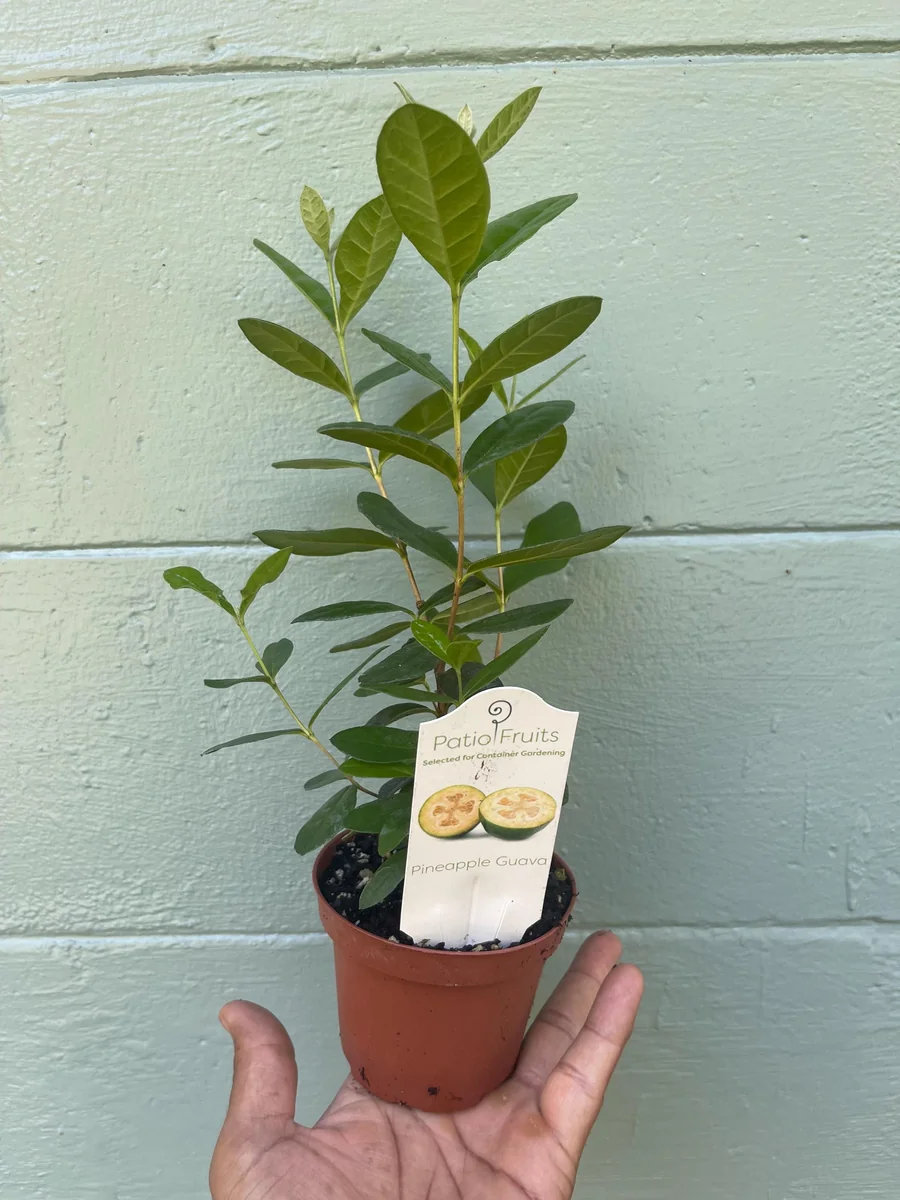
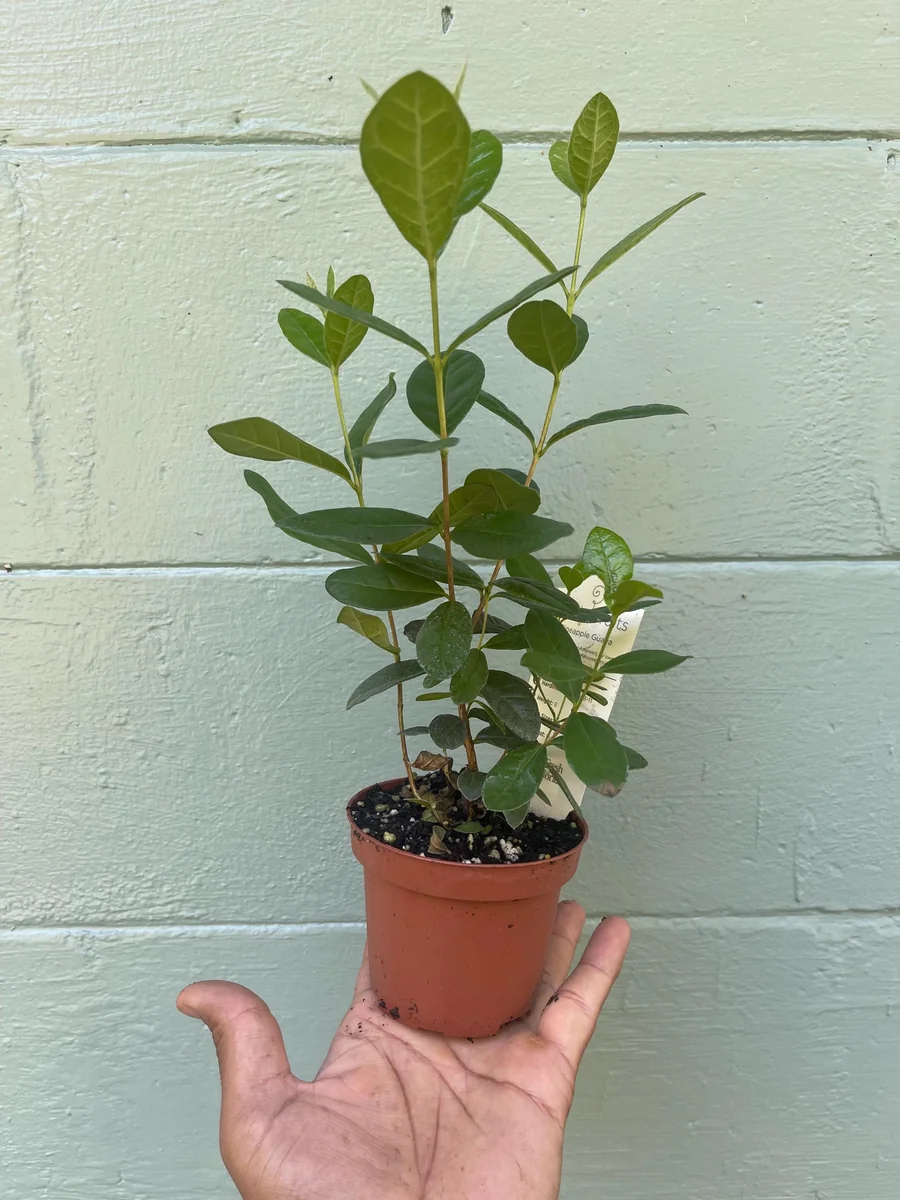
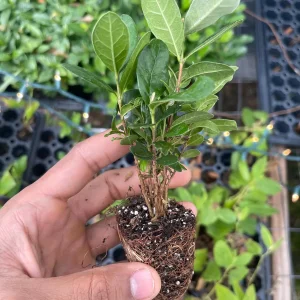
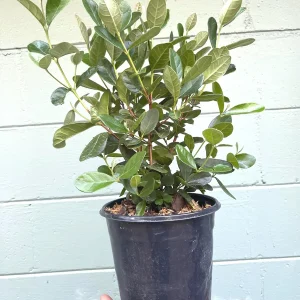
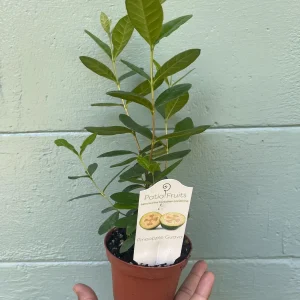
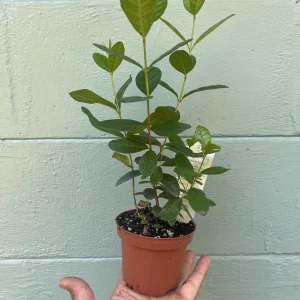
Pineapple Guava Live Plant – Acca Sellowiana Fruit Shrub for Edible & Ornamental Gardens
From $57.76
Cultivate a versatile pineapple guava live plant (Acca Sellowiana) in your garden. This evergreen shrub offers delicious, unique tropical fruits and attractive, edible flowers. Ideal for both ornamental and edible landscapes, thriving in USDA zones 8-11.
-
USDA Hardiness Zone
USDA zones 8-11 -
Soil Type
Loamy, moist, well-drained soil with acidic to neutral pH -
Sunlight Exposure
Full to partial sun -
Expected Planting Period
Spring to early summer

You can track your order HERE
Feb 27
Mar 04 - Mar 06
Mar 09 - Mar 13
Shipping and return policies: Our Alive & Thrive Guarantee covers issues with your plants within the first 30 days. Reach out to us. Our team will answer your questions and help you find the plants that are truly suitable for your environment, climate, and personal preferences.

Overview
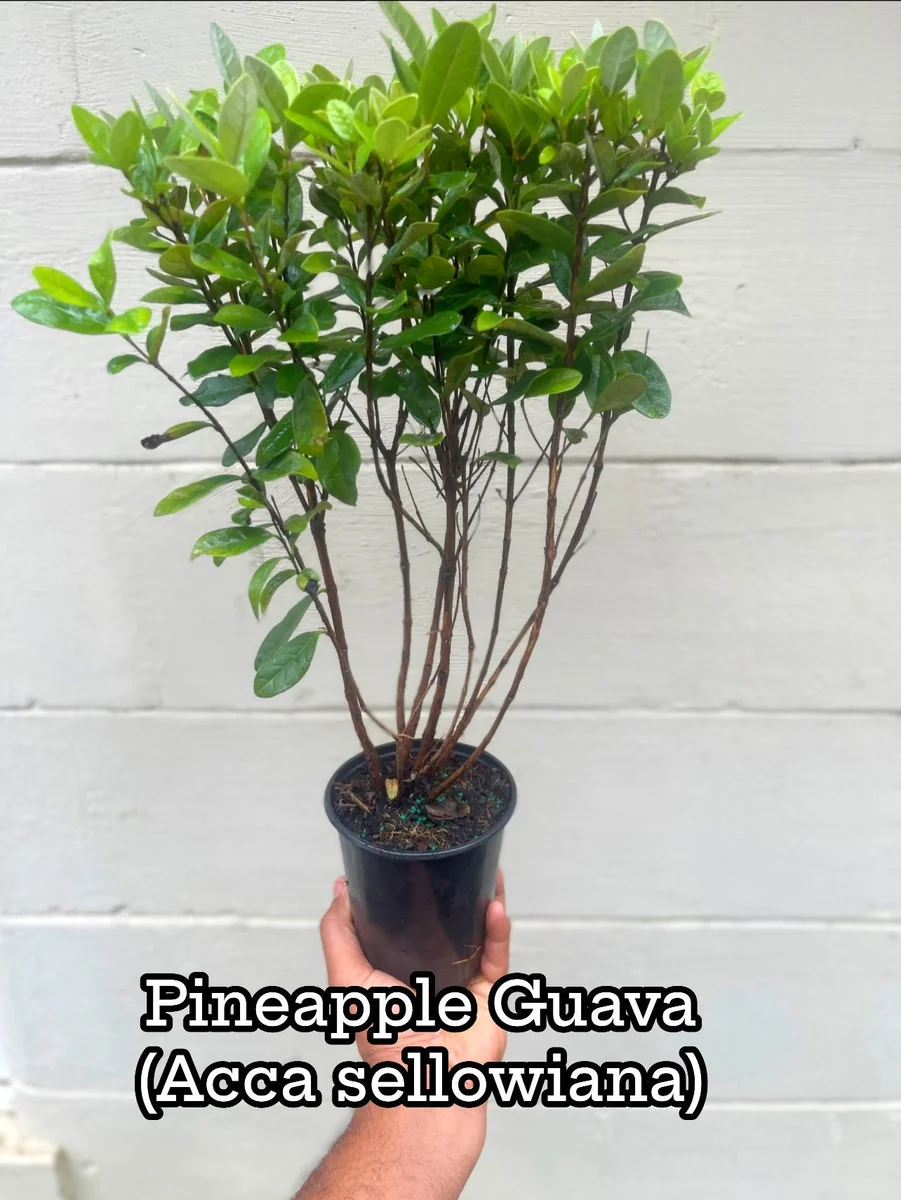
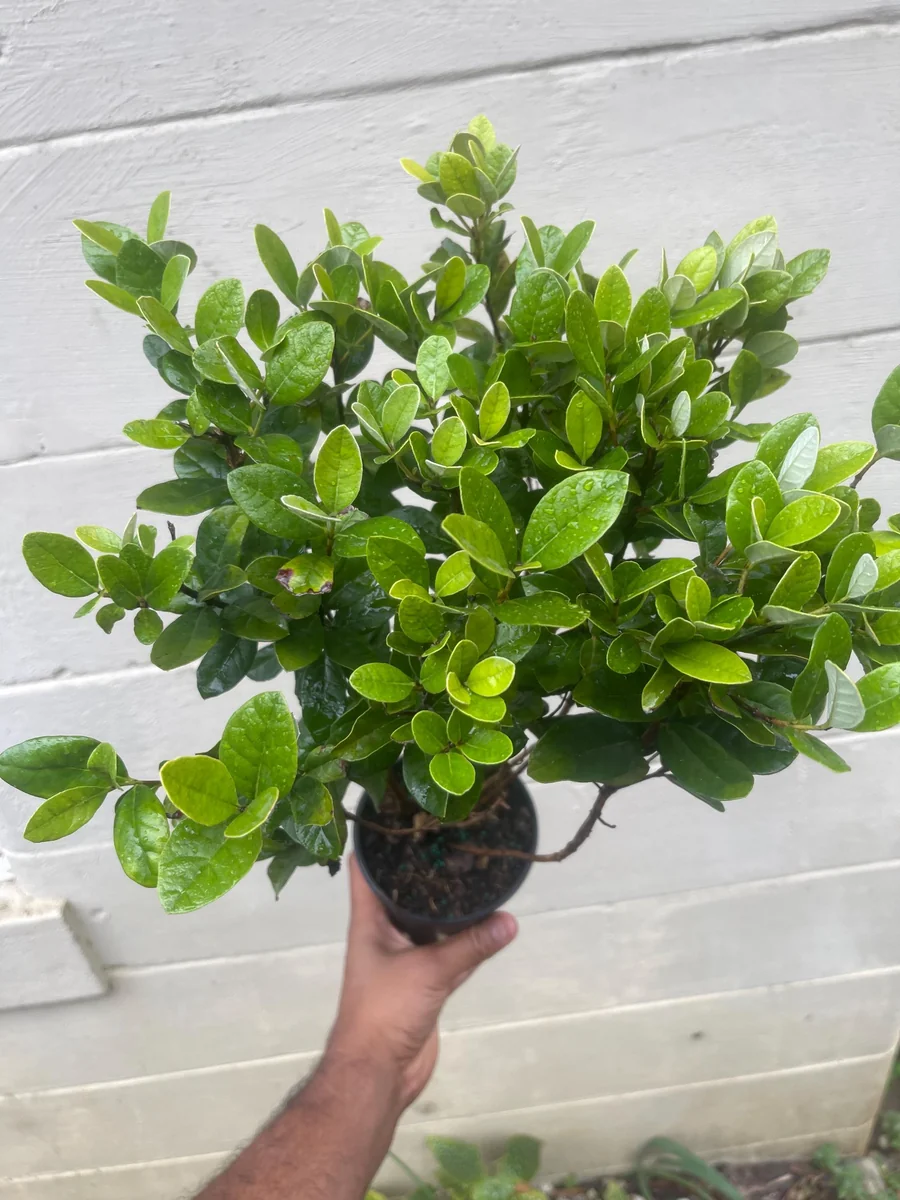
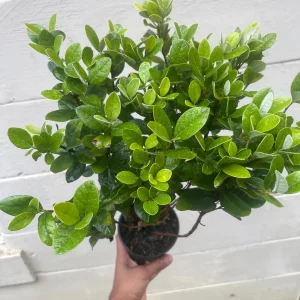
Introduce a truly unique and versatile specimen to your garden with the pineapple guava live plant (Acca Sellowiana), also widely known as feijoa. This exceptional evergreen shrub or small tree is celebrated for its dual appeal, providing both captivating visual interest and a bounty of delicious, exotic fruits. With its distinctive silvery-green oval foliage, the acca sellowiana shrub maintains its beauty year-round, making it a focal point in any landscape. Beyond its ornamental charm, this plant produces fragrant, edible flowers and egg-shaped green fruits that boast a complex flavor profile reminiscent of banana, pineapple, guava, and kiwi. It’s an excellent choice for gardeners looking to combine aesthetics with culinary delight, offering a tropical touch to temperate climates.
The feijoa plant is a resilient and rewarding addition, suitable for various garden styles, from formal edible landscapes to more informal cottage gardens. Its slow growth habit allows for flexibility in placement, whether you choose to grow it as a multi-stemmed shrub or prune it into a small, elegant tree. This pineapple guava live plant is not just a producer of fruit; its vibrant flowers also attract beneficial pollinators and birds, enhancing the biodiversity of your outdoor space. It’s a testament to nature’s ingenuity, delivering both beauty and sustenance in one elegant package.
Key Benefits
Adding a pineapple guava live plant to your garden offers a wealth of advantages, transforming your outdoor space into a productive and beautiful sanctuary. From its aesthetic appeal to its edible offerings, this plant is truly a multi-tasker:
-
Delicious Edible Fruits: Enjoy a unique tropical fruit with a delightful blend of banana, pineapple, guava, and kiwi flavors. The egg-shaped, green fruits are perfect for fresh eating, jams, jellies, and desserts, providing a taste of the tropics right from your backyard.
-
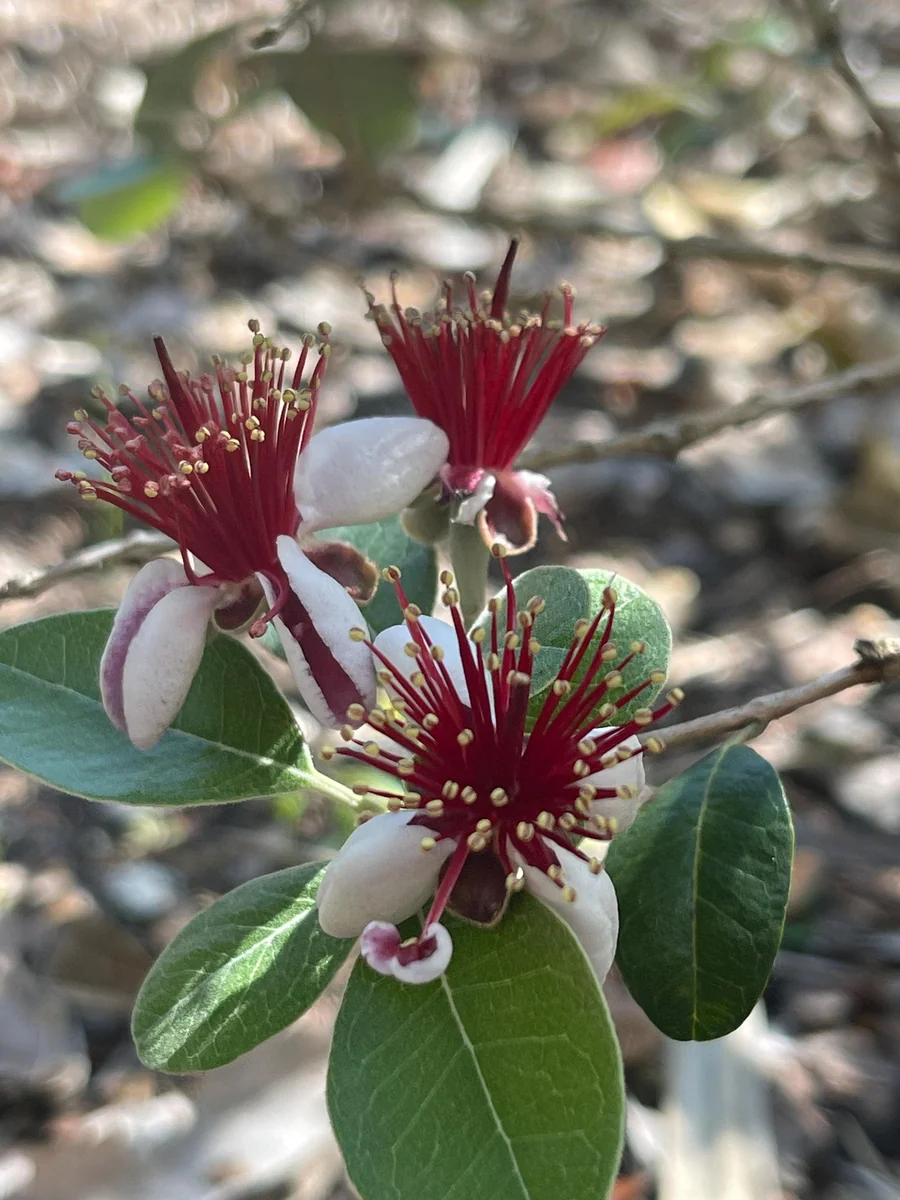
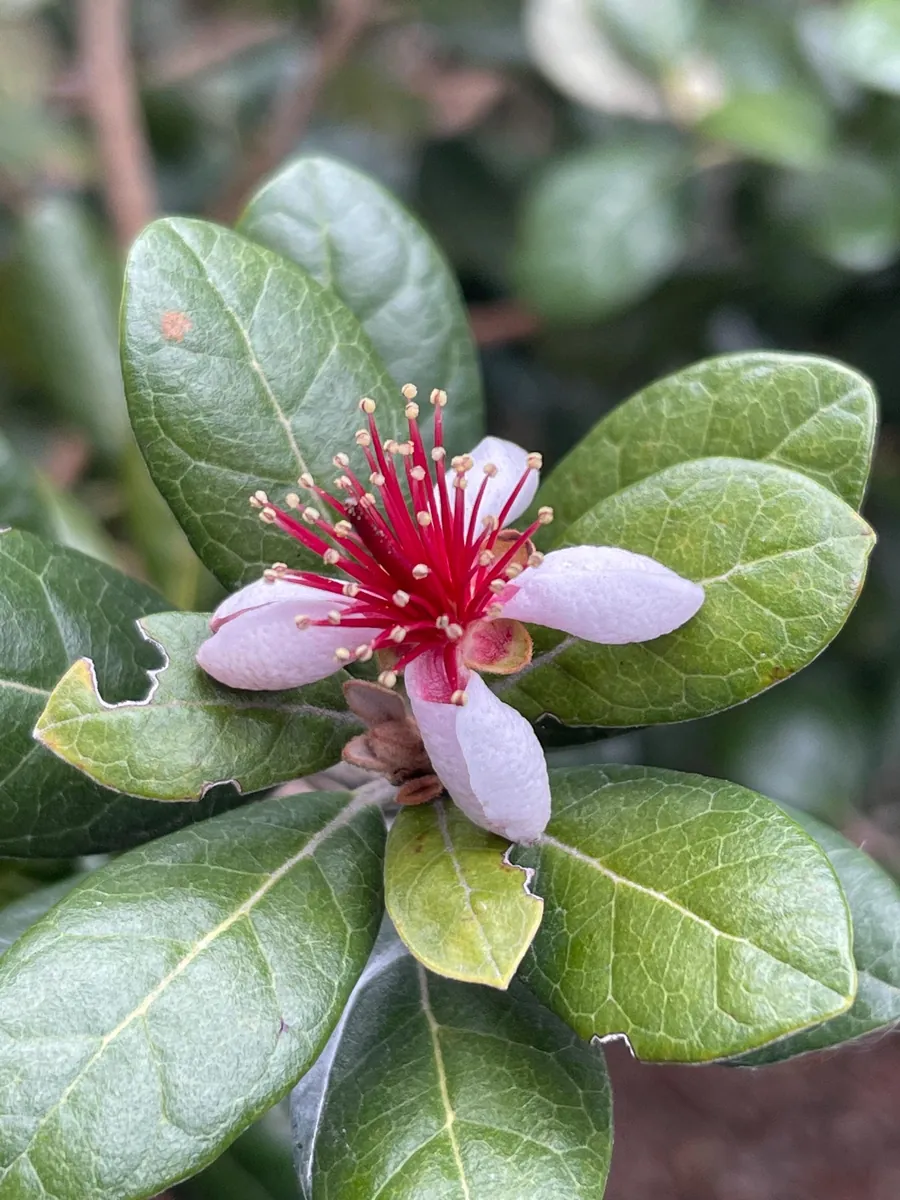
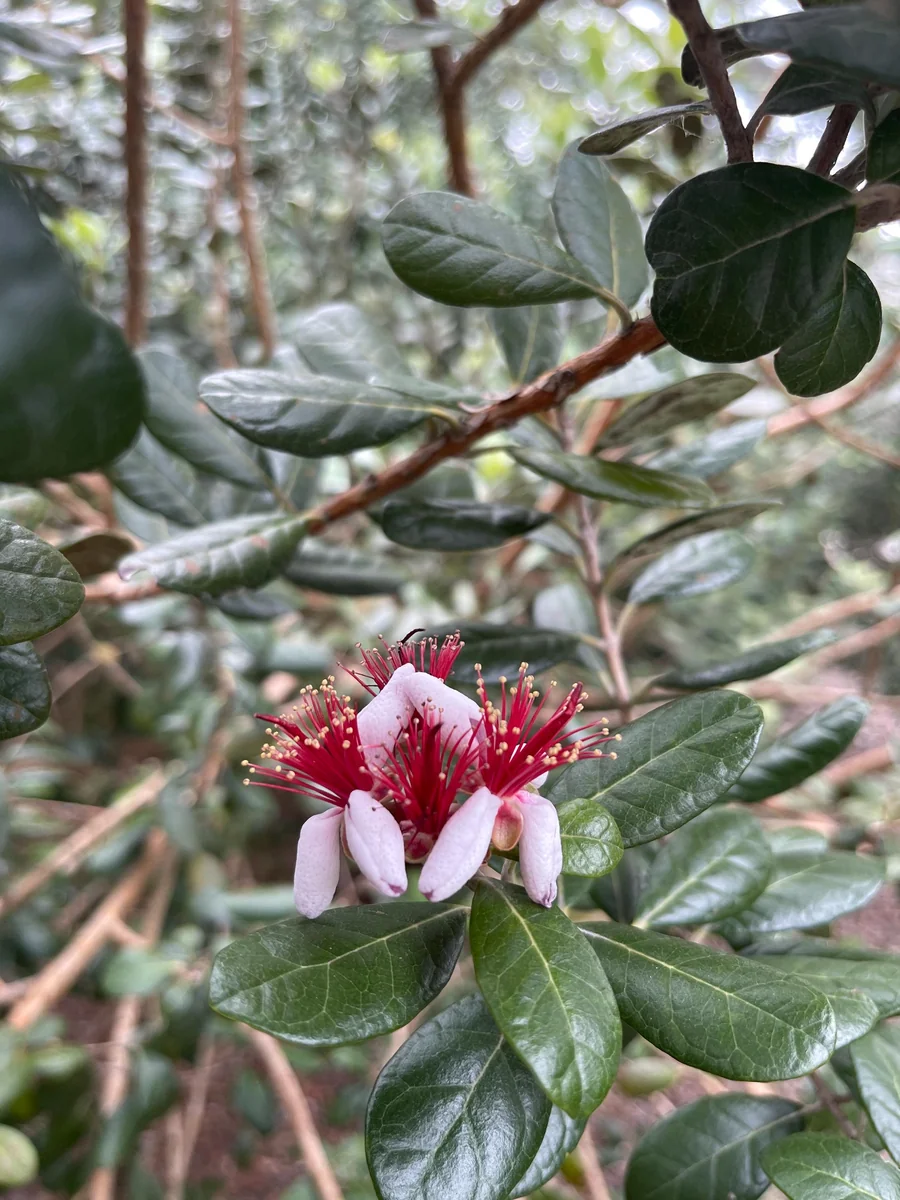
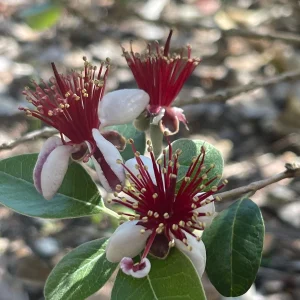
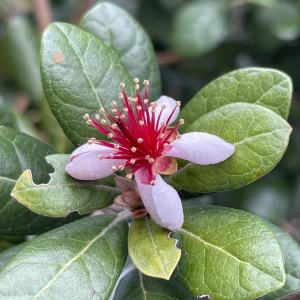
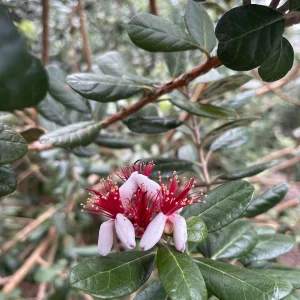
Attractive Edible Flowers: The beautiful pink and white flowers with spiky red stamens are not only a visual treat but also edible. They add a sweet, slightly spicy flavor to salads and desserts and are a favorite for attracting pollinators like bees and hummingbirds.
-
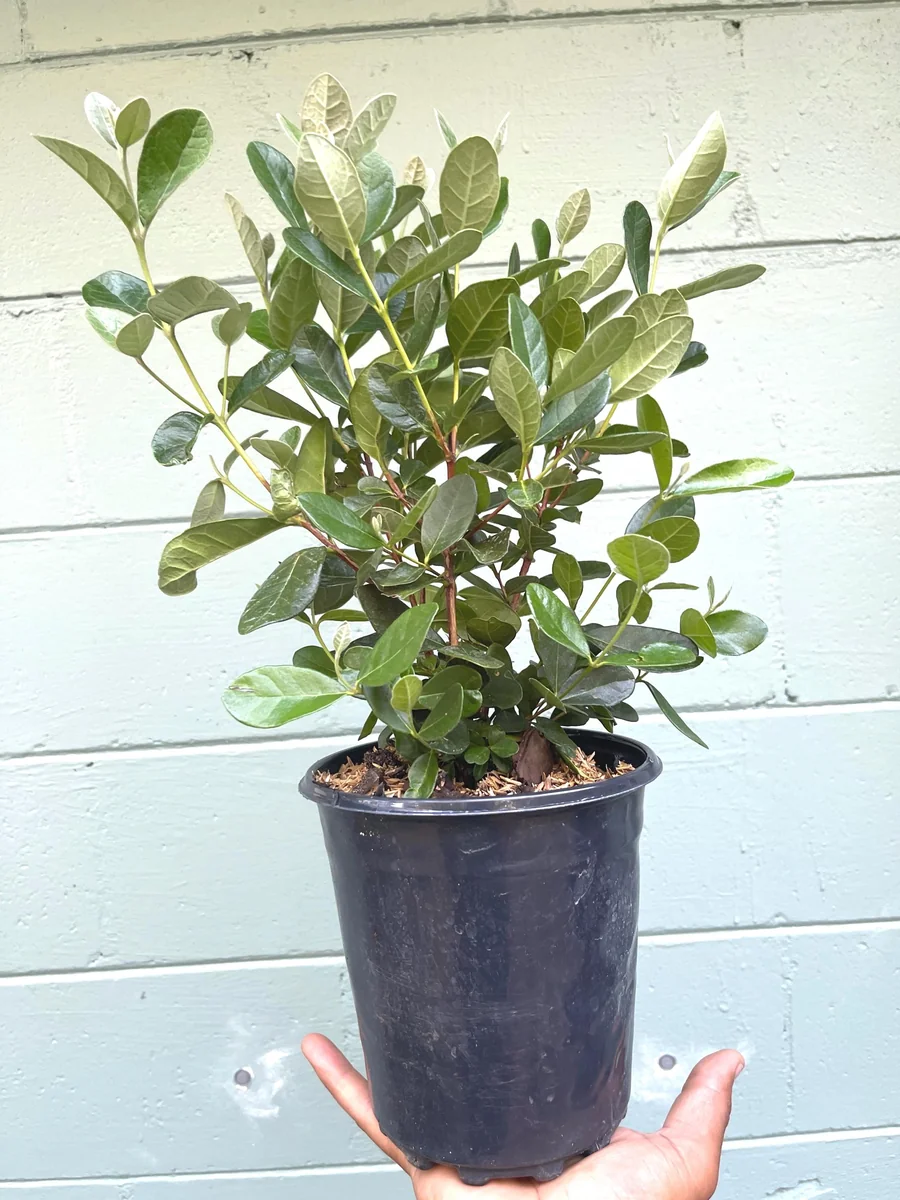
Evergreen Foliage: Maintain year-round interest with the attractive silvery-green oval leaves of this acca sellowiana shrub. Its evergreen nature ensures your garden remains vibrant even in cooler months, providing structure and color.
-
Versatile Growth Habit: This adaptable plant can be grown as a dense, multi-stemmed shrub for privacy or hedging, or expertly pruned into a charming small tree with a central trunk, making it suitable for various garden designs and spaces.
-
Low Maintenance & Drought Tolerant: Once established, the feijoa plant is relatively easy to care for, requiring moderate watering and minimal pruning to maintain its shape and productivity. It exhibits good drought tolerance, making it a sustainable choice for many regions.
-
Attracts Pollinators: The vibrant and fragrant flowers are a magnet for bees, butterflies, and other beneficial pollinators, contributing to the health and vitality of your garden ecosystem.
-
Ornamental Appeal: Beyond its edible benefits, the evergreen fruit shrub offers significant ornamental value with its unique foliage, beautiful flowers, and attractive form, enhancing the overall aesthetic of your landscape.
Plant Care & Growing Tips
Caring for your pineapple guava live plant is straightforward, ensuring a healthy and productive specimen for years to come. This resilient plant thrives when provided with the right conditions, mimicking its native subtropical environment. For optimal growth and fruit production, understanding its specific needs for sunlight, soil, water, and climate is crucial. A well-established acca sellowiana shrub can withstand various conditions, but consistent care in its early years will lead to a more robust and fruitful plant.
The feijoa plant prefers a location that receives full to partial sun, ideally with at least 6 hours of direct sunlight per day for the best fruit development. While it can tolerate some shade, too little sun may reduce flowering and fruiting. It thrives in loamy, moist, but well-drained soil with an acidic to neutral pH (6.0-7.0). Ensure good drainage to prevent root rot, especially in heavier clay soils; amending with organic matter can significantly improve soil structure. Water regularly to keep the soil consistently moist, particularly during dry spells and when the plant is establishing. However, avoid overwatering, as soggy conditions can be detrimental. Once mature, the evergreen fruit shrub becomes more drought-tolerant. Fertilize in early spring with a balanced slow-release fertilizer formulated for fruit trees or shrubs to support vigorous growth and fruit set. Pruning should be done in late winter or early spring to shape the plant, remove dead or crossing branches, and encourage air circulation. This also helps in maintaining the desired size, especially if you’re aiming for a smaller tree form. The edible guava plant is hardy in USDA zones 8-11, tolerating temperatures down to about 15°F (-9°C). In colder zones, it can be grown in containers and brought indoors during winter or protected with frost cloth.
Size & Details
This pineapple guava live plant is typically slow-growing, making it an excellent choice for various garden sizes, including containers or smaller spaces. When mature, it can reach an impressive height and width of up to 20 feet, though its growth can be easily managed through pruning to maintain a more compact size. The plants are shipped in quart-size pots, providing a well-established root system ready for easy transplanting into your garden or a larger container. This size ensures a smooth transition and quicker establishment in its new home. Expect the plant to gradually increase in size, developing its characteristic silvery-green foliage and eventually producing its unique flowers and delicious fruits. The initial size allows for flexible placement, and with consistent care, your acca sellowiana shrub will continue to grow and flourish.
The versatile nature of this plant means it can adapt to your landscaping needs, whether you envision it as a standalone specimen, part of an edible hedge, or a potted patio plant. Its robust nature and manageable growth rate ensure that you can enjoy the beauty and bounty of this feijoa plant without it quickly outgrowing its designated space. With proper care, it will become a long-lasting and rewarding feature in your garden, offering both aesthetic appeal and a continuous supply of exotic fruits.
Frequently Asked Questions
-
Q: How big does this pineapple guava live plant get? A: A mature pineapple guava live plant can reach up to 20 feet tall and wide if left unpruned. However, its slow growth rate makes it ideal for shaping and maintaining at a smaller size, perfect for various garden spaces or even large containers.
-
Q: Is this an indoor or outdoor plant? A: The acca sellowiana shrub is primarily an outdoor plant, thriving in USDA zones 8-11. In colder climates, it can be grown in a container and brought indoors during winter months to protect it from frost.
-
Q: How much sunlight does the evergreen fruit shrub need? A: This plant thrives in full to partial sun, ideally needing at least 6 hours of direct sunlight per day for optimal growth and fruit production. More sun generally leads to more abundant fruiting.
-
Q: Is this plant easy to care for? A: Yes, once established, the feijoa plant is relatively low-maintenance. It requires well-drained soil, regular watering during dry periods, and occasional fertilization. Pruning helps maintain its shape and health.
-
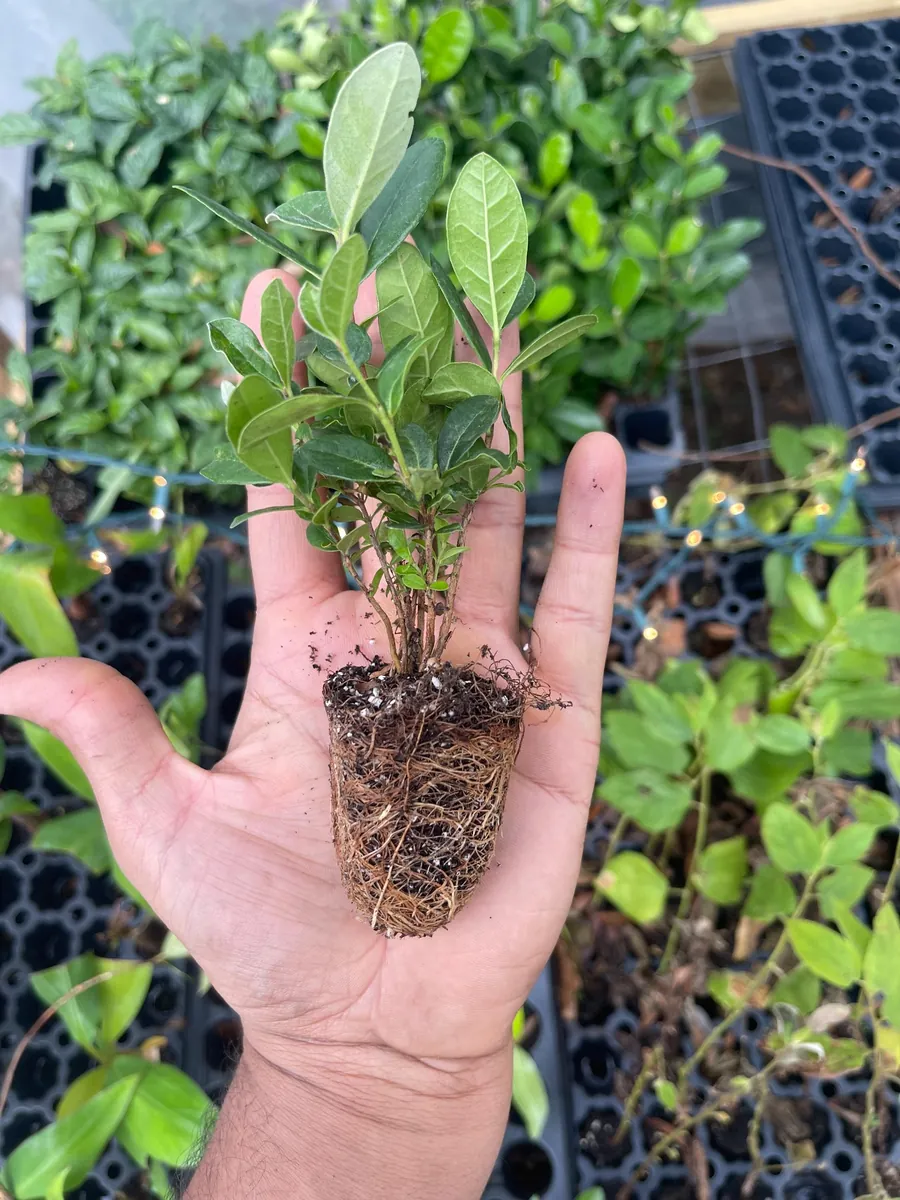
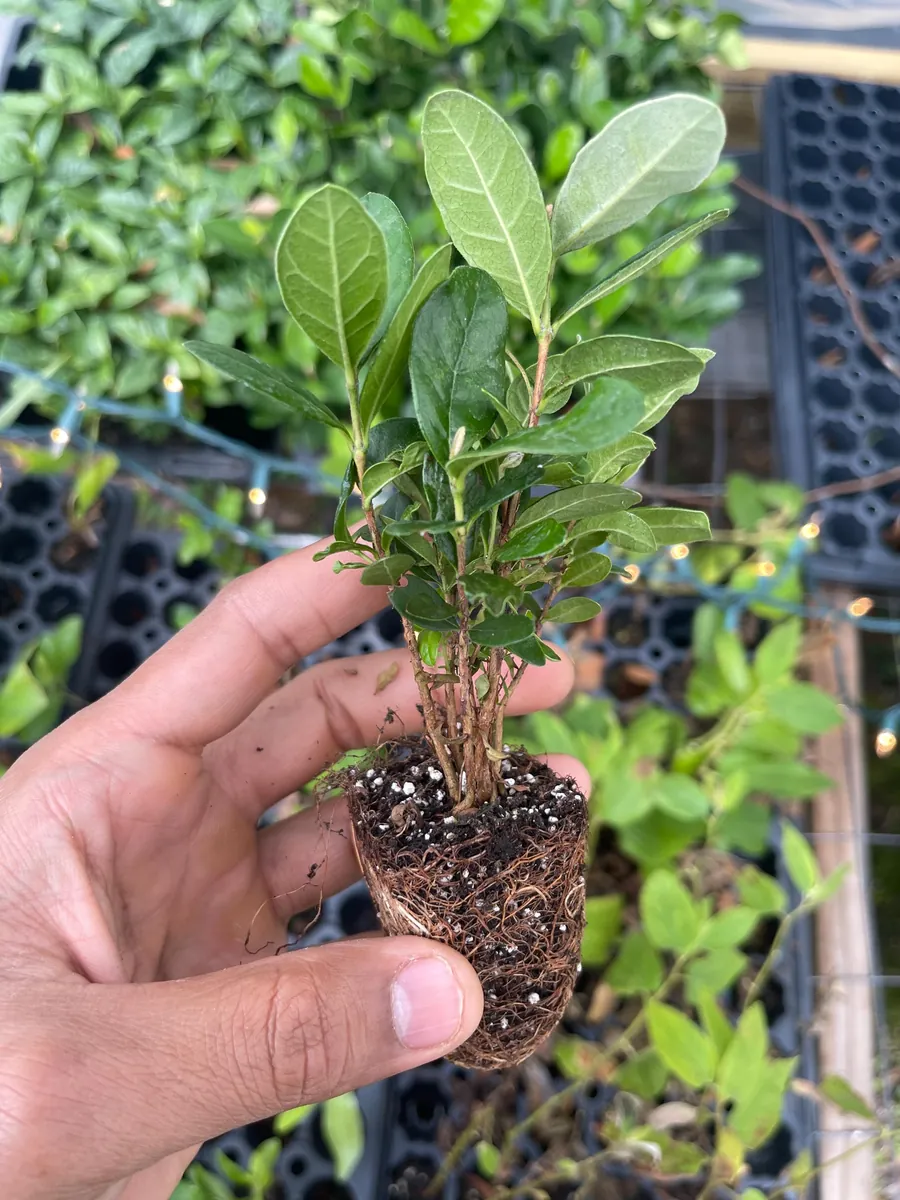
Q: What condition will the edible guava plant arrive in? A: Your pineapple guava live plant will be shipped in a quart-size pot, ensuring it arrives with a healthy, established root system, ready for transplanting into your garden or a larger container.
-
Q: When is the best time to plant a pineapple guava live plant? A: The best time to plant is typically in the spring or early fall when temperatures are moderate. This allows the plant to establish its root system before extreme heat or cold sets in.
-
Q: Will it survive winter in my zone? A: The acca sellowiana shrub is hardy in USDA zones 8-11. If you live in a colder zone, you’ll need to provide winter protection or grow it in a container that can be moved indoors.
-
Q: How long until the feijoa plant produces fruit? A: Typically, pineapple guava live plants begin producing fruit within 3-5 years after planting, depending on growing conditions and care. You may see flowers sooner, but fruit set takes a bit longer.
-
Q: Are the flowers of the evergreen fruit shrub edible? A: Yes, the beautiful pink and white flowers of the pineapple guava live plant are indeed edible and have a sweet, slightly spicy flavor. They can be used to garnish salads or desserts.
-
Q: What kind of soil does the edible guava plant prefer? A: It prefers loamy, moist, but well-drained soil with an acidic to neutral pH. Good drainage is crucial to prevent root issues.
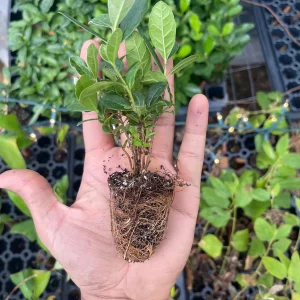
| plant size | 1 Gallon Pot, 4 Inch Pot, 6 Inch Pot, Small – 3 Inch Root |
|---|
Be the first to review “Pineapple Guava Live Plant – Acca Sellowiana Fruit Shrub for Edible & Ornamental Gardens”
People Also Viewed
Sold 58 products
Original price was: $39.98.$19.99Current price is: $19.99.
Sold 70 products
Original price was: $319.96.$159.98Current price is: $159.98.
Sold 67 products
Original price was: $58.58.$29.29Current price is: $29.29.
Sold 96 products
$87.98
Sold 94 products
Original price was: $355.96.$177.98Current price is: $177.98.
Sold 94 products
$35.18
Sold 94 products
Original price was: $25.98.$12.99Current price is: $12.99.
Sold 74 products
Original price was: $79.98.$39.99Current price is: $39.99.
Sold 73 products
Original price was: $38.00.$19.00Current price is: $19.00.
Sold 69 products
Original price was: $28.00.$22.40Current price is: $22.40.
Sold 67 products
Original price was: $50.99.$30.99Current price is: $30.99.
Sold 100 products
Original price was: $63.96.$31.98Current price is: $31.98.
Sold 63 products
Original price was: $39.98.$19.99Current price is: $19.99.
Sold 77 products
Original price was: $89.98.$44.99Current price is: $44.99.
Sold 67 products
$43.98
Succulents
Cotyledon Pendens Succulent Live Plant – Trailing Houseplant in 2 Inch Pot – Indoor/Outdoor
Sold 52 products
Original price was: $39.98.$19.99Current price is: $19.99.
Sold 67 products
Original price was: $39.98.$19.99Current price is: $19.99.
Sold 93 products
Original price was: $31.96.$15.98Current price is: $15.98.


Reviews
There are no reviews yet.