
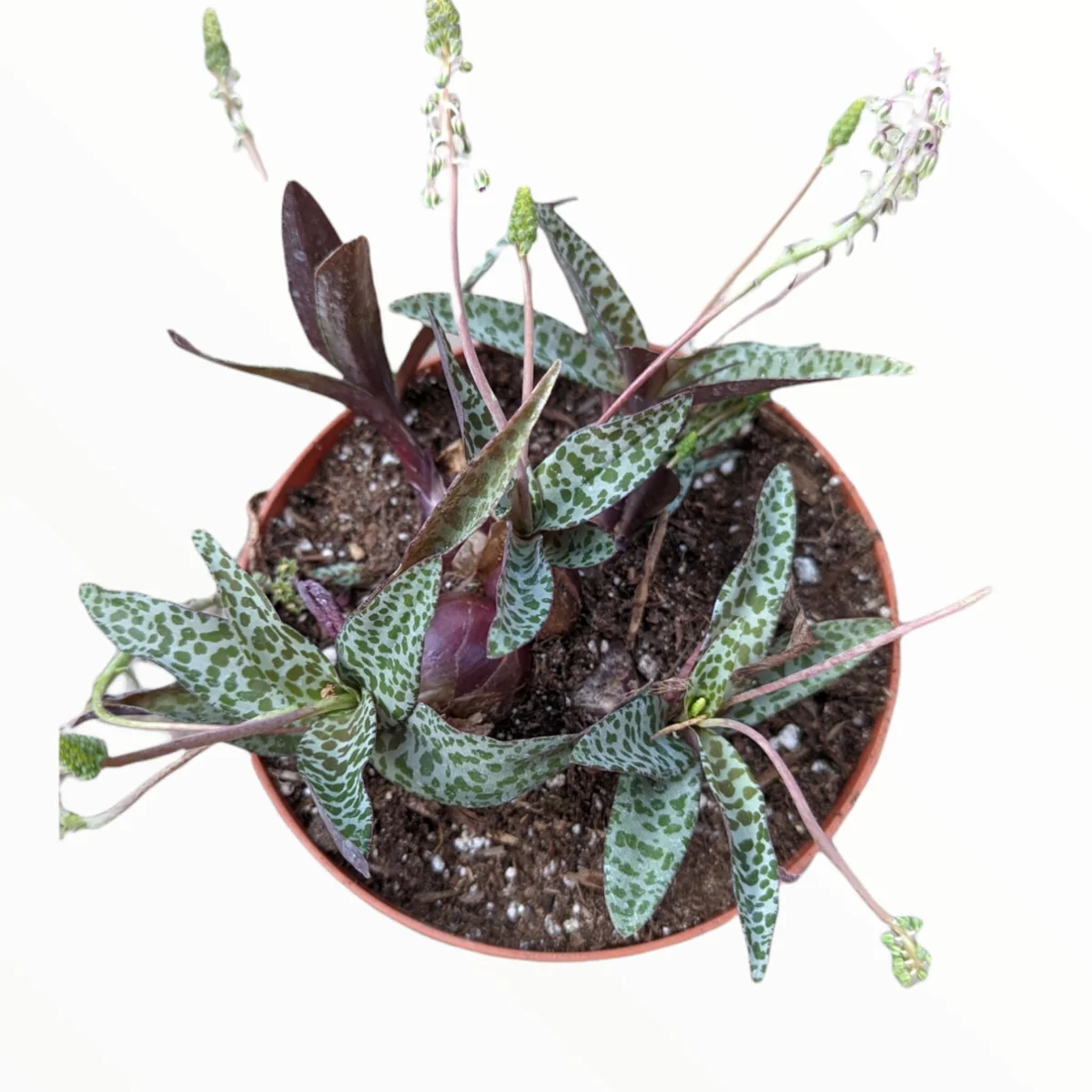
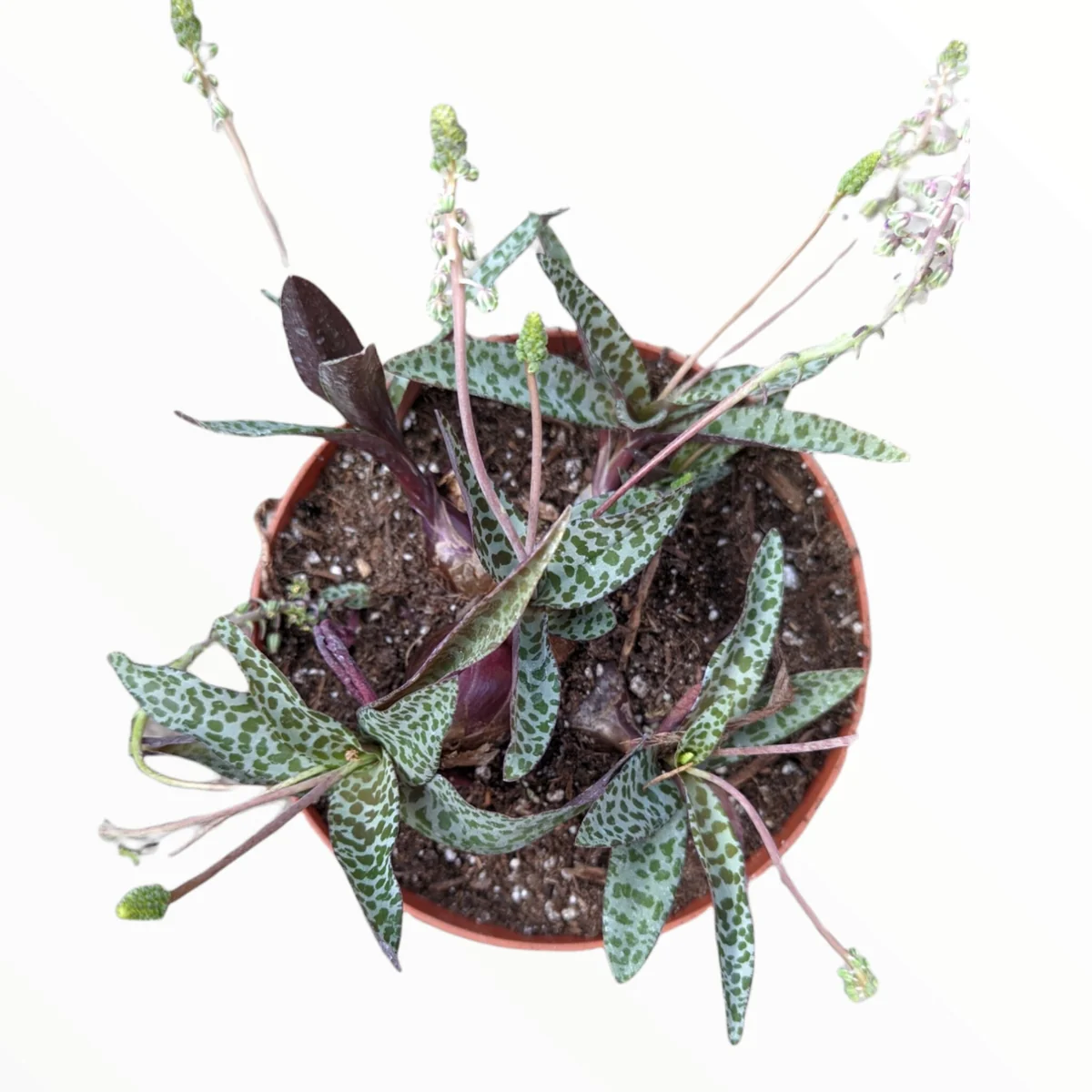
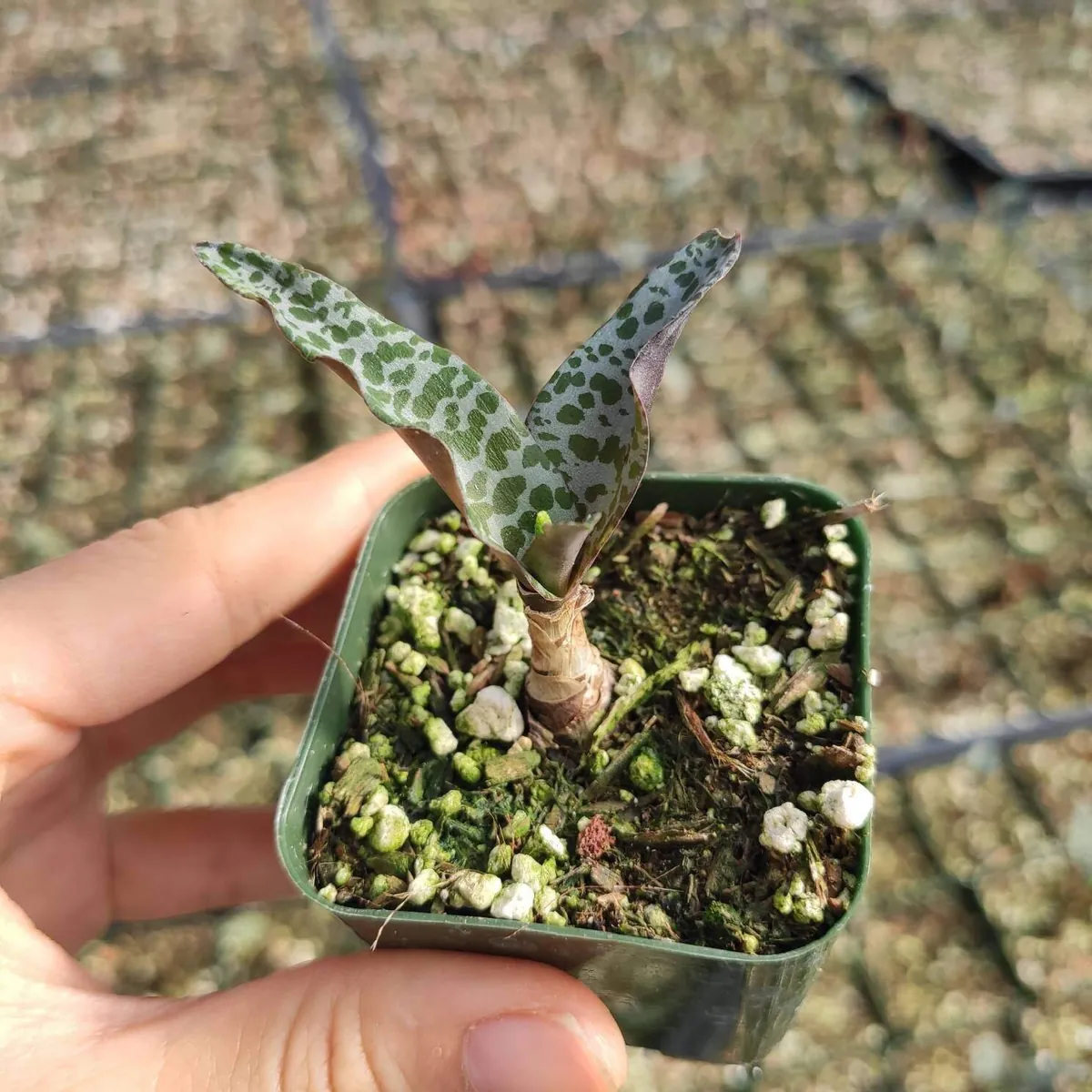
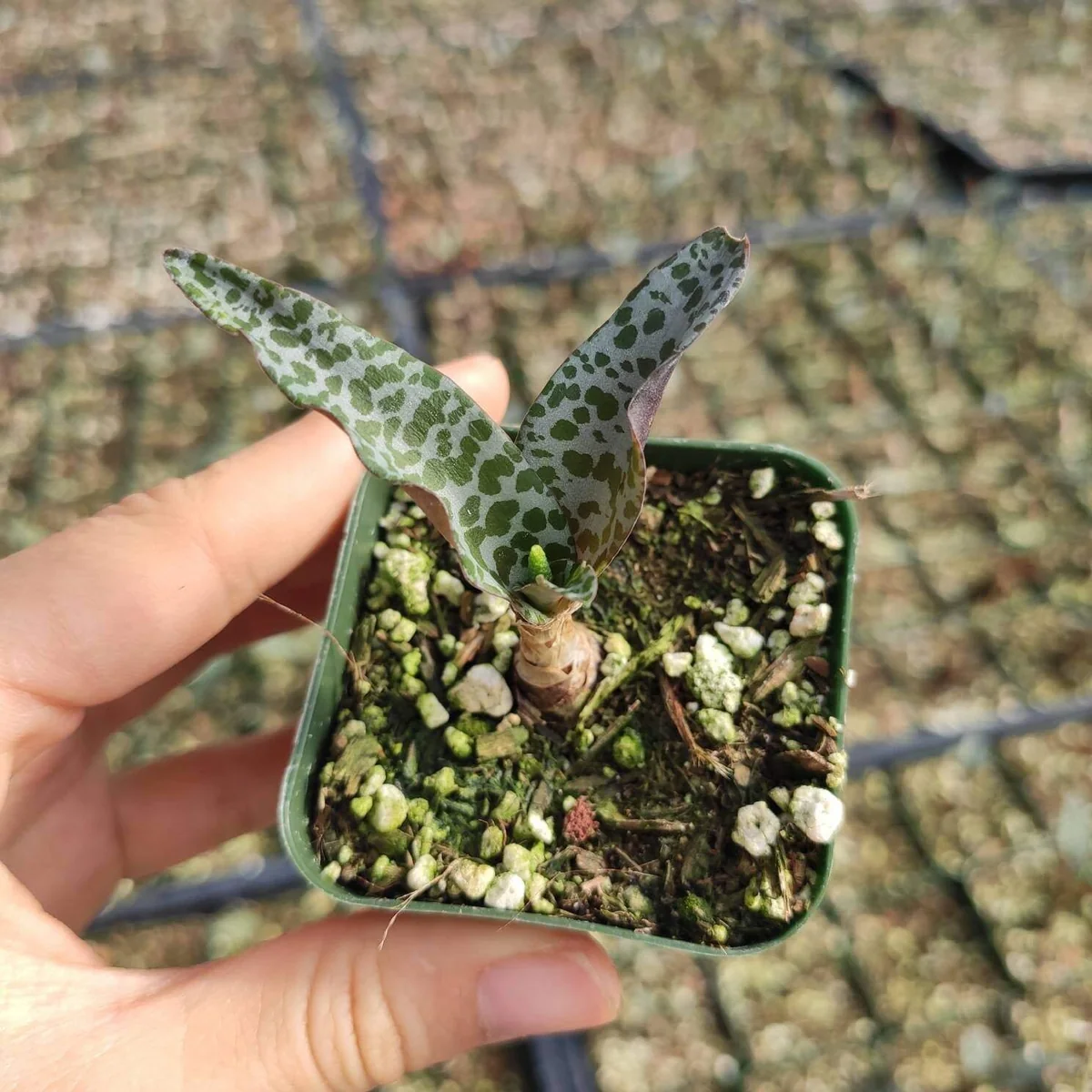
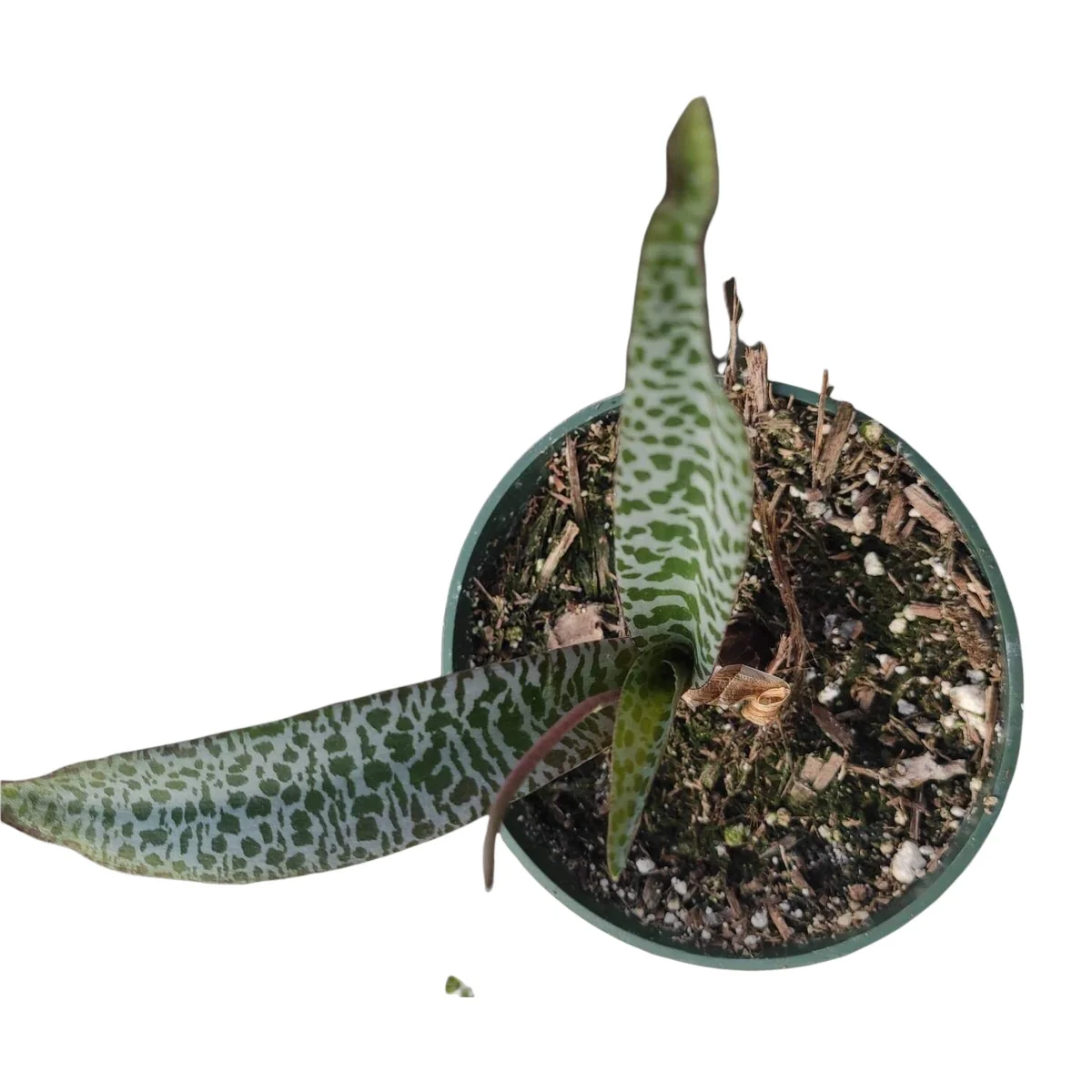
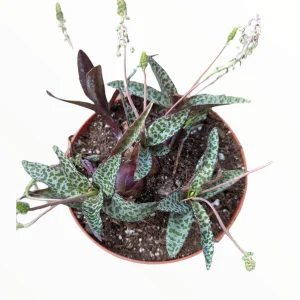
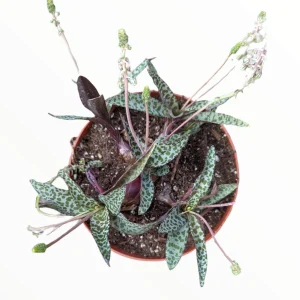
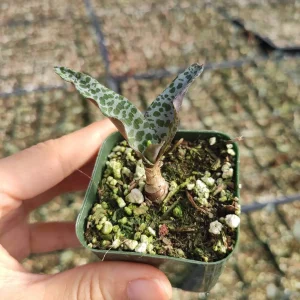
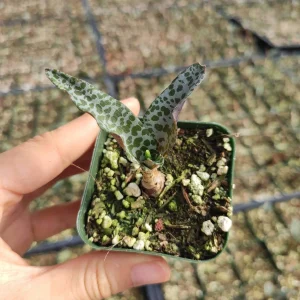
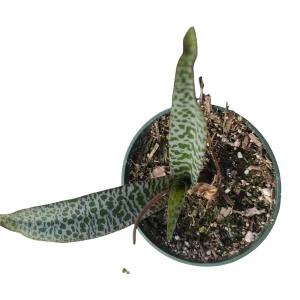
Ledebouria ovatifolia ‘Silver Squill’ Succulent Live Plant
Original price was: $68.24.$34.12Current price is: $34.12.
Bring home the captivating silver squill succulent plant, Ledebouria ovatifolia. This unique succulent features striking spotted foliage and is incredibly easy to care for, making it an ideal indoor succulent plant. Known for its drought tolerance and minimal watering needs, the silver squill succulent plant thrives in bright, indirect light, adding a touch of natural beauty to any space.
-
USDA Hardiness Zone
USDA zones 9-11 (indoors elsewhere) -
Soil Type
Well-draining succulent or cactus mix -
Sunlight Exposure
Bright indirect light -
Expected Planting Period
Year-round indoors

You can track your order HERE
Feb 27
Mar 04 - Mar 06
Mar 09 - Mar 13
Shipping and return policies: Our Alive & Thrive Guarantee covers issues with your plants within the first 30 days. Reach out to us. Our team will answer your questions and help you find the plants that are truly suitable for your environment, climate, and personal preferences.

Overview
The silver squill succulent plant, botanically known as Ledebouria ovatifolia, is a truly remarkable addition to any plant collection, especially for those who appreciate unique foliage and low-maintenance gardening. This captivating perennial succulent boasts distinctive, teardrop-shaped leaves adorned with intricate silver-green patterns and often a purple underside, creating a stunning visual contrast. Originating from South Africa, the silver squill succulent plant is celebrated for its resilience and adaptability, making it an excellent choice for both beginner and experienced plant enthusiasts. It forms charming clusters of bulbs that sit just above the soil line, adding to its ornamental appeal. As a live plant, it offers continuous beauty and a sense of tranquility to your indoor environment, perfect for windowsills, desks, or terrariums. This indoor succulent plant is not just a decorative piece; it’s a living testament to nature’s artistry, promising to be a conversation starter in any setting.
The Ledebouria ovatifolia, often simply called Silver Squill, is a hardy and drought-tolerant species that flourishes with minimal intervention. Its unique appearance and ease of care contribute to its growing popularity among succulent lovers. Unlike many plants that demand constant attention, the silver squill succulent plant thrives on neglect, requiring infrequent watering and ample light.
Key Benefits
The silver squill succulent plant offers a multitude of benefits that make it an exceptional choice for any home or office. Its striking appearance and adaptable nature are just the beginning of its appeal. This indoor succulent plant is more than just beautiful; it’s a resilient and rewarding addition to your living space.
- Unique Ornamental Appeal: The silver squill succulent plant features eye-catching, silver-spotted green leaves and often a charming purple underside, providing year-round visual interest. Its distinctive foliage adds a unique texture and color to any indoor plant arrangement or succulent collection.
- Drought-Tolerant Nature: This plant is incredibly forgiving of missed waterings, making it an ideal drought tolerant plant. Its succulent leaves and bulbs store water efficiently, reducing the frequency of watering needed and simplifying its care routine.
- Low Maintenance Requirements: Known as an easy care succulent, the Silver Squill requires minimal attention once established. It’s perfect for busy individuals or those new to plant care, as it thrives with basic watering and light conditions.
- Compact Growth Habit: The Ledebouria ovatifolia remains relatively small and contained, making it suitable for small spaces, windowsills, desks, and terrariums. Its manageable size ensures it won’t outgrow its spot quickly.
- Air Purifying Qualities: Like many houseplants, the silver squill succulent plant contributes to a healthier indoor environment by helping to filter airborne toxins and improving air quality, promoting a fresher living space.
- Easy Propagation: The Silver Squill readily produces offsets, making it simple to propagate and share with friends or expand your own collection. This allows for continuous enjoyment and growth from a single plant.
- Resilience to Pests: Generally, this succulent is quite resistant to common houseplant pests, further contributing to its low-maintenance appeal and ensuring a healthier plant for longer.
Plant Care & Growing Tips
Caring for your silver squill succulent plant is straightforward, making it an ideal choice for both novice and experienced gardeners. Proper care will ensure your Ledebouria ovatifolia thrives and continues to display its unique beauty. Understanding the specific needs of this indoor succulent plant will help you maintain its health and vibrancy for years to come.
For optimal growth, provide your Silver Squill with bright, indirect light. A south-facing window with sheer curtains or an east or west-facing window is usually ideal. While it can tolerate some direct morning sun, intense afternoon sun can scorch its delicate leaves. If growing indoors, rotate the plant periodically to ensure even light exposure and symmetrical growth. When it comes to watering, less is more for this drought tolerant plant. Allow the soil to dry out completely between waterings. Typically, watering every 2-4 weeks is sufficient, but this can vary based on humidity, temperature, and light conditions. During winter, reduce watering frequency significantly as the plant enters a period of slower growth. Overwatering is the biggest killer of succulents, so always err on the side of underwatering.
The ideal soil for the silver squill succulent plant is a well-draining cactus or succulent mix. This type of soil prevents waterlogging, which can lead to root rot. You can enhance drainage further by adding perlite, pumice, or coarse sand to a standard potting mix. The plant prefers temperatures between 60-80°F (15-27°C) and can tolerate slightly cooler temperatures but should be protected from freezing. It is generally hardy in USDA zones 9-11 if grown outdoors, but it is primarily kept as an indoor succulent plant in most regions. Fertilize sparingly during the growing season (spring and summer) with a diluted liquid succulent fertilizer, about once a month. Avoid fertilizing during fall and winter. Watch out for common succulent pests like mealybugs or spider mites, though the Silver Squill is generally quite resistant. Promptly address any infestations with appropriate organic treatments.
Size & Details
The silver squill succulent plant typically grows to a compact size, making it perfect for various indoor settings. Mature plants usually reach a height of about 6-12 inches (15-30 cm) and spread to a similar width, forming attractive clumps of bulbs and foliage. Each plant is shipped as a young, healthy specimen, often bare-root to ensure safe transit and minimize shock, allowing it to adapt quickly to its new environment. While the exact size may vary slightly upon arrival, you can expect a robust plant ready to establish itself. The growth rate is moderate, and with proper care, it will gradually expand its cluster of bulbs and leaves. This easy care succulent is ideal for 2-4 inch pots initially, allowing room for growth and offset production.
Frequently Asked Questions
- Q: How big does the silver squill succulent plant get? A: The silver squill succulent plant typically grows to about 6-12 inches (15-30 cm) in height and spread, making it a compact and manageable indoor plant. Its size makes it suitable for windowsills, desks, and small decorative pots.
- Q: Is this an indoor or outdoor plant? A: While it can tolerate outdoor conditions in USDA zones 9-11, the silver squill succulent plant is primarily grown as an indoor succulent plant in most climates due to its sensitivity to cold temperatures. It thrives in bright, indirect indoor light.
- Q: How much sunlight does the silver squill succulent plant need? A: The Ledebouria ovatifolia prefers bright, indirect light. A few hours of mild morning sun can be beneficial, but it should be protected from intense afternoon sun that can scorch its leaves.
- Q: Is this plant easy to care for? A: Yes, the silver squill succulent plant is considered an easy care succulent. It is very forgiving and thrives on minimal attention, making it an excellent choice for beginners or those with busy schedules.
- Q: What condition will the silver squill succulent plant arrive in? A: Your silver squill succulent plant will arrive as a healthy, live specimen, often shipped bare-root to ensure its safety and minimize stress during transit. It will be carefully packaged to protect its foliage and bulbs.
- Q: Is the silver squill succulent plant a drought tolerant plant? A: Absolutely. The Silver Squill is highly drought-tolerant, capable of storing water in its leaves and bulbs. This means it requires infrequent watering, making it a perfect choice for those who might forget to water regularly.
- Q: What kind of soil is best for Ledebouria ovatifolia? A: A well-draining cactus or succulent potting mix is ideal for the Ledebouria ovatifolia. You can improve drainage further by adding perlite or pumice to a standard potting mix.
| Size | 2 Inch, 4 Inch, 6 Inch |
|---|
Be the first to review “Ledebouria ovatifolia ‘Silver Squill’ Succulent Live Plant”
People Also Viewed
Sold 65 products
Original price was: $187.80.$93.90Current price is: $93.90.
Sold 97 products
Original price was: $47.96.$23.98Current price is: $23.98.
Sold 73 products
Original price was: $391.96.$195.98Current price is: $195.98.
Sold 83 products
From $71.80
HousePlants
Sold 90 products
Original price was: $147.16.$73.58Current price is: $73.58.

Sold 72 products
Original price was: $19.16.$9.58Current price is: $9.58.
Sold 81 products
Original price was: $67.98.$33.99Current price is: $33.99.
Sold 50 products
Original price was: $91.98.$45.99Current price is: $45.99.
Sold 77 products
Original price was: $37.98.$26.58Current price is: $26.58.
Sold 74 products
From $4.26
Sold 61 products
From $118.00
Sold 53 products
From $79.96
Sold 82 products
Original price was: $45.56.$22.78Current price is: $22.78.
Sold 58 products
Original price was: $30.76.$15.38Current price is: $15.38.
Sold 57 products
Original price was: $219.98.$109.99Current price is: $109.99.
Sold 97 products
From $95.80
Sold 59 products
Original price was: $37.98.$26.58Current price is: $26.58.
Sold 77 products
$73.90


Reviews
There are no reviews yet.