
Bocking 4 Russian Comfrey Live Root Cuttings – Dynamic Accumulator Plant for Soil Fertility
From $3.98
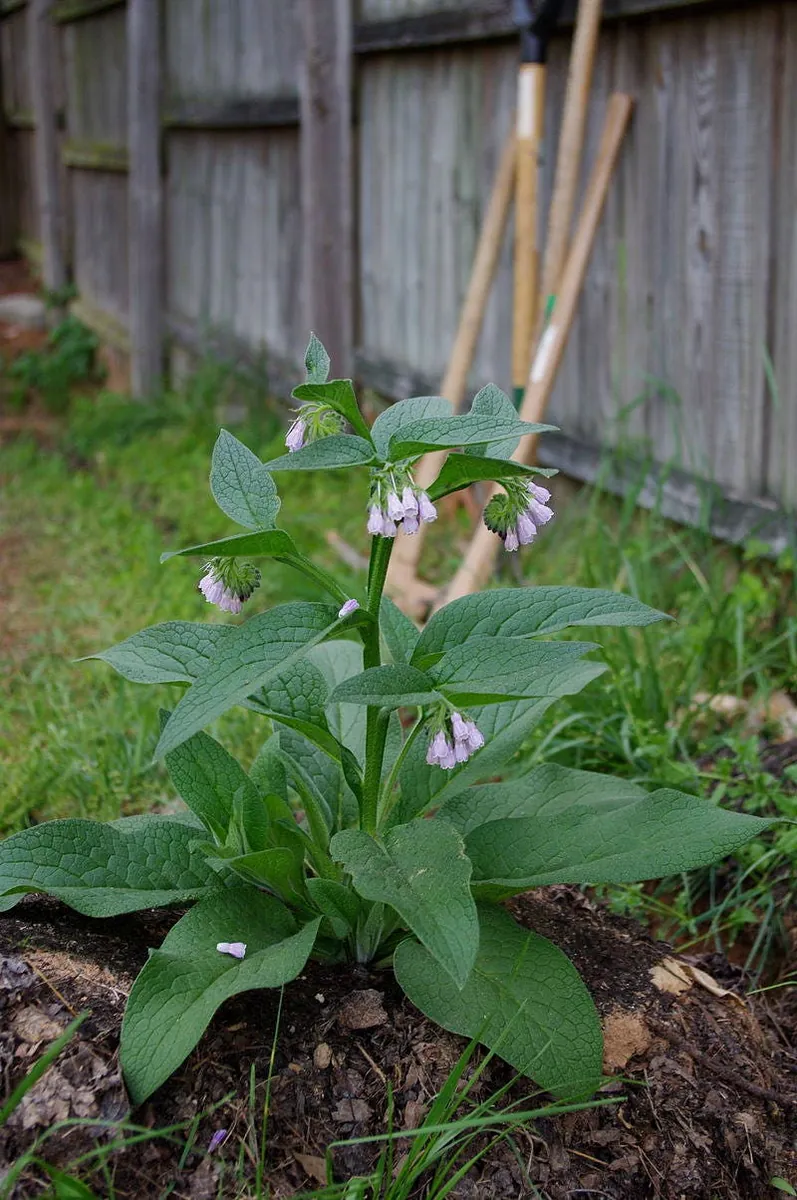
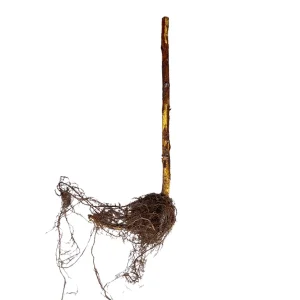
Cultivate a thriving organic garden with russian comfrey live root cuttings, specifically the highly sought-after bocking 4 comfrey cultivar. These sterile, vigorous roots are perfect for creating nutrient-rich compost, making liquid fertilizer, and improving soil fertility as a dynamic accumulator plant. An essential for sustainable gardening practices.
-
USDA Hardiness Zone
USDA Zones 3-9 -
Soil Type
Well-draining, fertile soil -
Sunlight Exposure
Full sun to partial shade -
Expected Planting Period
Early spring or late fall

You can track your order HERE
Mar 05
Mar 10 - Mar 12
Mar 15 - Mar 19
Shipping and return policies: Our Alive & Thrive Guarantee covers issues with your plants within the first 30 days. Reach out to us. Our team will answer your questions and help you find the plants that are truly suitable for your environment, climate, and personal preferences.

Overview
Transform your garden into a highly productive ecosystem with our premium russian comfrey live root cuttings. Specifically, this offering features the renowned ‘Bocking 4’ cultivar, a sterile, non-seeding variety developed for its exceptional vigor and nutrient accumulation properties. Organic gardeners and herbalists alike value comfrey for its versatility and numerous benefits. These vigorous root cuttings establish quickly, providing a sustainable source of organic matter and essential plant nutrients for your garden. The ‘Bocking 4’ cultivar is a cornerstone for those practicing permaculture and regenerative agriculture, offering a natural solution for soil improvement and plant health.
The ‘Bocking 4’ cultivar was developed by Lawrence D Hills in the 1950s, specifically bred for its robust growth and high nutrient content, making it an ideal choice for enhancing soil fertility without the concern of unwanted spreading through seeds. Once established, these plants are remarkably low maintenance and provide abundant harvests throughout the growing season. Whether you’re looking to create your own organic fertilizers or enrich your compost, these russian comfrey live root cuttings are an excellent investment for any eco-conscious gardener.
Key Benefits
Incorporating bocking 4 comfrey into your garden offers a multitude of advantages, significantly boosting the health and productivity of your plants and soil. Its unique properties make it an invaluable asset for sustainable gardening:
- Exceptional Nutrient Accumulator: Comfrey is a deep-rooted plant, acting as a ‘dynamic accumulator’ by drawing up essential nutrients and minerals from deep within the subsoil that are unavailable to most other plants. These nutrients are then stored in its fast-growing leaves, making them accessible to other garden plants.
- Superior Organic Fertilizer: The leaves are rich in potassium, an essential nutrient for flower, seed, and fruit production, containing 2–3 times more potassium than farmyard manure. They break down quickly, releasing these vital elements into the soil.
- Compost Activator: Adding comfrey leaves to your compost heap provides a nitrogen boost, helping to heat the pile and accelerate decomposition. It’s an excellent way to enrich your compost with a wide range of micronutrients.
- Comfrey Tea Production: Easily create a powerful liquid fertilizer, often called ‘comfrey tea,’ by steeping the leaves in water. This nutrient-dense liquid can be diluted and used as a foliar feed or soil drench for all your garden plants.
- Sterile Cultivar: The ‘Bocking 4’ variety is sterile and does not produce viable seeds, preventing unwanted spreading and making it easier to manage in your garden compared to other comfrey types.
- Vigorous Growth: Once established, organic comfrey plant grows rapidly, allowing for multiple harvests (up to 4-5 times) per growing season. This ensures a continuous supply of nutrient-rich biomass.
- Soil Structure Improvement: The extensive root system of this dynamic accumulator plant helps to break up compacted soil, improving aeration and water penetration, which benefits overall soil health.
Plant Care & Growing Tips
Cultivating russian comfrey live root cuttings is straightforward, and with proper care, you’ll enjoy abundant harvests for years. The comfrey bed should be well-prepared by thoroughly weeding and enriching with manure if available. Plant the root segments about 5 cm (2.0 inches) deep, ensuring the growing points are just below the surface. Keep the bed well-watered until the young plants are established. It’s crucial not to harvest in the first season; allow the plants to establish a strong root system. Remove any flowering stems in the first year to direct energy into root development.
Comfrey is a fast-growing, nitrogen-hungry plant. While tenacious, it thrives with regular feeding. Mulching with animal manure or other nitrogen-rich materials like lawn clippings significantly boosts growth. Mature comfrey plants can be harvested up to four or five times a year when they reach about 60 cm (24 inches) in height, typically starting in mid-Spring. Comfrey regrows quickly, usually ready for another cut in about 5 weeks. The best time to cut is just before flowering, as nutrient content is highest then. Continue harvesting until early autumn to allow the plants to build winter reserves. This organic comfrey plant is generally trouble-free once established, though weaker plants might occasionally suffer from comfrey rust or mildew, fungal diseases that rarely impair growth significantly.
Harvesting involves cutting the plant about 2 inches above the ground using shears, a sickle, or a scythe. Always wear gloves, as the leaves and stems have hairs that can irritate the skin. Despite being sterile, bocking 4 comfrey will steadily increase in size, making it advisable to divide it every few years. Eradicating established comfrey can be challenging due to its deep roots; any fragments left in the soil can regrow. The most effective method is careful digging, removing as much root as possible, preferably during hot, dry summer weather to help kill off remaining root stumps.
Size & Details
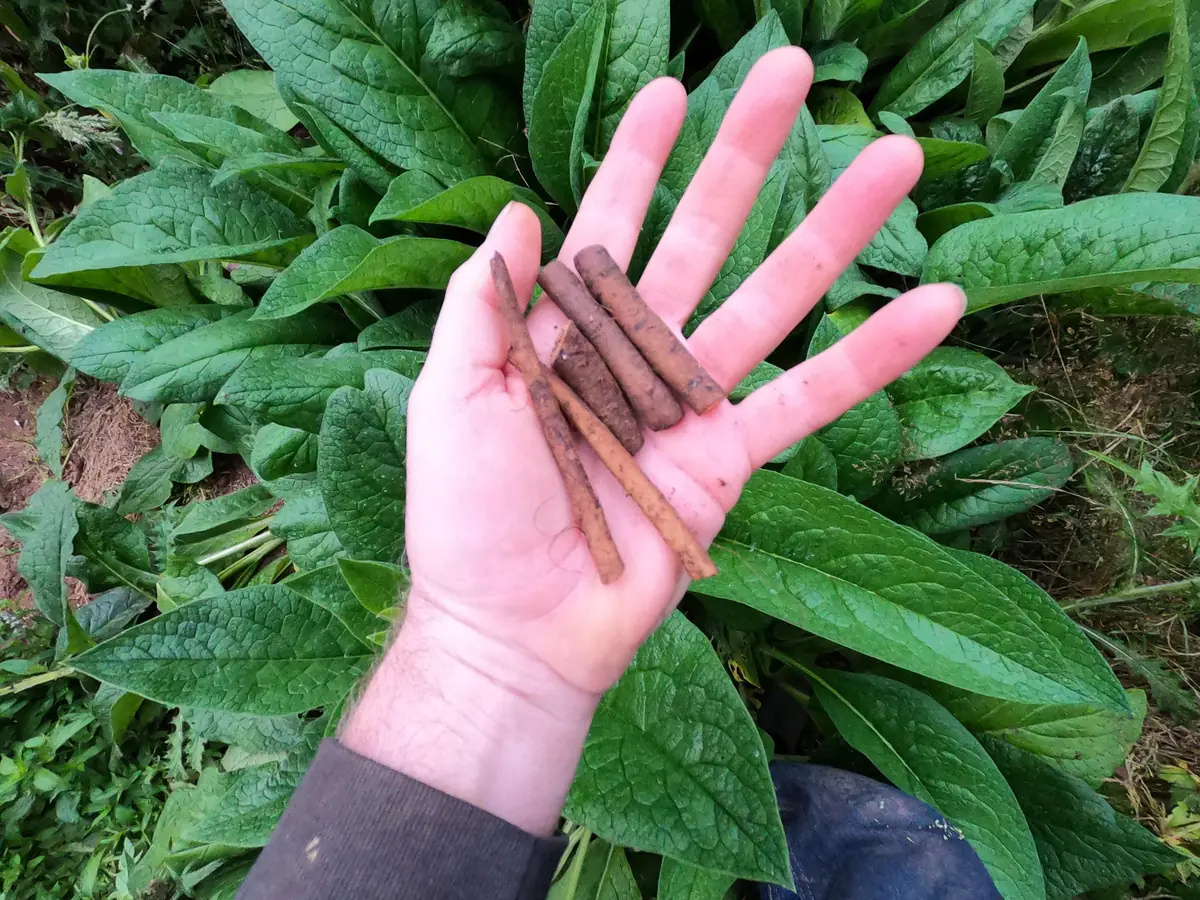
Our russian comfrey live root cuttings are supplied as viable root segments, ready for planting upon arrival. These cuttings are sourced from robust ‘Bocking 4’ cultivar parent plants, ensuring genetic purity and strong growth characteristics. Each root cutting is carefully selected to ensure optimal viability and establishment success in your garden. While specific dimensions for individual cuttings may vary, they are typically 2-4 inches long and packed to maintain moisture during transit. This variety is known for its rapid growth rate, quickly developing into a substantial plant that can be harvested multiple times within a single growing season.
Once established, a single organic comfrey plant can produce up to 1.8–2.3 kilograms (4.0–5.1 lb) of leaf matter per cut. The mature plants can reach heights of up to 2-3 feet with a similar spread, creating a dense canopy of foliage. These cuttings are shipped bare root, requiring immediate planting for best results. Expect initial growth within a few weeks, with significant leaf production beginning in the second season. This dynamic accumulator plant will provide years of benefit to your garden ecosystem.
Frequently Asked Questions
- Q: How big does this russian comfrey plant get? A: Once established, bocking 4 comfrey can grow to be quite substantial, typically reaching 2-3 feet tall and wide. Its vigorous growth allows for multiple harvests throughout the growing season, providing a continuous supply of biomass.
- Q: Is this an indoor or outdoor plant? A: Russian comfrey live root cuttings are primarily intended for outdoor cultivation. They thrive in garden beds, providing excellent benefits as a soil improver and fertilizer source for other outdoor plants.
- Q: How much sunlight does it need? A: Comfrey prefers full sun to partial shade. For optimal growth and maximum leaf production, aim for at least 6 hours of direct sunlight per day. It is quite adaptable but will produce less in deep shade.
- Q: Is this plant easy to care for? Is it good for beginners? A: Yes, comfrey is generally very easy to care for and is an excellent choice for beginner gardeners. Once established, it is remarkably resilient and requires minimal intervention beyond regular harvesting.
- Q: What condition will the root cuttings arrive in? A: Your russian comfrey live root cuttings will arrive bare root, carefully packaged to ensure they remain moist and viable during transit. It is important to plant them as soon as possible after arrival.
- Q: When is the best time to plant comfrey root cuttings? A: The best time to plant comfrey root cuttings is in early spring or late fall when the soil is workable and temperatures are moderate. This allows the roots to establish before extreme heat or cold.
- Q: Will this dynamic accumulator plant survive winter in my zone? A: Comfrey is a very hardy perennial plant, generally thriving in USDA Zones 3-9. It will die back to the ground in colder climates but reliably regrow from its deep roots each spring.
- Q: Can I use comfrey directly as a mulch? A: Yes, fresh comfrey leaves make an excellent mulch. They break down quickly, releasing nutrients into the soil and suppressing weeds. This is a great way to utilize the benefits of this organic comfrey plant.
- Q: How often should I fertilize my comfrey? A: While comfrey is a heavy feeder, it primarily benefits from organic matter. Mulching with manure or compost regularly is more effective than synthetic fertilizers. It is a dynamic accumulator plant, so it draws its own nutrients.
- Q: Is the ‘Bocking 4’ cultivar sterile? A: Yes, the ‘Bocking 4’ cultivar of comfrey is sterile, meaning it does not produce viable seeds. This is a significant advantage for gardeners who want to contain its growth and prevent unwanted spread.
| How Many Root Cuttings | 1 Root Cutting, 10 Root Cuttings, 20 Root Cuttings, 3 Root Cuttings, 5 Root Cuttings |
|---|
Be the first to review “Bocking 4 Russian Comfrey Live Root Cuttings – Dynamic Accumulator Plant for Soil Fertility”
People Also Viewed

Sold 78 products
Original price was: $39.96.$19.98Current price is: $19.98.

Sold 54 products
Original price was: $75.96.$37.98Current price is: $37.98.
Sold 88 products
Original price was: $39.98.$19.99Current price is: $19.99.
Sold 79 products
From $91.80
Sold 52 products
Original price was: $35.98.$17.99Current price is: $17.99.
Flower Bulbs
Ranunculus Flower Bulbs 16 Pink Picotee Corms – Perennial Peony-like Flowers for Garden & Bouquets
Sold 92 products
Original price was: $63.96.$31.98Current price is: $31.98.
Sold 99 products
Original price was: $39.96.$19.98Current price is: $19.98.

Sold 92 products
Original price was: $39.96.$19.98Current price is: $19.98.
Sold 91 products
From $87.80
Sold 97 products
Original price was: $85.98.$42.99Current price is: $42.99.
Sold 71 products
Original price was: $65.98.$32.99Current price is: $32.99.
Sold 86 products
Original price was: $8.52.$4.26Current price is: $4.26.

HousePlants
Plectranthus forsteri ‘Marginatus’ Variegated Swedish Ivy Live Plant – Easy Care Houseplant
Sold 72 products
From $18.32
Sold 71 products
Original price was: $159.80.$79.90Current price is: $79.90.
Sold 53 products
Original price was: $77.98.$38.99Current price is: $38.99.
Sold 68 products
Original price was: $49.98.$24.99Current price is: $24.99.
Sold 52 products
From $18.89
Sold 80 products
Original price was: $11.96.$5.98Current price is: $5.98.



Reviews
There are no reviews yet.