
3 Double Mahoi Banana Plant – Edible Dwarf Cavendish Starter Live Plant – Fruit Tree
Original price was: $52.00.$41.60Current price is: $41.60.
Bring a taste of the tropics home with the Double Mahoi banana plant. This unique dwarf Cavendish variety is prized for its large, sweet, and edible fruit, making it a fantastic addition to any fruit-loving gardener’s collection. Enjoy lush, vibrant foliage and the promise of homegrown bananas.
-
USDA Hardiness Zone
USDA zones 9-11 (outdoors), suitable for container growing indoors in colder zones -
Soil Type
Rich, well-draining soil -
Sunlight Exposure
Full sun (6-8+ hours direct light) -
Expected Planting Period
Year-round indoors, spring to summer outdoors

You can track your order HERE
Feb 27
Mar 04 - Mar 06
Mar 09 - Mar 13
Shipping and return policies: Our Alive & Thrive Guarantee covers issues with your plants within the first 30 days. Reach out to us. Our team will answer your questions and help you find the plants that are truly suitable for your environment, climate, and personal preferences.

Overview
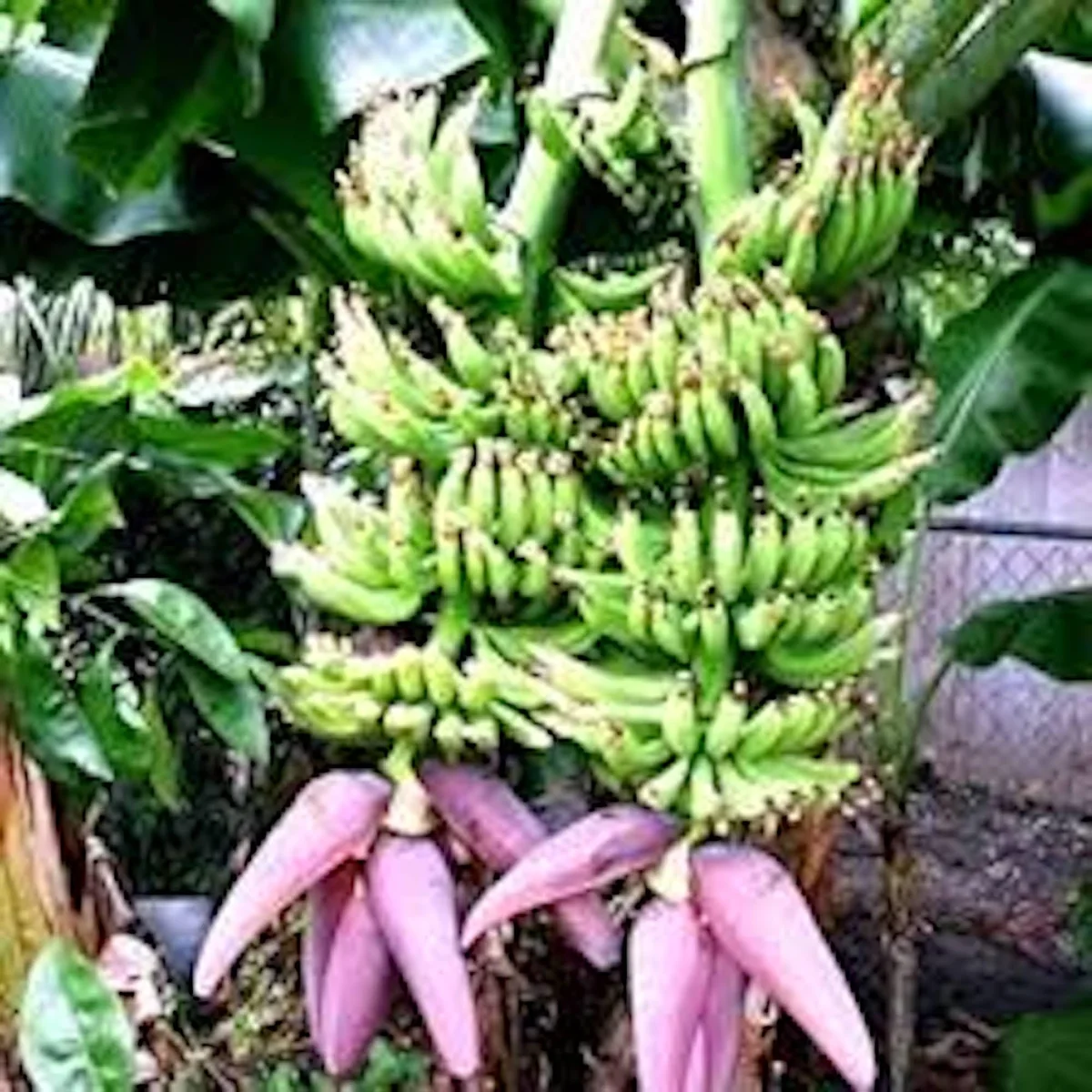
Introducing the remarkable Double Mahoi banana plant, a truly unique and sought-after cultivar that promises to transform your garden or patio into a tropical paradise. This particular variety, a dwarf Cavendish type, is primarily cultivated for its exceptionally large, sweet, and delicious edible fruit. Unlike common banana plants, the Double Mahoi banana plant stands out with its robust growth habit and a slightly distinct appearance, making it a captivating specimen for any plant enthusiast. As a live plant, it offers not just the joy of nurturing a growing organism but also the rewarding experience of harvesting your own fresh, homegrown bananas. Its lush foliage and potential for abundant fruit make it a focal point in any landscape, providing both aesthetic beauty and a bountiful harvest. If you’re looking for an exotic and productive addition to your plant collection, this edible banana tree is an excellent choice.
The Double Mahoi is a fascinating Musa cultivar, known scientifically as Musa acuminata ‘Double Mahoi’. Originating from the rich biodiversity of tropical regions, this plant thrives in warm climates and can be a prolific producer when given the right care. Its relatively compact size for a banana plant, combined with its high fruit yield, makes it an ideal candidate for home gardeners who desire fresh fruit without needing an expansive orchard. Cultivating a Double Mahoi banana plant is a journey into sustainable living and an appreciation for nature’s sweet offerings.
Key Benefits
The Double Mahoi banana plant offers a wealth of benefits beyond just its delicious fruit. It’s a versatile and rewarding plant for various growing environments.
- Homegrown Edible Fruit: The primary benefit is undoubtedly the production of large, sweet, and high-quality bananas right in your own garden. Enjoy fresh, organic fruit picked at peak ripeness, unmatched by store-bought varieties. This edible banana tree provides a sustainable source of healthy snacks.
- Tropical Aesthetic Appeal: With its large, broad, dark green leaves that can reach up to 6 feet in length, the Double Mahoi creates a stunning tropical ambiance. It’s perfect for adding a lush, exotic feel to patios, conservatories, or garden landscapes, enhancing visual appeal significantly.
- Robust Growth and Vigor: This cultivar is known for its strong and resilient growth, making it a relatively straightforward plant to cultivate for both experienced and novice gardeners. Its sturdy pseudostem supports healthy development and fruit production.
- Unique and Rare Variety: The Double Mahoi is considered a unique and rare variety, offering something truly special for collectors and enthusiasts. Growing this plant allows you to enjoy a banana type not commonly found in commercial markets.
- Air Purification: Like many large-leafed plants, the Musa cultivar contributes to air quality by absorbing carbon dioxide and releasing oxygen, helping to create a healthier environment around your home.
- Shade and Privacy: The extensive canopy formed by its large leaves can provide natural shade in sunny areas and can also be used to create a sense of privacy in outdoor living spaces.
- Educational Experience: Growing your own dwarf Cavendish banana offers a fantastic educational opportunity for families, teaching about plant life cycles, tropical agriculture, and sustainable food sources.
Plant Care & Growing Tips
To ensure your Double Mahoi banana plant thrives and produces abundant fruit, consistent care is essential. These tropical plants require specific conditions to flourish, mimicking their natural habitat. For optimal growth, they need plenty of sunlight. Aim for a location that receives at least 6-8 hours of direct sunlight per day. In very hot climates, some afternoon shade can prevent leaf scorch. If growing indoors, place it near a south-facing window or supplement with grow lights to ensure it receives adequate light. The sturdy pseudostem, often light green or yellowish, indicates a healthy plant.
Watering is crucial for a Double Mahoi banana plant. They are heavy feeders and drinkers. The soil should be kept consistently moist but never waterlogged, as this can lead to root rot. Good drainage is paramount. During warmer months, you may need to water daily, depending on your climate and soil type. Reduce watering slightly in cooler months. For soil, a rich, well-draining potting mix is ideal. Amend garden soil with plenty of organic matter like compost to improve fertility and drainage. The plant can grow quite tall, typically reaching 12 to 15 feet under optimal conditions, so ensure it has ample space.
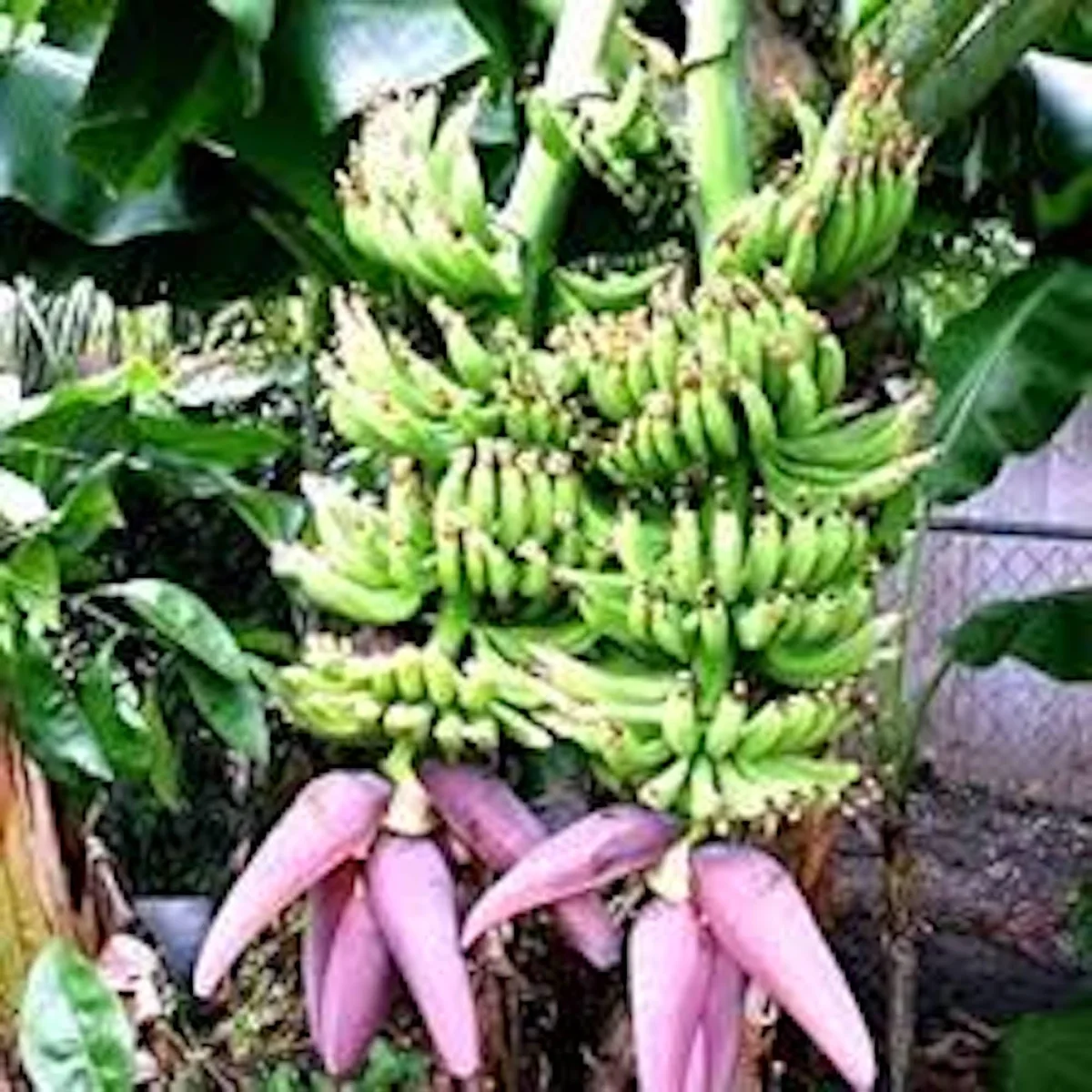
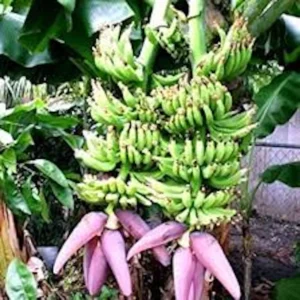
Banana plants are tropical and prefer warm temperatures, ideally between 75-85°F (24-29°C). They are not frost-tolerant, so in USDA zones below 9, they should be grown in containers that can be moved indoors during winter or protected. Fertilize regularly during the growing season (spring through fall) with a balanced, high-potassium fertilizer. A slow-release granular fertilizer or a weekly liquid feed can be effective. Watch out for common pests like spider mites and aphids, and treat with organic insecticidal soap if necessary. Proper care will lead to the emergence of flowering spikes and clusters of delicious fruit from your dwarf Cavendish banana.
Size & Details
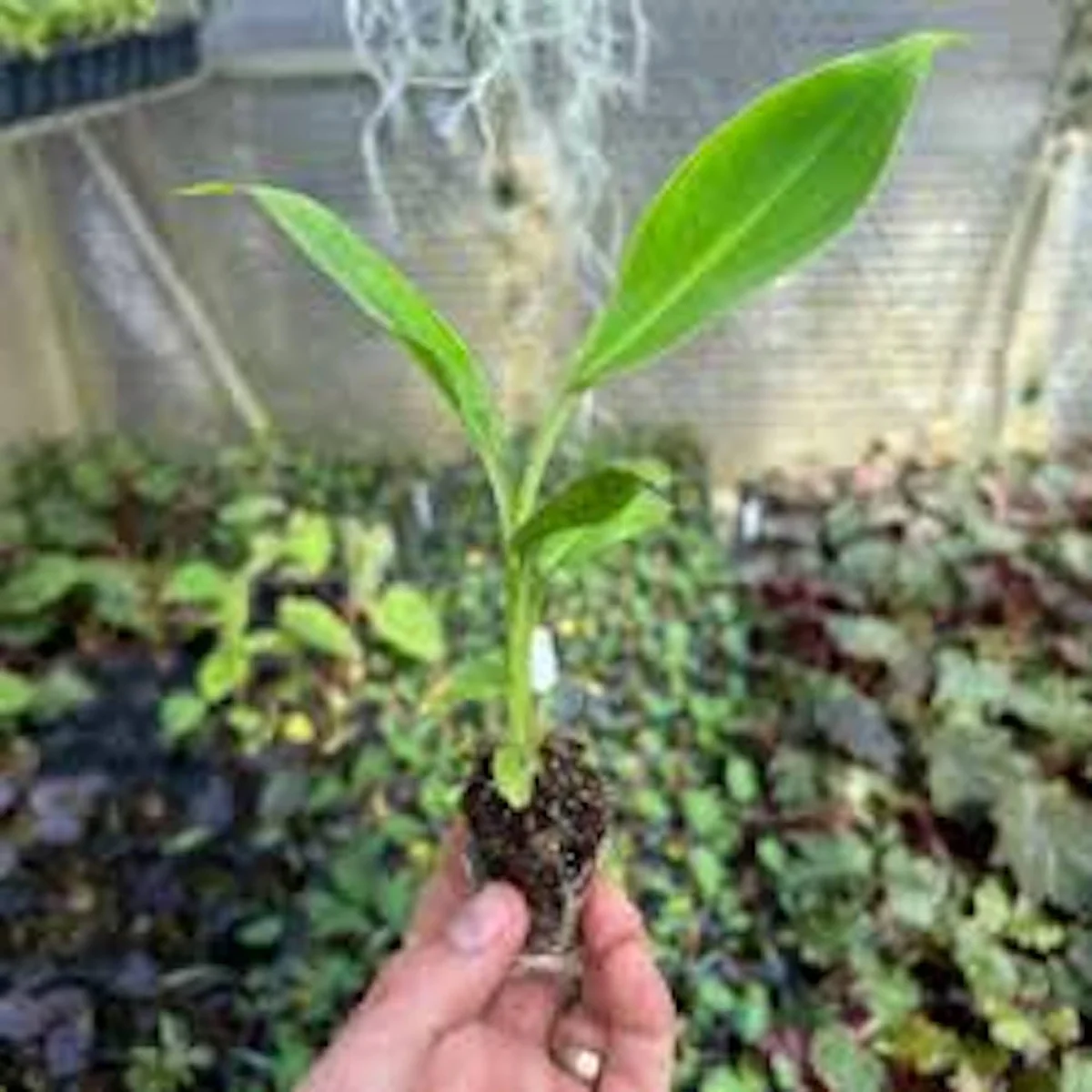
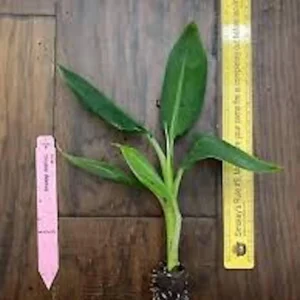
This offering includes three Double Mahoi banana plant starters, providing an excellent foundation for establishing your own banana grove. These plants are a dwarf Cavendish type, known for their manageable size compared to other banana varieties, yet they can still achieve impressive heights. Under optimal conditions, a mature edible banana tree of this cultivar can typically reach heights of about 12 to 15 feet (3.6 to 4.5 meters). The broad, dark green leaves can grow quite long, up to 6 feet (1.8 meters), creating a significant tropical presence.
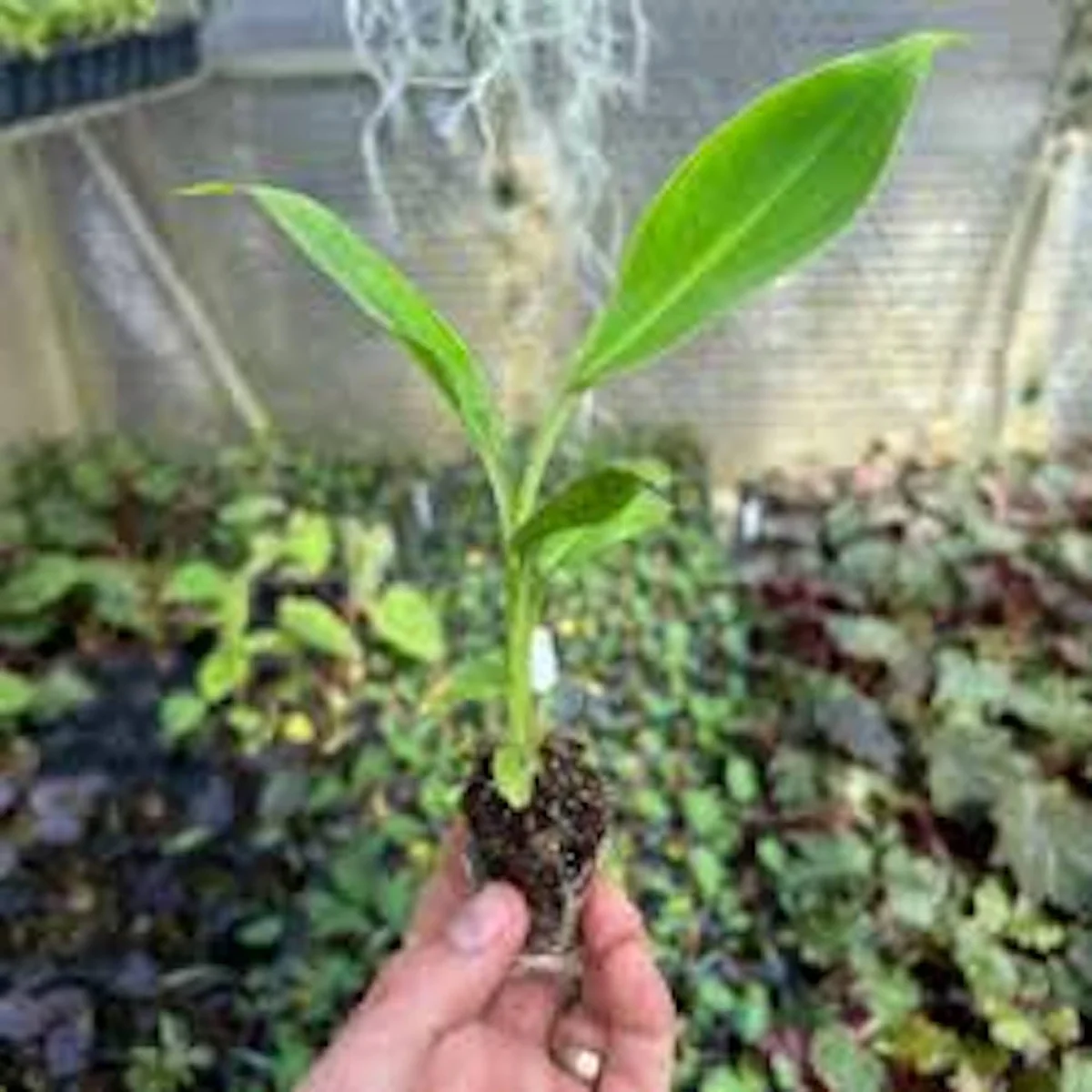
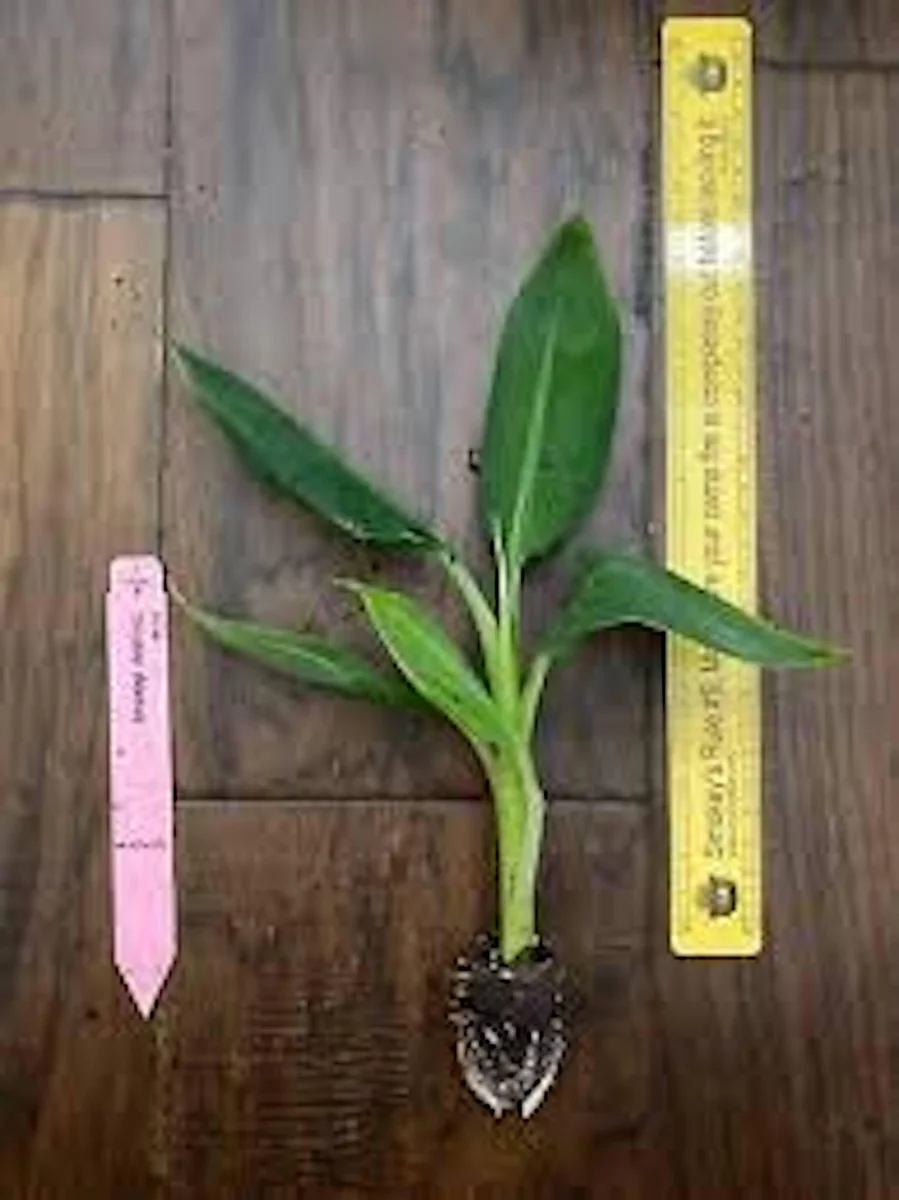
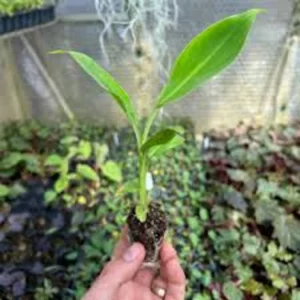
The plants are shipped as live starters, ready to be planted upon arrival. While they can grow quite tall, their robust nature ensures a strong start. The Double Mahoi is characterized by its sturdy pseudostem, which is often light green or yellowish and has a slightly waxy appearance. Growth rate is moderate to fast, allowing you to enjoy substantial development within the first year. Expect to see significant leaf development and the plant establishing itself quickly in appropriate growing conditions. Fruit production typically begins once the plant reaches maturity, which can vary depending on care and climate.
Frequently Asked Questions
- Q: How big does this Double Mahoi banana plant get? A: Under ideal conditions, the Double Mahoi banana plant can grow quite tall, typically reaching heights of about 12 to 15 feet (3.6 to 4.5 meters). Its large leaves can also extend up to 6 feet long.
- Q: Is this an indoor or outdoor plant? A: The Double Mahoi banana plant primarily thrives outdoors in warm, tropical climates (USDA zones 9-11). In cooler regions, it can be grown in large containers and brought indoors during colder months.
- Q: How much sunlight does the edible banana tree need? A: This plant requires at least 6-8 hours of direct sunlight per day for optimal growth and fruit production. In very intense heat, some afternoon shade can be beneficial.
- Q: Is this plant easy to care for? A: While dwarf Cavendish banana plants require consistent watering and feeding, they are relatively straightforward to care for if their basic needs for warmth, sun, and moisture are met. They are considered moderate in terms of care difficulty.
- Q: What condition will the plants arrive in? A: The plants are shipped as live starters, carefully packaged to ensure they arrive healthy and ready for planting. They are typically shipped bare root or with minimal soil.
- Q: How long until it produces fruit? A: The time until fruit production can vary, but generally, a healthy Musa cultivar will start producing fruit within 1-2 years after planting, given optimal growing conditions and maturity.
- Q: Will it survive winter in my zone? A: The Double Mahoi is a tropical plant and is not frost-tolerant. It will only survive winters outdoors in USDA zones 9-11. In colder zones, it must be protected from frost or brought indoors.
- Q: What type of soil is best for this tropical fruit plant? A: A rich, well-draining soil mix is best. Amending your garden soil with plenty of organic matter like compost will provide the necessary nutrients and improve drainage for your tropical fruit plant.
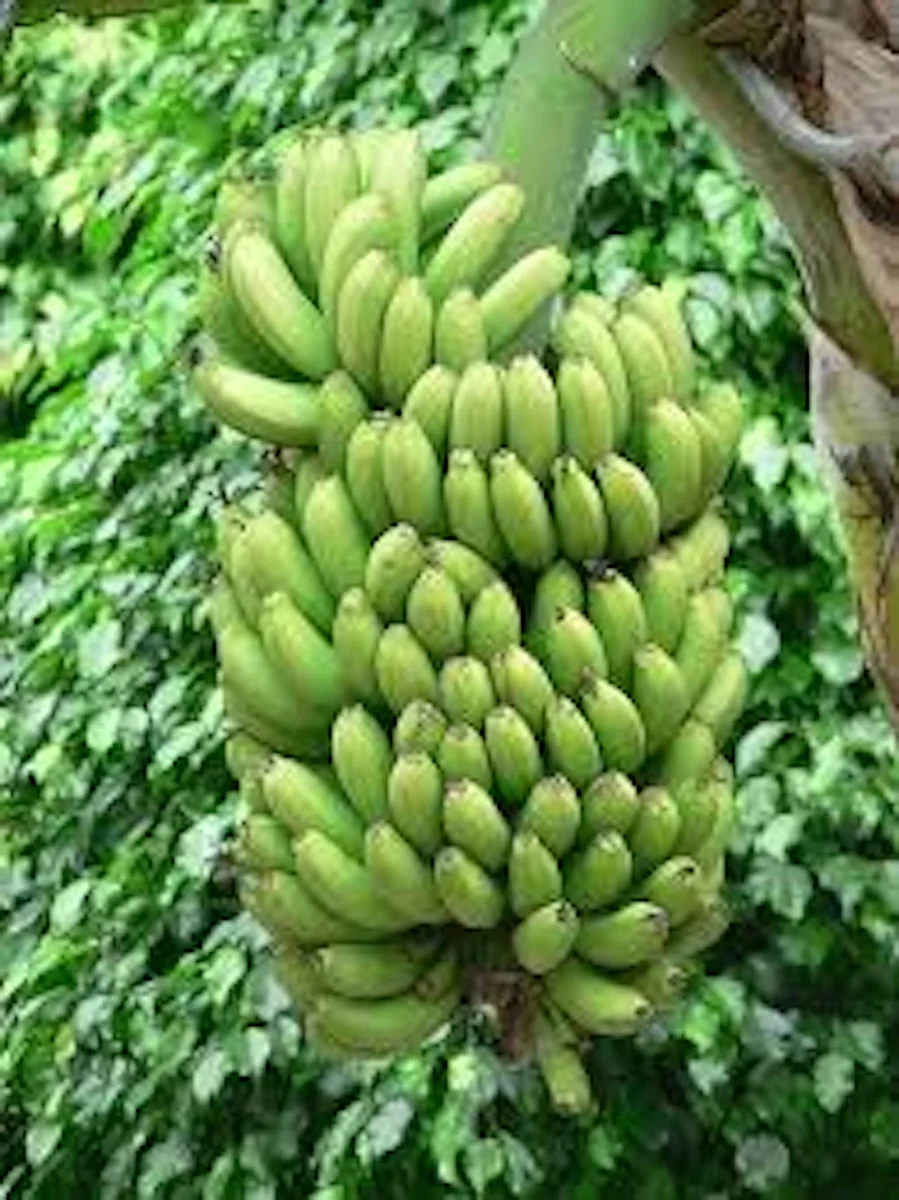
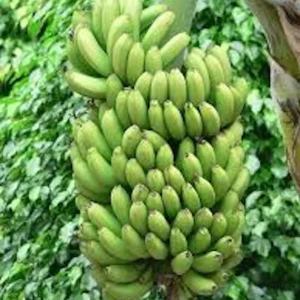
- Q: Is the fruit from this dwarf Cavendish banana edible? A: Yes, the Double Mahoi is specifically grown for its large, sweet, and delicious edible fruit. It is a highly prized variety for its taste.
- Q: How often should I fertilize my banana plant? A: During the active growing season (spring through fall), fertilize regularly, typically every 2-4 weeks, with a balanced, high-potassium fertilizer to support vigorous growth and fruit development.
Be the first to review “3 Double Mahoi Banana Plant – Edible Dwarf Cavendish Starter Live Plant – Fruit Tree”
People Also Viewed
Sold 56 products
Original price was: $49.98.$39.98Current price is: $39.98.
Sold 97 products
From $79.80
Sold 97 products
$35.18
Sold 67 products
From $67.80
Sold 73 products
Original price was: $47.10.$16.84Current price is: $16.84.
Sold 93 products
Original price was: $89.98.$44.99Current price is: $44.99.
Sold 79 products
Original price was: $39.98.$19.99Current price is: $19.99.
Sold 92 products
Original price was: $24.35.$7.74Current price is: $7.74.

Sold 61 products
Original price was: $51.96.$25.98Current price is: $25.98.
Sold 85 products
$43.98
Sold 76 products
Original price was: $37.96.$18.98Current price is: $18.98.
Sold 91 products
$54.98

Sold 77 products
Original price was: $21.56.$10.78Current price is: $10.78.
Sold 53 products
Original price was: $40.60.$14.24Current price is: $14.24.
Sold 68 products
Original price was: $28.76.$14.38Current price is: $14.38.
Sold 99 products
Original price was: $79.80.$39.90Current price is: $39.90.
Sold 98 products
Original price was: $39.98.$19.99Current price is: $19.99.
Sold 76 products
Original price was: $107.80.$53.90Current price is: $53.90.



Reviews
There are no reviews yet.