
Have you ever looked at your garden and wondered why some plants seem to struggle while your neighbor’s tomatoes look like they belong on a magazine cover? Are you tired of spending a fortune on synthetic fertilizers that leave your soil feeling dry and lifeless? If you have been searching for a natural way to supercharge your backyard ecosystem without the chemical price tag, you are in the right place.
I remember my first year of gardening in the Pacific Northwest. I spent hundreds of dollars on “organic” bottled nutrients, only to have an old-timer friend point at a large, fuzzy-leaved plant in the corner of my yard. “That’s comfrey,” he said. “That’s all the fertilizer you’ll ever need.”
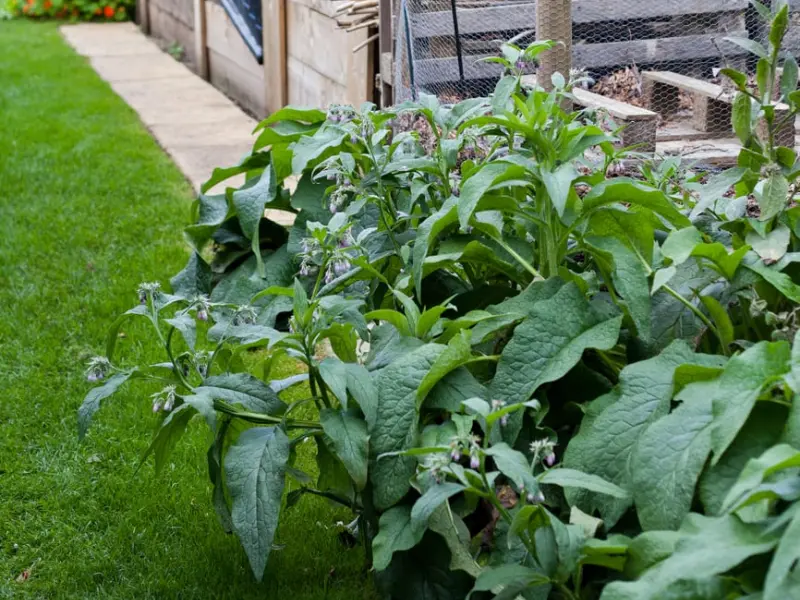
He wasn’t joking. Comfrey, specifically the Symphytum officinale species and its sterile hybrid Bocking 14, is a powerhouse of nutrition. Often called a “dynamic accumulator,” this plant uses its massive taproot to reach deep into the subsoil, mining for minerals like potassium, calcium, and magnesium that other plants simply cannot reach.
Here are six practical, tried-and-tested comfrey uses in the garden to transform your backyard into a self-sustaining paradise.
1. Brew the Infamous Comfrey Tea
If you have spent any time in permaculture circles, you have likely heard of “comfrey tea.” When people ask what to do with comfrey, this is usually the first recommendation. It is arguably the most potent liquid fertilizer you can make at home. It is rich in Nitrogen, Phosphorus, and Potassium (NPK), making it a dream for flowering and fruiting plants.
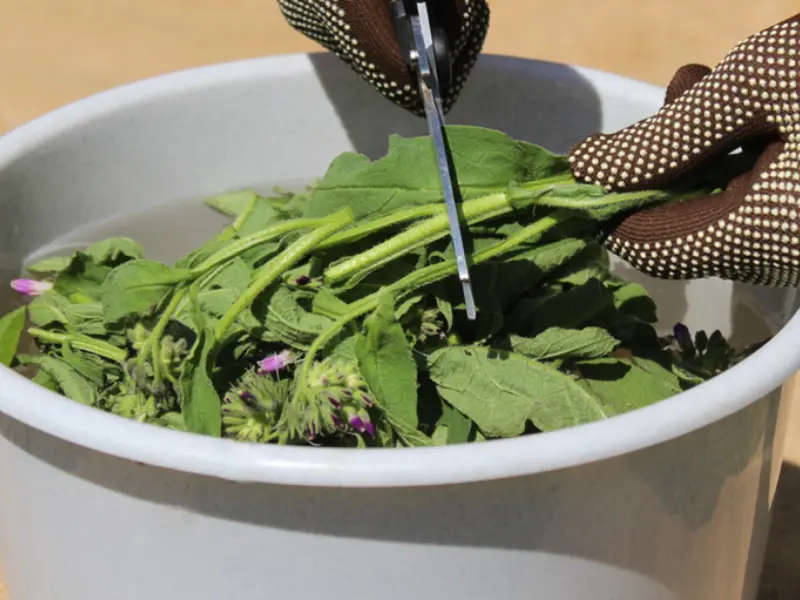
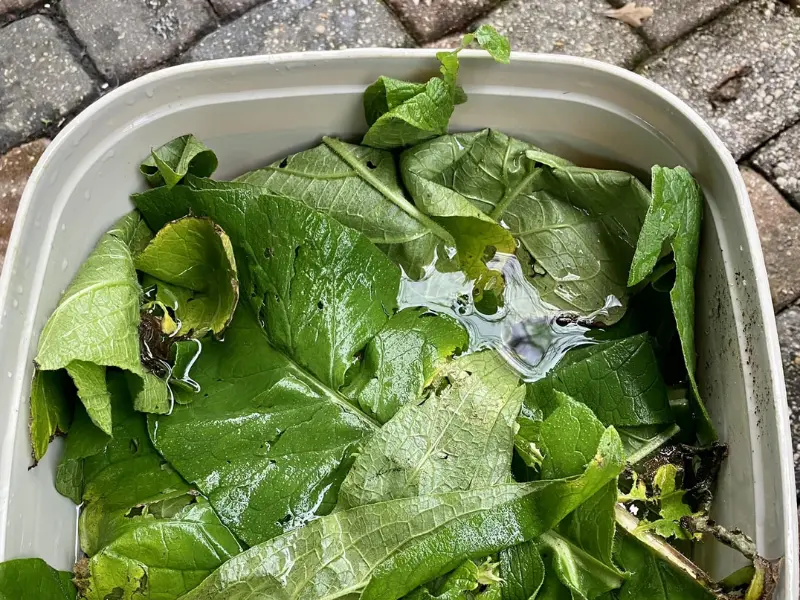
To master how to use comfrey as a liquid feed, simply harvest a batch of leaves, stuff them into a bucket, and weigh them down with a brick. Fill the bucket with water and cover it with a lid. Now, fair warning: after about two weeks, this mixture will smell like a swamp. However, that liquid gold is pure energy for your plants.
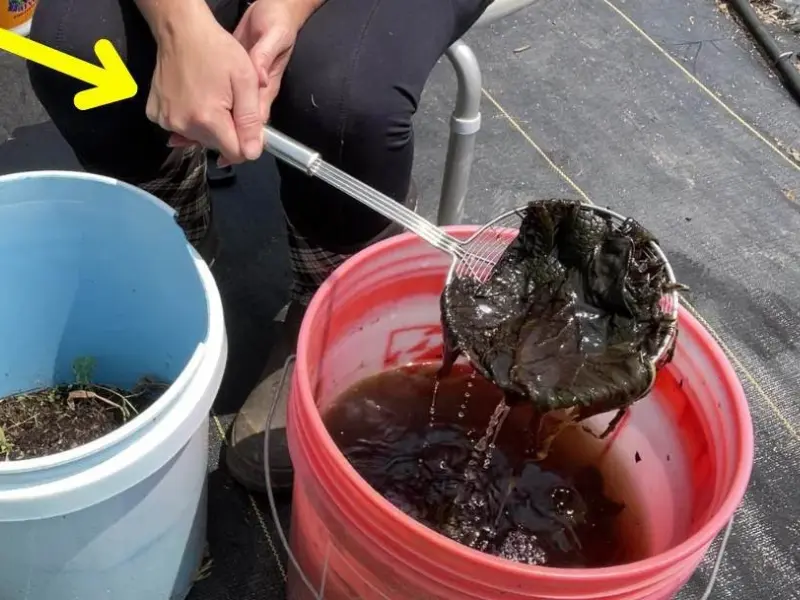
Pro Tip: For a smell-free version, try the “concentrate” method. Stuff the leaves into a tube or pipe with a small hole at the bottom. As the leaves decompose, a thick, dark liquid will drip out. Dilute this 15:1 with water, and your tomatoes will thank you.
2. The “Chop and Drop” Mulch Method
One of the easiest ways to use comfrey is to let gravity do the work. Comfrey grows incredibly fast, producing a massive amount of biomass throughout the season.
Because the leaves have a low carbon-to-nitrogen ratio, they break down much faster than straw or wood chips. When you “chop and drop,” you simply cut the leaves and lay them directly on the soil surface around your vegetables or fruit trees. This mulch does three things at once:
-
It suppresses weeds.
-
It retains soil moisture.
-
It slowly releases nutrients directly into the root zone of your plants.
3. A High-Speed Compost Activator
If you are wondering what to do with comfrey during a heavy harvest, toss it in your compost bin. Is your compost pile sitting there doing nothing? Every compost heap needs a balance of “greens” (nitrogen) and “browns” (carbon). Comfrey is a “super green.”
Because of its high nitrogen content, adding shredded comfrey leaves to a stagnant compost pile is like pouring gasoline on a fire, in a good way. It kicks the microbial activity into high gear, heating up the pile and speeding up the decomposition of tougher materials like straw or dried leaves. I always add a layer of comfrey whenever I add a fresh batch of kitchen scraps.
4. Enriching the Planting Hole
In the United States, especially among heirloom tomato growers, a favorite way of how to use comfrey is placing it directly in the planting hole.
Before you drop your seed potato or tomato transplant into the ground, place a few wilted comfrey leaves at the bottom of the hole and cover them with a thin layer of soil. As the plant grows, its roots will hit that decaying organic matter just as it begins to flower. This provides a targeted burst of potassium right when the plant needs it most to develop healthy fruit.
5. Building a Fertility Barrier
This is a clever design trick used in many forest gardens. Because comfrey grows in dense, leafy clumps and has a deep root system, it is excellent at stopping invasive grasses from creeping into your garden beds.
By planting a row of comfrey along the perimeter of your vegetable patch, you create a “fertility barrier.” The comfrey blocks the grass, and you have a convenient source of mulch right where you need it. It is a win-win for soil health and maintenance.
6. Supporting Pollinators and Beneficial Insects
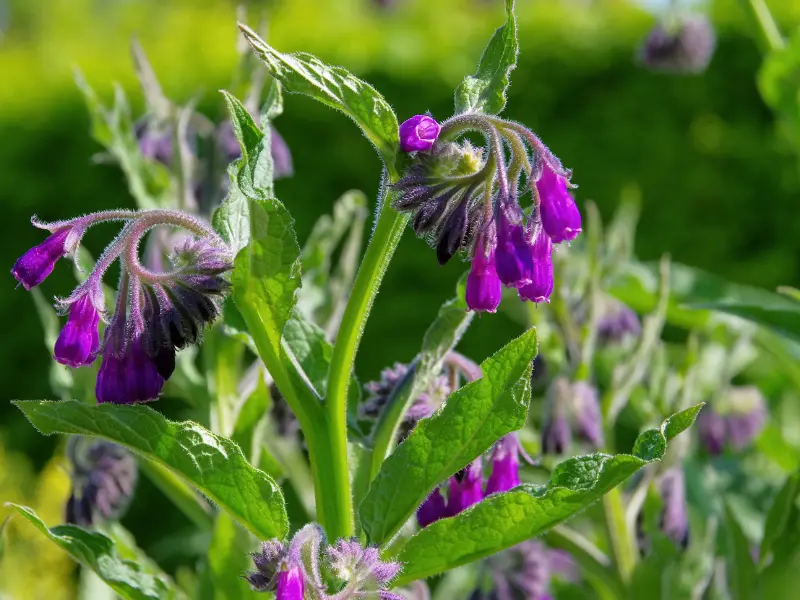
We often talk about comfrey as a fertilizer, but it is also a vital part of the garden food web. The bell-shaped flowers are a favorite for bees, especially bumblebees, who can “buzz pollinate” the blooms.
By having comfrey in your garden, you are ensuring that pollinators stay close to your home. This leads to better pollination rates for your cucumbers, squash, and fruit trees. Furthermore, the large leaves provide a cool, moist habitat for spiders and predatory beetles that help keep your pest population in check.
Which Comfrey Should You Plant?
Before you rush out to buy seeds, there is one critical detail you need to know. Common comfrey (Symphytum officinale) seeds easily and can quickly take over a garden if you are not careful.
Most American gardeners prefer Bocking 14 Russian Comfrey. This specific variety is sterile, meaning it won’t spread through seeds. It stays exactly where you put it, though it will grow larger and stronger each year. Since it has a deep taproot, make sure you choose its permanent home carefully. Once it’s established, it is there to stay!
Frequently Asked Questions
Does comfrey tea really smell that bad?
Yes, if made with water, it can be quite pungent. Think of it as the “smell of success.” To avoid this, use the dry-press concentrate method mentioned above or keep the container tightly sealed and far away from your back porch.
Can I use comfrey on all my plants?
Almost all! It is especially beneficial for “heavy feeders” like tomatoes, peppers, potatoes, and roses. However, because it is high in potassium, it is best used once the plants have moved past their initial leafy growth stage and are starting to produce flowers.
How many times a year can I harvest the leaves?
In most US climate zones, you can harvest comfrey 3 to 5 times a year. A good rule of thumb is to cut it back when it reaches about two feet tall, leaving a few inches of growth at the base so it can recharge.
Is comfrey safe for pets?
While comfrey is great for soil, it contains small amounts of alkaloids that can be harmful if eaten in large quantities by pets or livestock. It is always best to plant it in a spot where your dogs or cats aren’t tempted to snack on the foliage.
You may like:
