
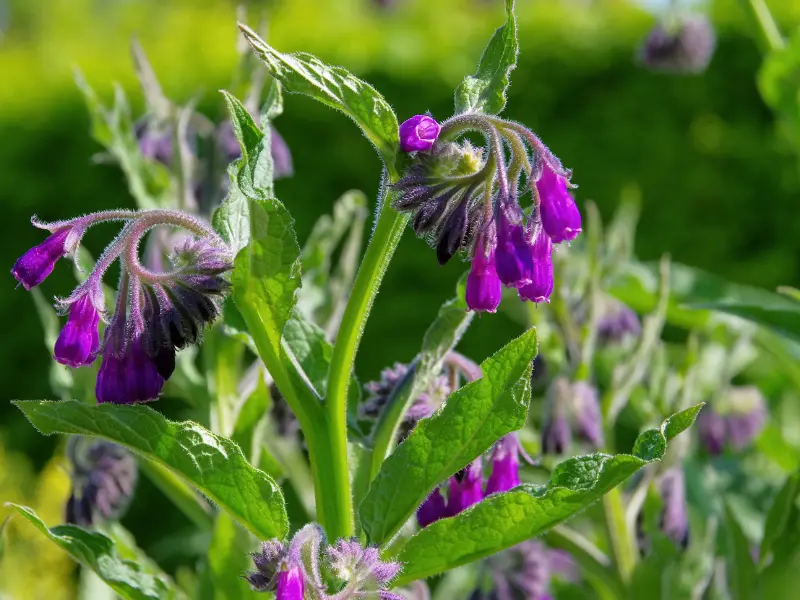
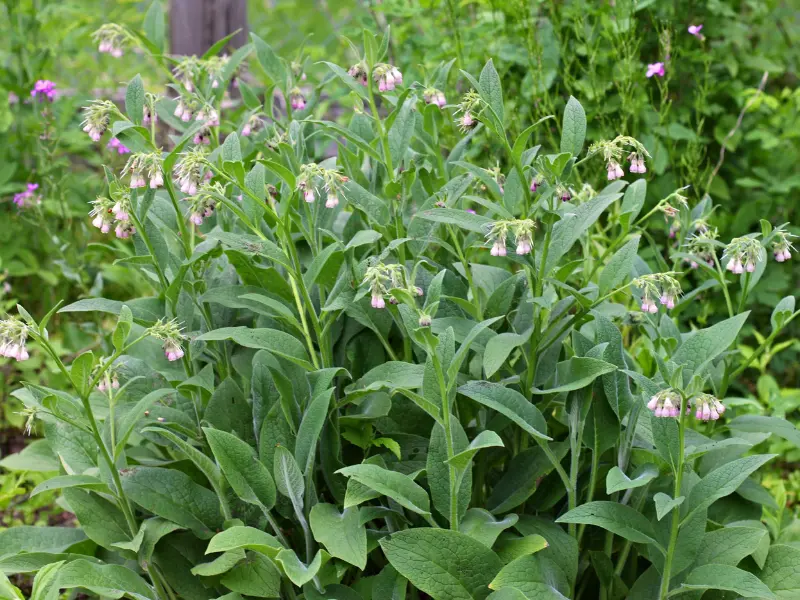
The Comfrey (Symphytum officinale) is a powerhouse perennial herb that every organic gardener should have in their arsenal. Known for its thick, hairy leaves and clusters of bell-shaped purple or creamy flowers, this plant is much more than just a garden resident. Its botanical name, Symphytum, comes from the Greek “symphyo,” meaning “to grow together,” reflecting its ancient history as a healing plant. Native to Europe and parts of Asia, Comfrey has become a staple in the American wilderness and backyard permaculture food forests.
Gardeners prize it as a “dynamic accumulator” – a plant whose massive taproots dive deep into the subsoil to mine essential minerals like potassium and calcium. While these plants are incredibly hardy and fast-growing, they are famous for their ability to regenerate from even the smallest piece of root.
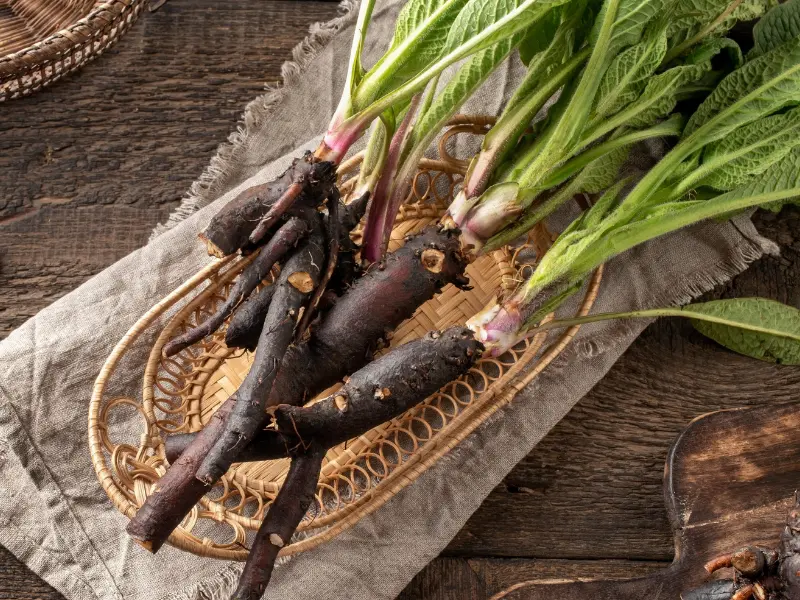
I remember the first time I ordered Bocking 14 comfrey root cuttings. They arrived in a small box, looking like nothing more than charred little sticks. I was skeptical. I planted them in a neglected corner of my garden, and within a month, I had lush, vibrant green leaves that became the backbone of my compost pile.
If you want to turn your garden into a self-sustaining ecosystem, learning how to grow comfrey from root cuttings is the single best move you can make. Let’s get your hands dirty and walk through exactly how to do it right the first time.
Why Grow Comfrey from Root Cuttings?
You might wonder why we don’t just buy seeds. Here is the secret: most experienced gardeners in the US avoid comfrey seeds. Common comfrey can drop seeds and spread like wildfire, becoming a weed you will never get rid of. Propagating comfrey via roots is much more reliable.
The Magic of Bocking 14
In the world of organic gardening, the Bocking 14 cultivar is the gold standard. It is a sterile hybrid, meaning it won’t produce viable seeds. The only way to grow it is through root division or comfrey root cuttings. This gives you total control over where it stays in your garden.
A Nutrient Fountain
Growing comfrey provides you with a living fertilizer factory. Its massive taproot can reach depths of 10 feet or more, mining minerals like potassium, calcium, and magnesium from deep in the subsoil and bringing them up to the leaves. When you “chop and drop” those leaves, you are basically giving your garden a free dose of high-quality NPK fertilizer.
Best Time for Comfrey Propagation
Timing is everything when it comes to root propagation. While comfrey is incredibly hardy (thriving in most USDA hardiness zones), you want to give those roots the best start.
When to Plant
The best time to plant your comfrey root cuttings is in the early spring, as soon as the soil can be worked, or in the fall at least four weeks before the ground freezes. In warmer states like California or Florida, you have a much wider window, but avoiding the peak heat of summer is always a good idea for new plants.
Choosing Your Cuttings
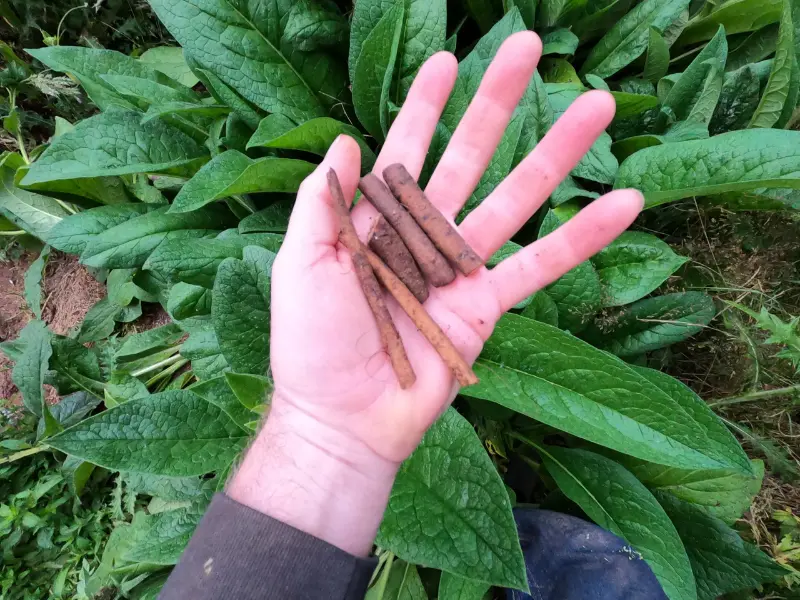
When your package arrives, look for root pieces that are about 1 to 3 inches long. They should feel firm, not mushy. Don’t worry if they look like plain old sticks; those “sticks” are packed with the energy needed to push out new shoots.
How to Plant Comfrey Root Cuttings
Let’s get down to the actual planting. Comfrey is not picky, but a little bit of preparation goes a long way.
Step 1: Soil Preparation and Site Selection
Pick a “forever home” for your comfrey. Because of that long taproot, once it is established, it is very hard to move. Any tiny piece of root left behind will grow into a new plant.
Comfrey loves the sun but can handle partial shade. It thrives in nitrogen-rich soil with a bit of organic matter. If your soil is heavy clay or very sandy, dig in a little compost first.
Step 2: Determining Planting Depth and Spacing
Space your plants about 2 to 3 feet apart. It might seem like a lot of room now, but a mature comfrey plant can grow 3 feet wide.
For the depth, aim for 2 inches below the soil surface. If your soil is very light and sandy, you can go as deep as 3 inches.
Step 3: Horizontal vs. Vertical Planting
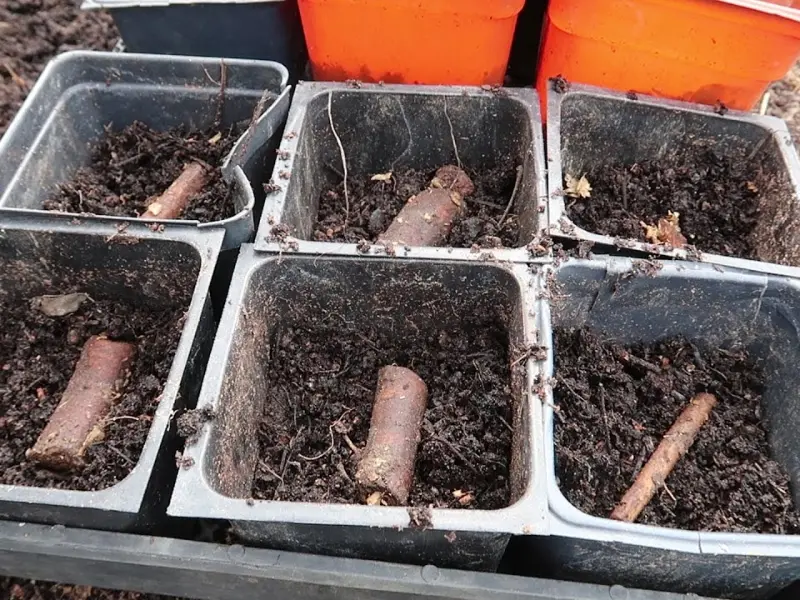
This is where most beginners get nervous when propagating comfrey. If you can see a “bud” or a small green growth point, plant that facing up. If it just looks like a root segment, plant it horizontally (flat). Comfrey is smart; it will figure out which way is up. Just lay it in the trench and cover it with soil.
Step 4: Initial Watering and Mulching
Water the area thoroughly right after planting. This settles the soil around the roots and removes air pockets. Adding a layer of straw or leaf mulch on top helps retain moisture and keeps weeds from competing with your new sprouts.
Planting Your Cuttings: Ground or Containers?
Now that your comfrey root cuttings are ready, you need to decide on their permanent home.
-
In the Ground: Choose a “forever spot” because once Comfrey is established, its taproot is nearly impossible to remove entirely. It loves full sun but will tolerate partial shade. Plant cuttings 2 inches deep, spaced 2-3 feet apart.
-
In Pots: If you are still designing your garden, start cuttings in 6-inch pots with well-draining potting soil. Keep them in a sunny spot until they have 3-4 true leaves before transplanting.
Added tip: Pots are perfect for controlling growth if you have a very small urban garden.
Caring for Comfrey Root Cuttings After Planting
For the first few weeks, your main job is patience.
-
Watering: Keep the soil moist but not soggy. Once the plant is established with its deep taproot, it is remarkably drought-tolerant, but “baby” roots need consistent hydration.
-
Weeding: Keep the area clear of grass and aggressive weeds for the first season. Once comfrey leafed out, its large leaves will naturally shade out most competition.
-
The First Leaves: You should see green leaves popping up in 3 to 6 weeks. Avoid harvesting any leaves in the first season. Let the plant put all its energy into building that massive root system.
Common Mistakes to Avoid
Even though growing comfrey from root cuttings is a relatively simple process, I have seen friends struggle with a few common issues:
-
Overwatering in Heavy Clay: If your water sits on top of the soil like a puddle, your cuttings might rot before they sprout. Ensure good drainage.
-
The “Moving” Mistake: I once tried to move a comfrey plant after two years. I ended up with six comfrey plants because I broke the roots during the move. Plan your location carefully!
-
Planting Too Deep: If you bury a small cutting 6 inches deep, it might run out of energy before the leaves reach the sunlight. Stick to the 2-inch rule.
-
Root Rot: This occurs if the soil is waterlogged. Always ensure your planting site has good drainage.
-
Slugs and Snails: They love the tender new leaves. Use organic grit or beer traps to protect young plants.
-
Slow Start: If it’s a cold spring, be patient. Comfrey waits for the soil to warm up before it makes its grand entrance.
How to Use Your Homegrown Comfrey
Once your plants are established (usually by the second year), the fun begins.
-
Comfrey Tea: Soak leaves in a bucket of water for a few weeks. It smells terrible, but it is the best liquid fertilizer for tomatoes and peppers.
-
Chop and Drop: Simply cut the leaves and lay them around your fruit trees. They break down quickly, releasing nutrients exactly where the trees need them.
-
Compost Activator: Adding a few layers of comfrey to your compost bin will heat it up and speed up the decomposition process significantly.
Frequently Asked Questions
Can I grow comfrey in pots from root cuttings?
Yes, you can start them in large pots (at least 5 gallons). This is a great way to keep it mobile, but keep in mind that the plant will never reach its full potential compared to being in the ground.
How long does it take for comfrey root cuttings to sprout?
In warm spring soil, you should see growth in about 21 days. If the weather is cool, it can take up to 6 weeks.
Is comfrey invasive in the United States?
The common variety can be. If you are worried, always buy “Bocking 14” Russian Comfrey. It does not produce seeds, so it only grows where you plant it.
Do I need to fertilize my comfrey plants?
Not really! They are the ones who do the fertilizing. However, a little mulch or compost once a year will keep them producing massive amounts of biomass.
Conclusion
Growing Comfrey from root cuttings is an incredibly rewarding way to build soil fertility for free. It’s a plant that gives back more than it takes, providing medicine for the soil and mulch for your vegetables. By following these simple steps, you are not just planting a herb; you are installing a permanent nutrient pump in your garden.
Are you ready to boost your garden’s health? Grab your shovel, find some quality cuttings, and start your journey to growing the ultimate garden ally today!
You may like to read more:
References:
